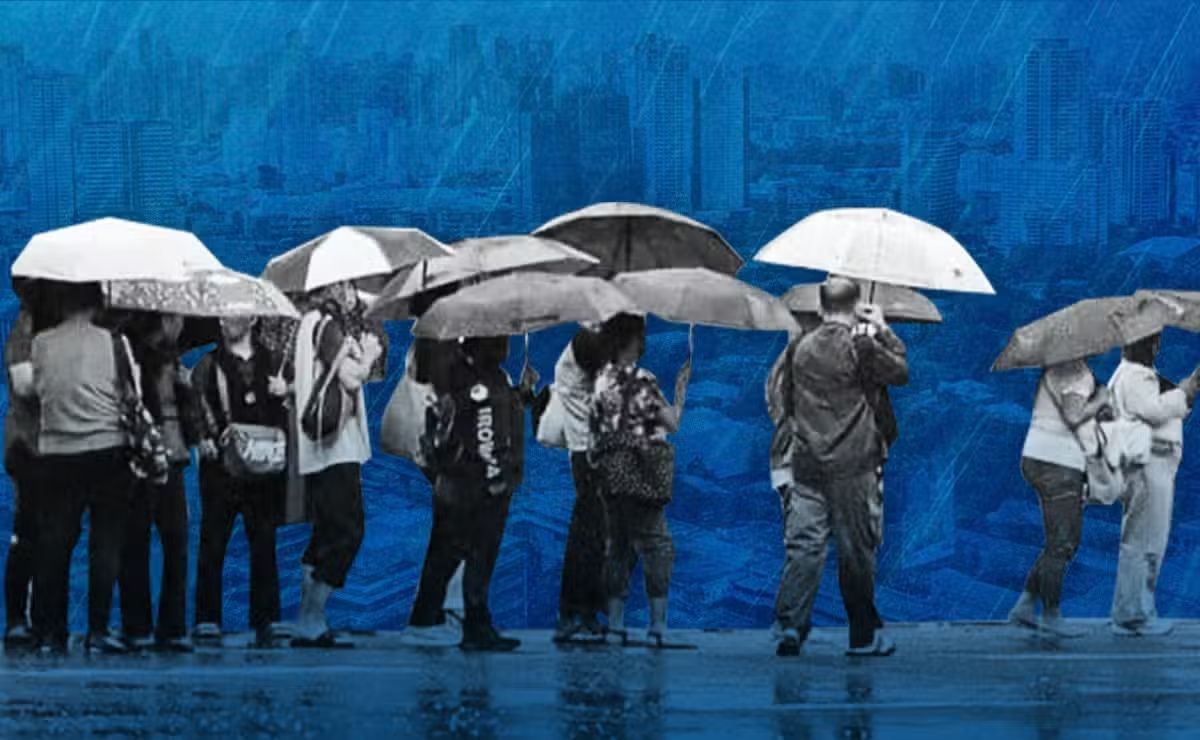
Metro Manila's experience of intense rainfall during early August this year, when the southwest monsoon and successive tropical cyclones deluged the Philippine capital, offers a sobering lesson in the vulnerability of major Southeast Asian cities to extreme weather events. An analysis of meteorological data from 23 observation stations operated by the Philippine Atmospheric, Geophysical and Astronomical Services Administration, conducted by Dr Alicor Panao, an associate professor at the University of the Philippines, revealed that the metropolitan area absorbed an average of 483.4 millimeters of cumulative rainfall between August 5 and 14—a volume that starkly illustrates both the scale of the challenge facing urban flood management and the institutional shortcomings that leave residents exposed to preventable disaster.
The statistical portrait painted by the rainfall data becomes more striking when broken down into daily increments. Across the 23 stations examined, the average daily precipitation during this ten-day window reached approximately 48.3 millimeters, yet this figure masks a highly uneven distribution. The most intense downpour was concentrated in a mere two-day window on August 9 and 10, when nearly half of the total ten-day accumulation fell. The Pagasa Airport monitoring station recorded 226.5 millimeters on August 9 alone—a deluge that Panao characterized as extraordinary and indicative of the extreme volatility increasingly common in the region's weather patterns.
While this single-day figure did not surpass Metro Manila's historical record established during Tropical Storm Ondoy in 2009, when 455 millimeters fell at the Pagasa Science Garden station in one catastrophic day, the distinction reveals an important nuance about this year's rainfall event. The danger lay not in a single day of unprecedented intensity but in the accumulated effect of persistent, heavy precipitation over a sustained period. This pattern of repeated saturation creates a fundamentally different challenge for urban drainage infrastructure than sporadic extreme events, as systems designed to handle peak flows are overwhelmed by the inability of watersheds and drainage networks to recover between successive deluges.
To grasp the sheer volume of water that Metro Manila faced, the numbers require translation into comprehensible scales. The average 483.4 millimeters recorded across the metropolitan area, if distributed uniformly over a single square kilometer, would constitute approximately 483.4 million liters of water. Extrapolated across Metro Manila's total area of roughly 620 square kilometers, this ten-day rainfall episode deposited the equivalent of approximately 120,000 Olympic-sized swimming pools—a rate of roughly 193 pools per square kilometer. This visualization underscores why conventional approaches to flood management, based primarily on the construction of additional drainage infrastructure, prove inadequate when confronted with such volumetric realities.
Certain locations within and surrounding Metro Manila experienced even more severe inundation. Sitio Wawa recorded the highest cumulative precipitation at 708.0 millimeters over the ten-day period, effectively accumulating 708 liters of water per square meter. San Mateo-2 followed closely with 701.0 millimeters, while the La Mesa Dam area recorded 645.5 millimeters during the same interval. These figures, significantly above the metropolitan average, highlight the marked geographic variation in rainfall intensity and suggest that localized areas experienced conditions substantially more taxing than the broader statistical picture would indicate.
Dr Panao's analysis points to a critical insight often overlooked in public discourse on urban flooding: the problem extends far beyond the mere construction of dams, pumping stations, and drainage channels. The cumulative effect of repeated heavy rainfall, with insufficient intervals for natural drainage systems and man-made infrastructure to function effectively, fundamentally transforms the nature of the challenge. Rivers operating near capacity, already-saturated soil unable to absorb additional moisture, and drainage systems still processing the previous day's water create a cascading failure mode that structural engineering alone cannot resolve. This reality demands a shift in conceptual framework, from viewing flood protection as primarily a matter of quantity and scale of construction to recognizing it as a governance and maintenance challenge of equal or greater significance.
The governance dimension has become impossible to ignore in the Philippine context, where investigations have progressively uncovered deeply troubling patterns within flood-control programs. Allegations of phantom projects—infrastructure listed in budgets and reports but never constructed—combine with documented instances of substandard workmanship and inflated project costs to create a landscape where public resources ostensibly allocated for citizen protection are systematically diverted or misused. Criminal investigations into these matters are underway, yet the human cost continues to accumulate with each monsoon season. For Malaysian policymakers and those responsible for urban planning across Southeast Asia, the Philippine experience serves as a cautionary account of how institutional corruption and negligence can systematically undermine even well-intentioned infrastructure investments.
The implications for the broader region are substantial. As climate patterns grow more erratic and extreme weather events increase in frequency and intensity, major metropolitan centers across Southeast Asia face analogous risks. Cities like Kuala Lumpur, Bangkok, Jakarta, and Ho Chi Minh City all contend with similar combinations of high population density, concentrated economic value, and vulnerability to monsoon-driven precipitation extremes. The question is not whether such intense rainfall events will recur—meteorological evidence suggests they will—but whether regional governments will undertake the difficult institutional reforms necessary to ensure that infrastructure investments actually translate into tangible protection for their populations.
Effective flood management, as Panao's analysis implicitly argues, requires more than engineering solutions; it demands systemic accountability, transparent procurement processes, rigorous quality assurance during construction and maintenance, and a cultural shift toward treating disaster preparedness as a matter of fundamental state competence rather than a source of patronage opportunities. The 483.4 millimeters that fell on Metro Manila in ten days will recede into historical rainfall data within months. Yet the governance failures that rendered residents vulnerable to preventable flooding during that episode require urgent and sustained attention. For Southeast Asian cities watching from the margins, the lesson is clear: infrastructure projects are only as effective as the institutions that manage them, and no amount of concrete and engineering can compensate for systematic corruption and institutional failure.

