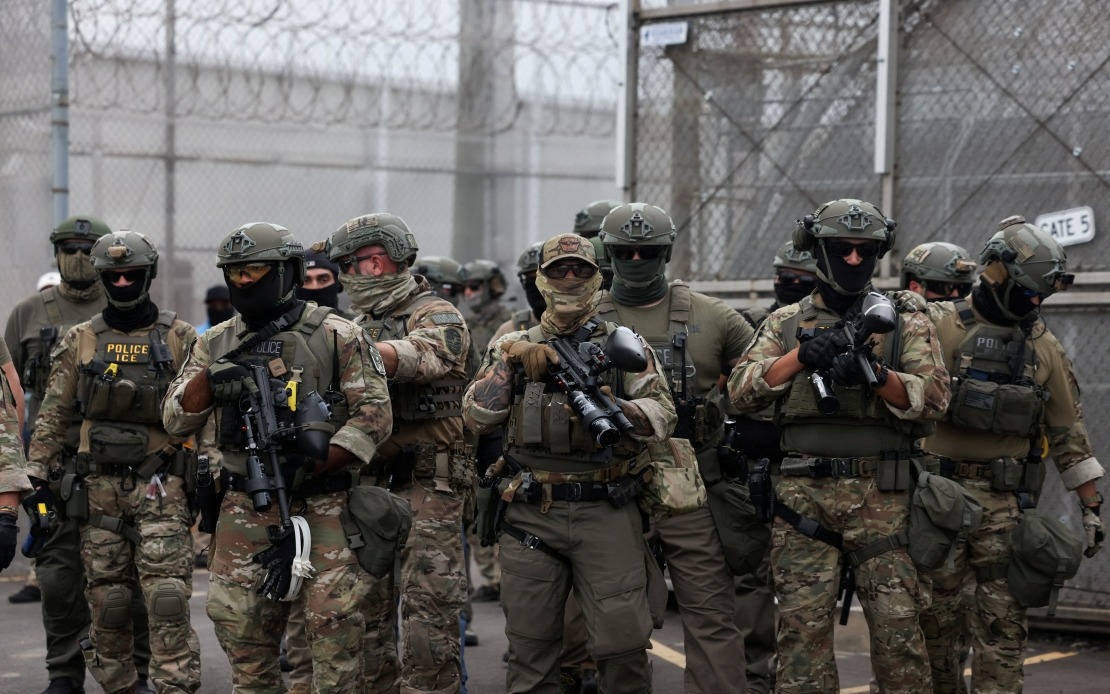
A Mexican national was fatally shot by a United States Immigration and Customs Enforcement (ICE) officer following an altercation that escalated when the man allegedly rammed a federal agent's vehicle and attempted to strike an officer with his own car. The US Department of Homeland Security confirmed the incident occurred in the early morning hours, with the suspect later succumbing to his injuries at hospital. Officials stated the driver had initially refused to comply with officers' commands while remaining inside his vehicle before the confrontation turned violent.
The deceased has been identified as Lorenzo Salgado Araujo, who was alleged to be in the United States unlawfully. The Department of Homeland Security has not disclosed the specific circumstances that led federal agents to initiate contact with Salgado Araujo or the location of the incident, leaving significant gaps in the public understanding of how the situation developed from a routine enforcement operation to a fatal shooting.
In response to the shooting, two separate investigations have been launched to examine the officer's conduct. The Department of Homeland Security opened an internal review process, while the Federal Bureau of Investigation's Houston office assumed responsibility for investigating the alleged assault on a federal officer. This dual investigation approach reflects standard federal protocol when law enforcement uses lethal force, though it also underscores the complexity and sensitivity surrounding such incidents.
The case adds to a troubling pattern of fatal confrontations involving federal law enforcement agents. In January of this year, ICE officers fired upon and killed two United States citizens, Renée Good and Alex Pretti, in circumstances that sparked considerable public backlash and calls for greater accountability. These incidents have prompted ongoing debates within American society regarding the appropriate use of force by immigration enforcement personnel and whether current protocols adequately protect civilians during operations.
Multiple witnesses documented the confrontation involving Salgado Araujo through photographs and video recordings, according to reports from NBC News. The presence of civilian eyewitness documentation carries particular importance given that previous high-profile shootings by federal agents have produced conflicting narratives between official accounts and independent video evidence. This material may prove crucial in clarifying the sequence of events and the threat assessment that prompted the officer to discharge his weapon.
Historical precedent suggests that video evidence in comparable cases has frequently contradicted official explanations provided by law enforcement agencies. These discrepancies have eroded public confidence in statements issued by authorities immediately following such incidents, creating a demand for transparent investigations that account for independent documentation rather than relying solely on officer reports and departmental statements.
For Malaysian readers and Southeast Asian observers, this incident illustrates the complex legal vulnerabilities faced by migrant workers and undocumented individuals within the United States. Immigration enforcement operations in America frequently occur with minimal notice and limited oversight, particularly during early morning hours when resistance and confusion become more likely. The fatal outcome of what began as a traffic stop reflects broader systemic tensions between enforcement priorities and civilian safety protections.
The Department of Homeland Security's limited initial disclosure regarding the incident's context—including why agents targeted Salgado Araujo and the location of the confrontation—exemplifies how official narratives often withhold information pending investigation completion. This approach, while standard procedure, can impede public understanding and fuel speculation about whether protocols were followed and whether alternatives to lethal force were adequately considered.
The implications extend beyond immediate questions about this specific case to encompass broader concerns about immigrant rights protections and the training standards applied to officers conducting enforcement operations. Regional governments in Southeast Asia, including Malaysia, monitor such cases closely as context for understanding how their citizens and documented workers face treatment within American legal systems. Incidents involving fatal force by immigration authorities carry diplomatic weight and influence regional perceptions of American institutional reliability.
The investigation findings will likely address whether the officer's response met standards of proportionality and necessity, whether de-escalation techniques were attempted, and whether the threat assessment justified lethal force. These technical legal questions carry significant weight in determining whether charges or disciplinary action against officers proceed, though political pressure and public opinion increasingly shape outcomes in high-profile cases.
As this investigation develops, the presence of civilian video evidence may prove decisive in either corroborating or contradicting the Department of Homeland Security's account that Salgado Araujo aggressively rammed vehicles and targeted officers. Independent documentation can shift investigative conclusions substantially and may influence whether federal authorities face external accountability mechanisms beyond internal reviews.

