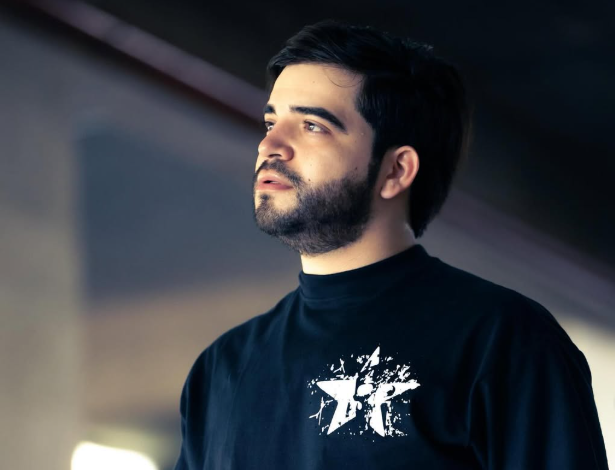
A Mexican comedy influencer with nearly 600,000 TikTok followers was shot dead during a live broadcast in the northwestern city of Culiacan this week, highlighting the escalating danger facing public figures in regions controlled by rival criminal syndicates. Cesar Gastelum, 25, was streaming content with friends outside a fast food restaurant when two people arrived on a motorcycle, both helmeted, and one fired directly at him. The livestream was subsequently taken down from the platform, though video footage and images of the attack continue circulating across social media.
The killing in Culiacan, the capital of Sinaloa state, underscores the precarious security situation in one of Mexico's most dangerous regions. Sinaloa has long been a flashpoint for turf wars between competing drug trafficking organisations seeking dominance over lucrative trafficking routes and distribution networks. The state's significance as a narcotics hub means that criminal violence regularly spills into public spaces and affects ordinary citizens, including those simply going about daily activities.
For Malaysia and Southeast Asian observers, the incident serves as a sobering reminder of how organised crime violence operates in neighbouring countries. While Mexico's drug cartels operate on a vastly different scale than criminal networks in the region, the intersection of social media celebrity culture with personal security risks reflects a broader vulnerability affecting young, visible figures in unstable areas. Southeast Asian governments have increasingly focused on understanding cross-border criminal networks and their methods, making developments in Mexico's conflict landscape relevant to regional security assessments.
The circumstances surrounding Gastelum's death mirror a similarly brazen killing months earlier. In May, beauty influencer Valeria Marquez, 23, was shot dead during a TikTok livestream at a salon in Zapopan, Jalisco, when an armed individual entered and opened fire. Marquez's death triggered investigations under Mexico's femicide protocols, reflecting concerns about violence disproportionately targeting women. Both incidents demonstrate that digital content creators have become vulnerable to organised crime, whether through direct targeting or as collateral victims of broader gang conflicts.
Authorities in Mexico have increasingly linked these high-profile killings to specific criminal organisations and individuals. In July, security forces arrested Ramon Angel Alvarez Ayala, known operationally as "El R-1," in Jalisco. Security Minister Omar Garcia Harfuch identified Alvarez Ayala as leading a criminal cell with ties to the Jalisco New Generation Cartel (CJNG), one of Mexico's most powerful and violent organisations. Prosecutors have connected him to Marquez's killing and have accused him of ordering and financing the November killing of Uruapan mayor Carlos Manzo, revealing how cartel leadership structures operate across multiple criminal enterprises.
The pattern of violence suggests that criminal organisations in Mexico increasingly view public figures as targets for intimidation, territorial messaging, or factional disputes. Unlike conventional organised crime killings that often go unsolved or unreported, livestreamed murders achieve maximum visibility and psychological impact. This represents a tactical shift where criminals exploit digital platforms to amplify fear and demonstrate their reach and capacity for violence in broad daylight.
For content creators operating in Mexico's unstable regions, the risks have become impossible to ignore. While many influencers operate in relatively safer urban areas, those in conflict zones face dual vulnerabilities: they are highly visible through their social media presence and they often broadcast from locations predictable to observers. The combination creates operational opportunities for criminal actors seeking to make statements or eliminate rivals.
Mexican authorities have responded by deploying military personnel and federal police to Culiacan and other violence hotspots, yet the persistence of high-profile killings suggests these measures have limited effectiveness in deterring cartel violence. The removal of livestream footage by platforms provides some containment of graphic material, but does not address the underlying security failures that allow armed individuals to approach and kill people in public venues.
The incidents also raise questions about institutional fragility in affected regions. Local police initially misidentified Gastelum as a delivery worker, reflecting either limited information-gathering capacity or inadequate coordination among security agencies. Such gaps create environments where criminals operate with apparent impunity, knowing that initial investigative responses may be slow or ineffective.
For Southeast Asian policymakers and security analysts monitoring organised crime trends, Mexico's experience offers cautionary lessons about how cartel violence increasingly intersects with digital culture and youth-oriented sectors. As social media continues expanding in the region and young people build followings on TikTok, Instagram, and other platforms, understanding how organised crime exploits visibility and online presence becomes strategically relevant. Southeast Asian governments have been strengthening cybercrime and digital security capabilities; extending these frameworks to protect content creators from organised crime threats represents an emerging policy consideration.
The broader implication of these killings extends beyond individual tragedies. They signal the erosion of public safety in significant population centres and reflect how powerful criminal syndicates operate with minimal constraint. In Culiacan particularly, where Sinaloa Cartel factions have competed intensely for control, the capacity to execute someone during a public livestream suggests that criminals possess either explicit territorial dominance or sufficient security penetration to predict and intercept targets.
Moving forward, Mexican authorities face mounting pressure to restore public confidence through more effective investigations and prosecutions. The arrest of Alvarez Ayala demonstrates capacity for targeting cartel leadership, but conviction rates and actual sentence lengths remain critical measures of institutional effectiveness. For young Mexicans considering careers as content creators, personal security planning has become an unavoidable professional consideration.

