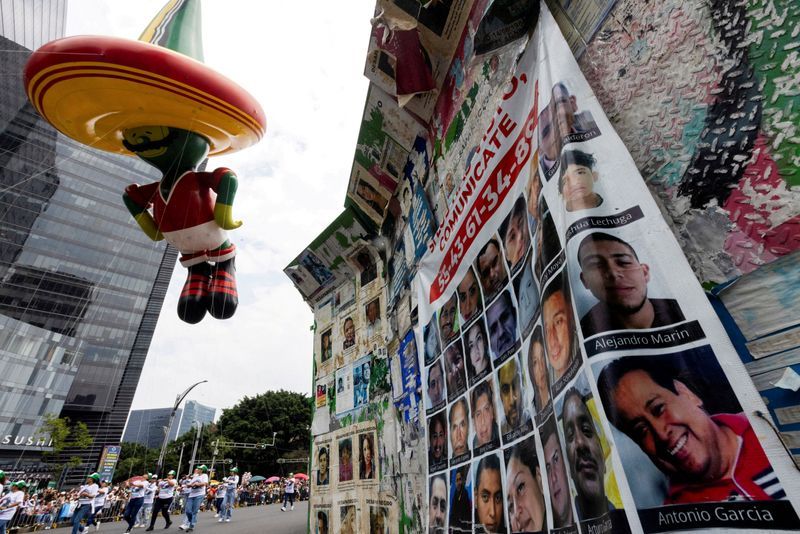
The Mexican capital presented a striking visual paradox during the 2026 World Cup campaign. While Mexico City's iconic Paseo de Reforma bustled with massive screens celebrating the national team's quarter-final push against England, those same streets displayed haunting reminders of an ongoing tragedy: posters bearing the faces of more than 135,000 missing people. This jarring juxtaposition captured the complicated emotional landscape facing many Mexicans—the simultaneous desire to embrace national pride and the impossible ability to ignore persistent suffering that has defined the country for two decades.
The scale of Mexico's missing persons crisis became acute after 2006, when then-President Felipe Calderón initiated an aggressive military campaign against drug trafficking organisations. The subsequent two decades witnessed a dramatic expansion of disappearances, transforming the absence of loved ones into a defining feature of Mexican society. For thousands of families, no sporting achievement could erase the daily reality of searching for relatives who vanished under circumstances often clouded by suspected cartel or state involvement. The visual presence of these missing persons posters along Mexico City's primary thoroughfare served as a deliberate counter-narrative to the celebratory World Cup atmosphere, forcing passersby to confront what many wished to temporarily forget.
The World Cup campaign itself provided undeniable grounds for celebration. Mexico's path to the knockout stages proved remarkable—the team navigated the group phase undefeated and without conceding a goal, demonstrating tactical discipline and competitive quality. The subsequent victory over Ecuador marked Mexico's first World Cup knockout-stage triumph in four decades, a genuinely historic achievement for a nation with passionate football culture. Yet even this sporting milestone became entangled with tragedy when four people died during celebratory gatherings along Reforma, transforming joy into grief for families suddenly confronting loss amid the supposed festivity.
Beyond security concerns, the tournament exposed economic divisions within Mexican society. While the World Cup unfolded across shared stadiums, ticket prices soared beyond reach for ordinary supporters. Tournament organisers priced matches at figures running into thousands of dollars, effectively creating a two-tiered viewing experience where passion for the national team meant little without substantial purchasing power. This accessibility problem represented not merely a logistical challenge but a reflection of deeper inequality, preventing working-class Mexicans from experiencing live what their wealthier compatriots could easily attend.
Economic hardship extended well beyond stadium access. Despite inflation showing modest improvement in early June, Mexico's core inflation rate stubbornly remained above the Bank of Mexico's three-percent target. Families budgeting for basic necessities faced persistent cost pressures that had compressed household finances throughout the preceding months. The World Cup, rather than providing genuine economic relief, instead offered temporary psychological escape—what observers described as a "national dopamine rush" that allowed citizens to mentally disengage from uncomfortable financial realities, at least temporarily.
The tournament also became a lightning rod for political grievances. Members of the CNTE teachers' union established protest encampments throughout Mexico City's central areas, their tents blocking major roadways and disrupting normal life. These educators demanded government fulfilment of campaign promises to repeal a 2007 pension reform law that had restructured benefits and social security protections for public-sector workers, while simultaneously pressing for salary increases. The contrast between World Cup celebrations and teachers demanding basic economic recognition highlighted how sporting events could overshadow urgent labour disputes and social demands requiring immediate government attention.
Anti-World Cup graffiti covered walls throughout Mexico City and around the Azteca Stadium, a visual protest movement reflecting broader scepticism about the tournament's value given competing national priorities. Rather than viewing the World Cup as a unifying moment for national progress, some Mexicans interpreted the investment in hosting matches as misallocated resources that could have addressed missing persons investigations, economic inequality, or worker compensation. This critical perspective, though minority in voice, represented a substantial portion of national opinion unwilling to suspend judgment about government priorities even during moments of sporting triumph.
Mexican President Claudia Sheinbaum maintained strong public approval despite these undercurrents, with polling published by El Financiero indicating 69 percent approval ratings in mid-tournament—actually reversing a slight decline from March. The government emphasised that locating missing persons constituted a national priority, attempting to demonstrate commitment to resolving the crisis even as World Cup fever consumed media attention. Whether this stated commitment would translate into concrete results remained unclear, particularly given competing budget pressures and the historical difficulty of investigating disappearances involving organised crime networks.
Observers including local journalist Carlos Mendoza articulated the psychological tension facing Mexican citizens: the simultaneous capacity to experience intense patriotic joy during football matches while maintaining critical awareness of governance failures and societal dysfunction. "You can get excited about 90 minutes of football. You can worry about the country, get angry at FIFA, and detest the politics and organisation of the Mexico City government," as local politician Rodrigo Cordera framed it on social media. This sophisticated emotional duality reflected mature civic consciousness—the ability to celebrate achievement without surrendering critical evaluation of institutional performance.
Yet the fundamental concern among many Mexicans centred on whether World Cup enthusiasm would actually improve national conditions or merely delay necessary reckoning with serious problems. Resident Alejandra Gonzalez captured this worry when suggesting that "the tournament does not clear our troubles but places them in a lower priority among society, and the government leverages the euphoria to delay relevant and urgent decisions." This fear that sporting distraction might substitute for substantive policy action represented a legitimate concern given Mexico's history of crises being shelved during periods of national attention capture by other events.
The deeper implication for Southeast Asian readers involved understanding how sporting tournaments in developing economies often mask rather than resolve underlying governance challenges. Whether in Mexico, Malaysia, or elsewhere, major sporting events created temporary national cohesion while structural problems—corruption, inequality, missing persons, labour disputes—persisted beneath celebratory surfaces. The question for any nation hosting large tournaments involved whether the temporary unity such events generated could be channelled toward addressing the urgent matters that graffiti artists and protest movements insisted on highlighting, or whether euphoria would ultimately evaporate once stadiums closed and normalcy returned.

