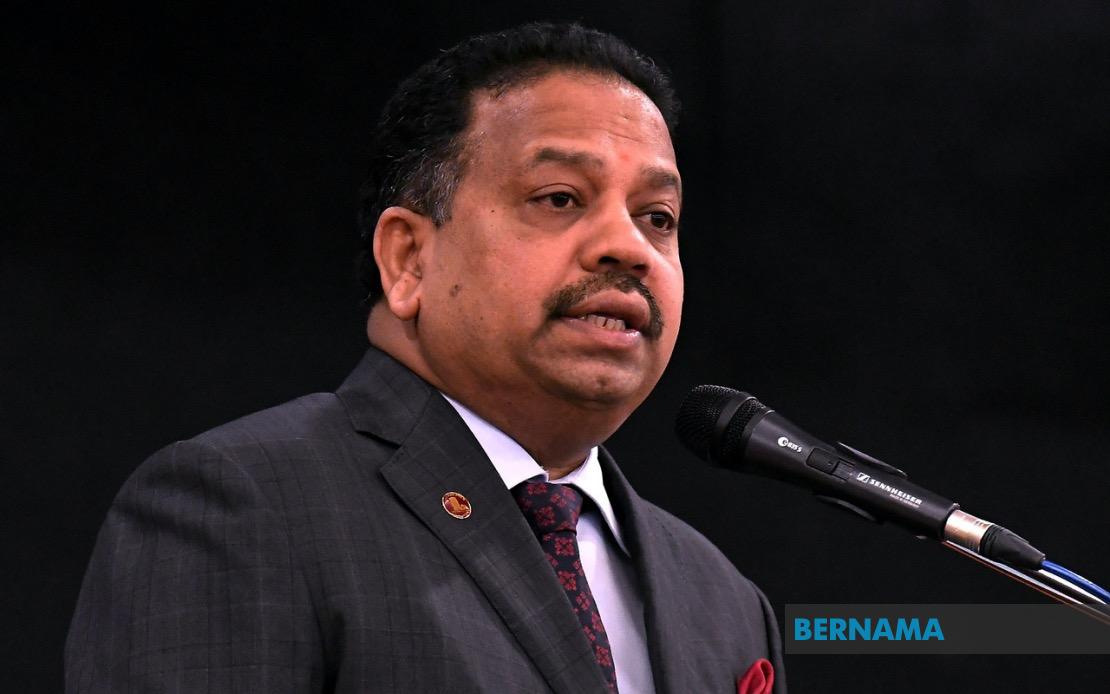
Tan Sri S.A. Vigneswaran, president of the Malaysian Indian Congress, has projected that the Indian community will continue backing Barisan Nasional candidates in tomorrow's Johor state election, particularly those fielded by MIC across four contested constituencies. Speaking at a press conference in Kulai, he anchored his optimism on what he characterised as a productive working relationship between MIC and both the federal and state administrations in tackling issues affecting Indian Malaysians. The confidence reflects MIC's assessment that meaningful engagement with government structures has yielded tangible results for the community it represents.
Vigneswaran emphasised that electoral success depends on fielding representatives capable of engaging constructively with state authorities to translate campaign promises into practical solutions. This statement underscores a particular political philosophy within MIC—one that prioritises institutional collaboration over adversarial opposition politics. For Indian voters in Johor, the calculus presented is straightforward: candidates who maintain positive working relationships with the machinery of government can deliver more effectively than those adopting confrontational stances. This framing appeals to a constituency often concerned with bread-and-butter issues such as education, employment, and property rights rather than ideological clashes.
The MIC campaign strategy has deliberately eschewed personal attacks on opponents, instead concentrating on presenting substantive policy alternatives to voter constituencies. Vigneswaran characterised this as a mature approach to electoral competition, suggesting that dignified discourse and solution-focused messaging would resonate more powerfully with Indian voters than negative campaigning. This positioning also serves to differentiate MIC within the broader coalition, projecting an image of responsibility and statesmanship that could appeal beyond the party's traditional base to swing voters in mixed constituencies.
The party is fielding four candidates across the 16th Johor state election cycle. K. Raven Kumar contests the Kemelah seat, V. Rugendran seeks election in Kahang, P. Pannir Selvam is the MIC standard-bearer in Perling, and R. Kumaran campaigns in Bukit Batu. These four constituencies represent MIC's footprint in Johor's electoral geography, districts where Indian voters constitute meaningful portions of the electorate. The breadth of MIC's slate, though modest compared to larger parties, reflects its role as a component member within the BN coalition framework.
A controversy surrounding government funding claims has clouded the party's campaign narrative. A Tamil-language portal reported that MIC had received RM221 million in government funds, an allegation that Vigneswaran swiftly disputed as inaccurate and misleading. Rather than dismiss the report entirely, he provided detailed clarification regarding the actual source and purpose of the assistance in question. This measured response suggests an attempt to defuse the issue through transparency rather than confrontation, though such disputes can nonetheless create perceptual damage among voters sensitive to questions of institutional integrity.
According to Vigneswaran's explanation, the funds in question constitute annual grants specifically allocated to AIMST University, a private higher education institution operated by a foundation rather than a political party. Since Prime Minister Datuk Seri Anwar Ibrahim assumed office in 2023, the government has provided RM25 million annually to the university, including the current financial year. These allocations are subject to audit and directed towards operational priorities such as infrastructure maintenance and cost reduction measures. The distinction between party funding and institutional support is crucial, though one that requires careful explanation to avoid public misunderstanding.
The university utilises government grants to fund facility upgrades, renewable energy installations, and operational efficiency improvements. A primary objective of these expenditures is to maintain student fee structures at levels accessible to lower-income families, thereby reducing the financial barriers that might otherwise prevent economically disadvantaged students from pursuing higher education. This framing positions government support not as party patronage but as investment in human capital development and educational access—a narrative with broader appeal beyond the Indian community.
MIC has instructed its legal representatives to issue a formal demand letter to the Tamil portal, requiring that the publication correct its reporting and retract the defamatory allegations. This legal escalation reflects the party's determination to contest what it views as deliberately misleading information disseminated during a sensitive electoral period. The move signals that MIC will not permit unchallenged assertions that could undermine voter confidence, particularly among Indian constituents who may already harbour suspicions regarding the distribution of public resources along communal lines.
The Johor state election occurs within a broader context of coalition management within Malaysia's political system. MIC's performance in this poll carries implications beyond Johor itself, serving as an indicator of Indian community political preferences and the effectiveness of the BN coalition in maintaining minority community support. The convergence of strong performance by MIC-backed candidates with general BN success would reinforce narratives about effective multi-ethnic governance and institutional continuity. Conversely, disappointing results could prompt questions about whether Indian voters are experiencing declining electoral incentives to maintain support for the coalition.
Sigma analysis suggests that Indian voting behaviour in Johor remains influenced by pragmatic considerations regarding government access and service delivery rather than primarily by identity-based or ideological considerations. Vigneswaran's emphasis on collaborative governance reflects this understanding, positioning MIC representatives as functional intermediaries between community constituents and state apparatus rather than as ideological warriors engaged in abstract political contests. Whether this appeal suffices to mobilise sufficient turnout and consolidate Indian voter support will become evident in election returns.

