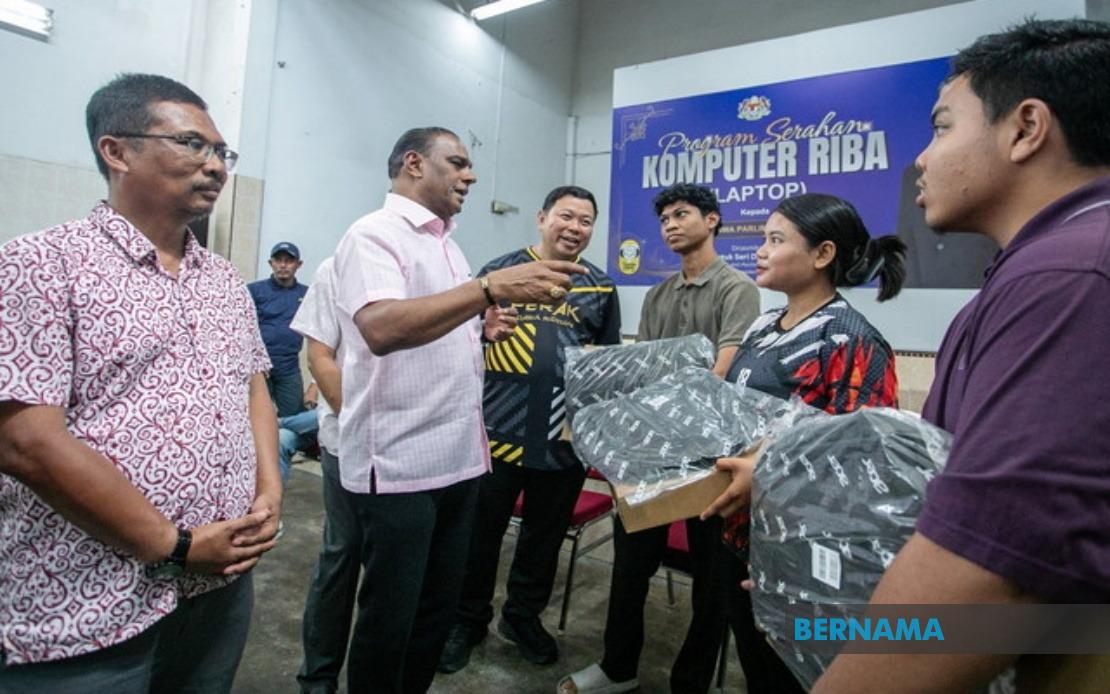
The Malaysian Indian Congress (MIC) has committed to defending its sole constituency in the upcoming Melaka state election, though the party is simultaneously exploring opportunities to broaden its electoral footprint by contesting additional seats, according to statements made by deputy president Datuk Seri M. Saravanan this week.
Speaking in Tapah on August 16, Saravanan indicated that no final determination has been reached regarding seat expansion, with the party leadership currently undertaking a comprehensive assessment of potential opportunities. The deliberation process encompasses multiple variables that will ultimately influence the party's decision-making framework, including the demographic viability of targeted constituencies, the calibre and electability of prospective candidates, and realistic appraisals of victory prospects in each contested area.
Party president Tan Sri S A Vigneswaran is actively involved in evaluating potential candidates across these constituencies, a process Saravanan suggested would yield concrete outcomes imminently. This methodical approach reflects MIC's attempt to maximise its electoral impact in a state where the party has traditionally maintained limited representation, particularly among the Indian community which comprises a modest but strategically important voter segment in Melaka's electoral landscape.
MIC's defensive posture regarding the Gadek seat carries particular significance given the constituency's history. In the 2021 state election, MIC candidate VP Shanmugam secured victory under the Barisan Nasional banner with a relatively narrow margin of 559 votes in a contested six-way race. This thin victory underscores the competitive nature of the constituency and the importance of retaining this asset as the party rebuilds its statewide presence.
Beyond candidate selection, MIC has commenced comprehensive election preparation activities designed to establish a robust organisational foundation ahead of polling day. These initiatives focus on granular voter identification work, particularly concentrating on mobilising the party's traditional support base. The party recognises that understanding electoral demography at the grassroots level remains essential for converting party machinery into actual votes on election day.
Concomitantly, MIC is conducting issues-mapping exercises to identify pressing concerns within communities it intends to contest. This strategic focus on contemporary voter grievances reflects a recognition that state elections are increasingly determined by bread-and-butter concerns rather than purely communal or historical party loyalty. By identifying salient issues affecting voters—whether economic hardship, inadequate public services, or infrastructure deficiencies—the party aims to craft messaging that resonates beyond traditional Indian community networks.
The party's cautious expansion strategy represents a measured approach within Malaysia's complex ethnic and political landscape. As a component of Barisan Nasional and a party primarily representing Indian interests, MIC operates within clearly defined competitive spaces where larger parties and alternative political coalitions have competing claims. The decision to carefully evaluate each potential seat reflects an understanding that hasty expansion could dilute resources across unwinnable constituencies, whereas strategic and selective growth allows concentrated effort where victory remains achievable.
For Malaysian and regional observers, MIC's positioning in Melaka assumes broader significance. The party functions as a barometer of Barisan Nasional's capacity to retain multiethnic coalition partners and maintain electoral relevance in an increasingly fragmented political environment. The Indian community's electoral behaviour across Malaysia has demonstrated volatility over recent election cycles, with voters sometimes punishing or rewarding component parties based on perceived indifference to community interests. MIC's revival efforts thus carry implications extending beyond Melaka state boundaries.
The timing of these preparations proves significant, occurring amid broader political recalibration across Southeast Asia where ethnic and religious tensions periodically surface as electoral dynamics shift. Malaysia's ability to maintain stable multiethnic coalitions depends partly on component parties like MIC retaining genuine political viability rather than becoming ceremonial appendages. Melaka's election thus provides an early test of whether MIC can genuinely mobilise support or whether Indian voters have permanently shifted preferences toward competing political vehicles.
Looking forward, the party's expansion calculus will likely depend on candidate quality and local political dynamics in specific constituencies. Should high-calibre candidates become available in constituencies with substantial Indian populations or positive polling indicators, MIC may aggressively pursue expansion. Conversely, if candidate recruitment proves challenging or local conditions appear unfavourable, the party may consolidate resources around Gadek and perhaps one or two additional winnable seats.
The outcome of these decisions will inform broader assessments of Barisan Nasional's ability to coordinate multiethnic component parties and whether traditional coalition structures remain viable in contemporary Malaysian politics. For MIC specifically, the Melaka election represents a crucial opportunity to demonstrate renewed electoral relevance and organisational capacity.

