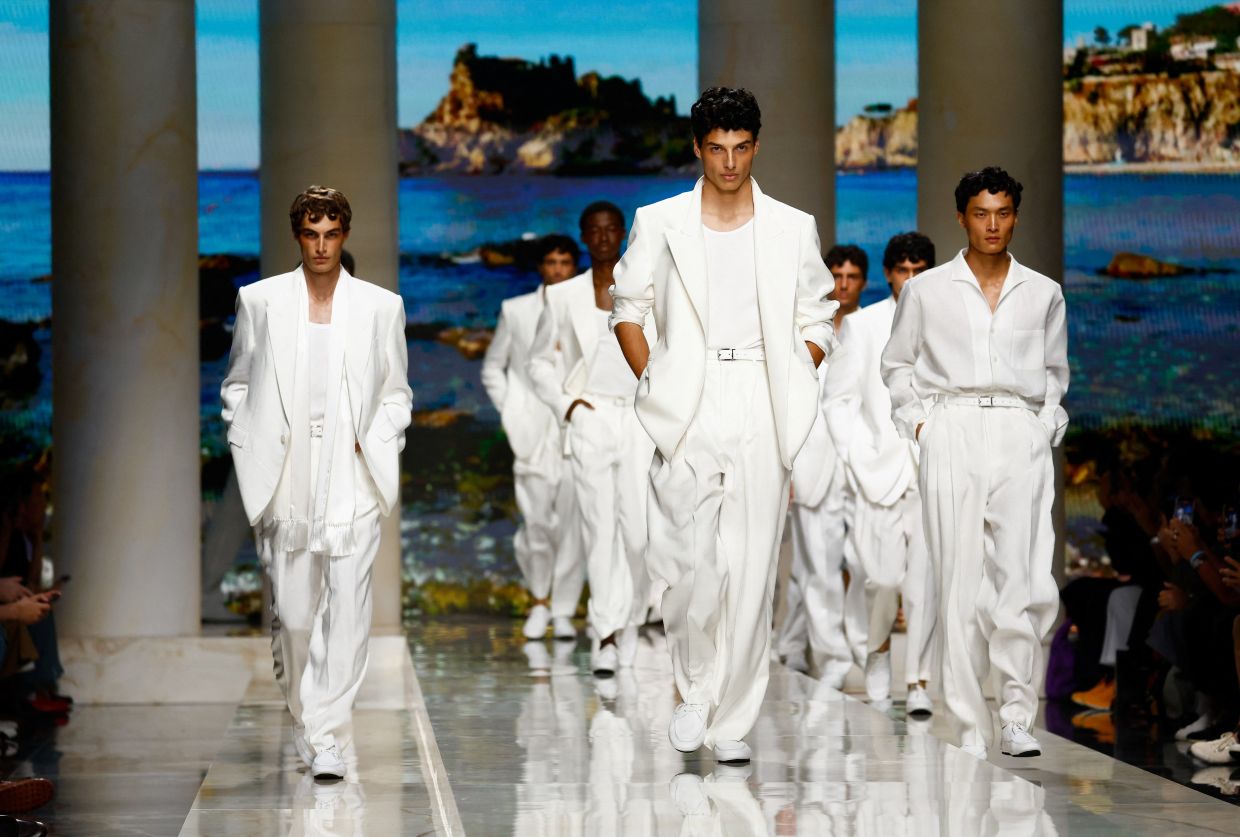
The menswear collections unveiled during Milan Fashion Week this month reflected a broader shift in designer thinking as the industry grappled with complex global circumstances. Rather than introducing radical innovations, the fashion capital's most influential designers chose to refine and simplify, demonstrating that restraint and considered design could resonate powerfully with audiences navigating economic headwinds, geopolitical volatility, and the practical challenge of dressing stylishly in stifling heat. The consensus emerging from the runway suggested that complexity, whether in cut or concept, had given way to a more measured aesthetic anchored in timeless tailoring and refined proportions.
Prada's collection, steered by co-creative directors Miuccia Prada and Raf Simons, exemplified this philosophy most clearly. Their approach centred on the proposition that familiar garments could be reinvented through intelligent manipulation of proportion and fabric choice rather than through wholesale reinvention. This philosophy represented a philosophical departure from the industry's occasional tendency toward experimentation for its own sake. The designers' argument—that simplicity itself could be a form of sophisticated storytelling—resonated throughout the week's presentations, with numerous collections echoing similar sentiments about purity of form.
One of the season's most conspicuous contradictions was the unexpected prevalence of leather across collections, a choice that seemed to defy the practical realities of dressing for summer warmth. Rather than viewing this as a limitation, designers approached it as a design challenge worthy of technical innovation. Prada's leather offerings drew conceptual inspiration from the democratic universality of denim, translating that accessibility into tailored pieces featuring slim five-pocket construction and cropped jackets that blurred the distinction between outerwear and shirting. Simultaneously, other designers experimented with woven and perforated leather techniques, engineering breathability into material traditionally associated with insulation and weight. This commitment to luxury materials despite climatic constraints suggested that Milan's elite understood their clientele would invest in appropriate environmental solutions—whether air-conditioned transport, resort escapes, or simply the altitude of mountain retreats.
The relationship between luxury and practicality that emerged across the week illuminated a fundamental tension within contemporary menswear design. After years during which generous, oversized silhouettes dominated runways and street style, the collections showed a decisive return to garments that acknowledged and engaged with the male form. This shift represented more than merely aesthetic preference; it reflected changing attitudes toward how masculine identity could be expressed through fashion, moving away from the aggressive informality of oversized silhouettes toward a more considered engagement with tailored structure.
Designers broadly maintained that the formal suit remained essential to a well-dressed man's wardrobe, but they grappled seriously with the challenge of making such structures viable in high temperatures. Their solution emphasised ventilation—dress shirts worn unbuttoned, sometimes rendered semi-transparent, or eliminated entirely in favour of exposed chest and torso. Long trousers persisted as the dominant silhouette, but the overall construction moved decidedly closer to the body, creating a visual tautness that contrasted sharply with recent seasons' looser aesthetics. Dolce & Gabbana pushed this philosophy to its conceptual extreme with microshorts that deliberately showcased muscular physiques, while other houses experimented with strategic exposure of the torso. This recalibration of menswear proportions suggested a new confidence in presenting the male body as worthy of fashion's aesthetic consideration.
Tailoring itself underwent significant evolution, softening in construction while retaining its formal authority. Designers opened necklines, experimented with fabric weights and weaves that encouraged airflow, and reconsidered internal architecture to reduce unnecessary layers and bulk. The result was tailoring that accommodated warmer temperatures without sacrificing the silhouette's inherent formality or prestige. Thom Browne, the American designer now operating under Zegna ownership, marked his return to Milan after a 15-year absence with collections that layered seersucker and pleated skirts—both materials and constructions traditionally associated with summer dressing—into sophisticated tailored narratives. His reintroduction to the Milan calendar symbolised both the city's continued drawing power and the global reach of Italian fashion infrastructure.
Not all designers embraced the season's general inclination toward restraint. Philipp Plein presented crystal-encrusted denim that demanded days of meticulous handwork to complete, representing a deliberate assertion of labour-intensive maximalism. Dolce & Gabbana similarly doubled down on embellishment, incorporating beaded detailing that evoked coral formations and pushed against the minimalist tide. These collections existed in productive tension with the season's dominant philosophy, offering alternative visions of menswear luxury that prioritised decoration, visual spectacle, and unapologetic glamour over reduction and simplicity. This plurality of aesthetic approaches suggested that Milan's menswear community remained capacious enough to accommodate fundamentally different design philosophies simultaneously.
The lighter calendar for Spring/Summer 2027 created meaningful opportunities for emerging designers to establish themselves alongside the industry's established powerhouses. Martin Quad made his Milan debut with unconventional tailoring techniques that had already generated attention in his native Copenhagen, while Domenico Orefice presented a co-ed collection that engaged richly with leather and densely woven textiles. Japanese designer Shinya Kozuka's Shinyakozuka label made its Milan premiere with what many observers identified as among the season's most poetically summery presentations—a particularly striking image featured a bare-chested model wearing a voluminous sheer teal coat over generous cream-coloured trousers, capturing the essential spirit of the season's rebalancing of formality and practicality.
Milan's menswear week ultimately conveyed a clear message about the direction of men's fashion at a moment of considerable uncertainty. The suit, long subject to periodic pronouncements of its decline, remained fundamentally viable and culturally significant. However, the suit itself was evolving, becoming more responsive to environmental realities, more engaged with the body's actual contours, and more willing to experiment with construction techniques that privileged wearability without sacrificing elegance. This adaptation suggested that fashion's response to global turbulence was not retreat into nostalgia or embrace of novelty for its own sake, but rather a careful reconsideration of foundational garments through a contemporary lens.

