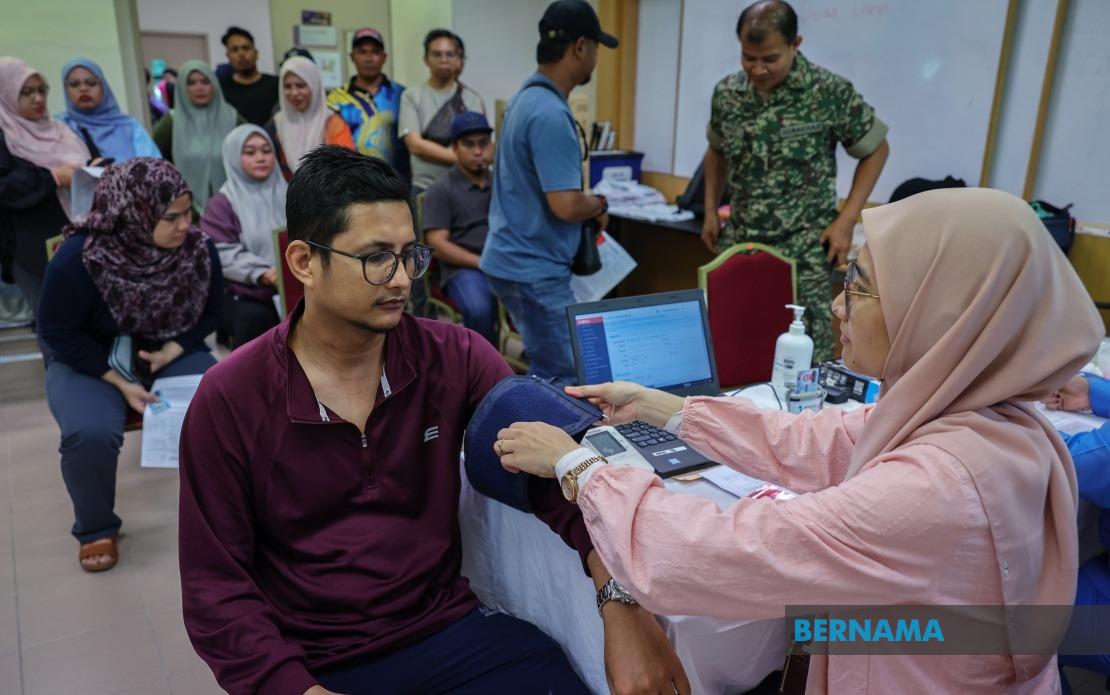
The Royal Malaysian Armed Forces brought free medical and dental services to residents of Baling, Kedah this week as part of a wider civil-military cooperation programme designed to deepen connections between the military and local populations. The initiative, which ran from Tuesday through Thursday at Sultan Abdul Halim Mu'adzam Shah International Islamic University in Kuala Ketil, combined the conclusion of a commando training course with direct health interventions that reached hundreds of community members seeking treatment without the usual costs and delays associated with private clinics.
The programme operated under the CIMIC framework—a strategic approach that positions military medical expertise as a community resource. Two specialised medical wings, the Medical Community Assistance Programme and the Dental Community Assistance Programme, staffed the event with Royal Medical Corps personnel and dental officers from the 2nd Medical Battalion. This structure allowed the military to offer layered services: basic dental work including fillings, scaling, and extractions ran concurrently with comprehensive health screenings that assessed blood pressure, blood sugar levels, and body mass index. The coordination reflected a partnership between the Ministry of Health's Baling District Office and armed forces medical services, demonstrating how government agencies can pool resources to address rural healthcare gaps.
For working families with limited time to access traditional healthcare facilities, the convenience factor proved significant. Siti Salmiah Said, a 28-year-old factory worker, seized the opportunity to bring her entire household for treatment, avoiding the scheduling friction typical of civilian dental clinics. She obtained immediate scaling treatment, while her husband underwent the same procedure and her six-year-old child received a filling—all without the usual appointment delays. Such accounts highlight how mobile military medical units can alleviate pressure on already-stretched public health infrastructure, particularly in districts like Baling where the nearest major healthcare centres may require significant travel time.
The financial dimension extended beyond the obvious cost savings. Adam Ruzlan, a 26-year-old legal assistant, noted that receiving both treatment and professional dental advice on the same day compressed what would typically require multiple visits. Military dentists provided education about plaque and tartar accumulation, reinforcing preventive practices that strengthen long-term oral health outcomes. This educational component distinguishes the initiative from transactional service delivery; by explaining proper oral hygiene and encouraging regular check-ups, the medical teams planted seeds for sustained health consciousness within the community.
G. Devindran, who recalled a similar military medical outreach 28 years prior, observed marked improvements in service speed and equipment sophistication. He underwent a full battery of screenings—dental examination, blood pressure assessment, blood sugar testing, and BMI measurement—within a single visit, then received a filling through DENCAP. His observation underscores how decades of institutional development have enhanced the military's capacity to deliver healthcare efficiently, permitting faster processing without sacrificing quality.
The programme's responsiveness to medical emergencies tested its operational readiness. When a child experienced dizziness and nausea during the event, Civil Defence Force personnel rapidly transported her to the MEDCAP tent, where military staff conducted vital sign checks and administered medication. Norhasliza Nayan, the child's mother, interpreted this swift intervention as evidence that such initiatives merit expansion to other large-scale public gatherings. The episode revealed how peacetime health deployment functions as both service provision and practical training for military medical personnel.
Captain Dr Muhammad Afiq Ishak, a dental officer from the 2nd Medical Battalion, explained that DENCAP focused on foundational dental services with an emphasis on preventive awareness. The team identified individuals at risk for chronic conditions like hypertension and diabetes, conducting supplementary screenings and referring complex cases to nearby civilian clinics for continued care. This tiered approach—managing straightforward cases on-site while preserving referral pathways for complicated presentations—reflects sensible resource allocation that complements rather than circumvents the public health system.
Lieutenant Colonel Dr Atiff Abdul Aziz, overseeing both MEDCAP and DENCAP at the Special Warfare Training Centre, situated the healthcare initiative within a broader "Army with the People" programme that transcended purely medical objectives. The Baling District Health Office contributed general screening capacity and mental health awareness campaigns aimed at reducing stigma—a critical intervention for rural populations where mental health remains frequently underdiscussed. This multipronged approach addressed physical health, psychological wellbeing, and public health literacy simultaneously.
The associated blood donation drive, managed in coordination with Sultan Abdul Halim Hospital in Sungai Petani, represented another dimension of the CIMIC framework. By collecting approximately 100 bags daily throughout the event, the military mobilised community participation in medical supply chains, transforming attendees from passive healthcare consumers into contributors to the broader health system. Such integration strengthens perceptions of mutual responsibility between civilians and armed forces.
For Malaysian policymakers evaluating rural healthcare delivery models, the Baling initiative offers practical lessons. Military medical assets—particularly in countries with substantial defence budgets and trained personnel—represent underutilised healthcare infrastructure that can address accessibility gaps without significantly burdening civilian systems. The coordination with the Ministry of Health demonstrates that civil-military collaboration need not involve competing institutional interests; instead, aligned objectives around population health create synergies that amplify service reach and efficiency.
The programme's timing—concluding a commando course—embodied a strategic messaging component. By associating military training with humanitarian community service, the armed forces cultivated positive public perception and demonstrated that defence institutions serve civilian populations directly. This soft diplomacy dimension proves particularly valuable in societies where civil-military relations warrant continuous reinforcement through concrete acts of public service.
Expanding such initiatives across Malaysia's more remote districts could yield significant returns. Rural areas across Sabah, Sarawak, Pahang, and other states where medical infrastructure remains sparse could benefit from periodic military medical deployments. Strategic planning, adequate resource allocation, and institutional coordination with state health authorities would enable scaling without creating sustainability challenges. The Baling model, though modest in absolute numbers served, demonstrates technical feasibility and public receptiveness.

