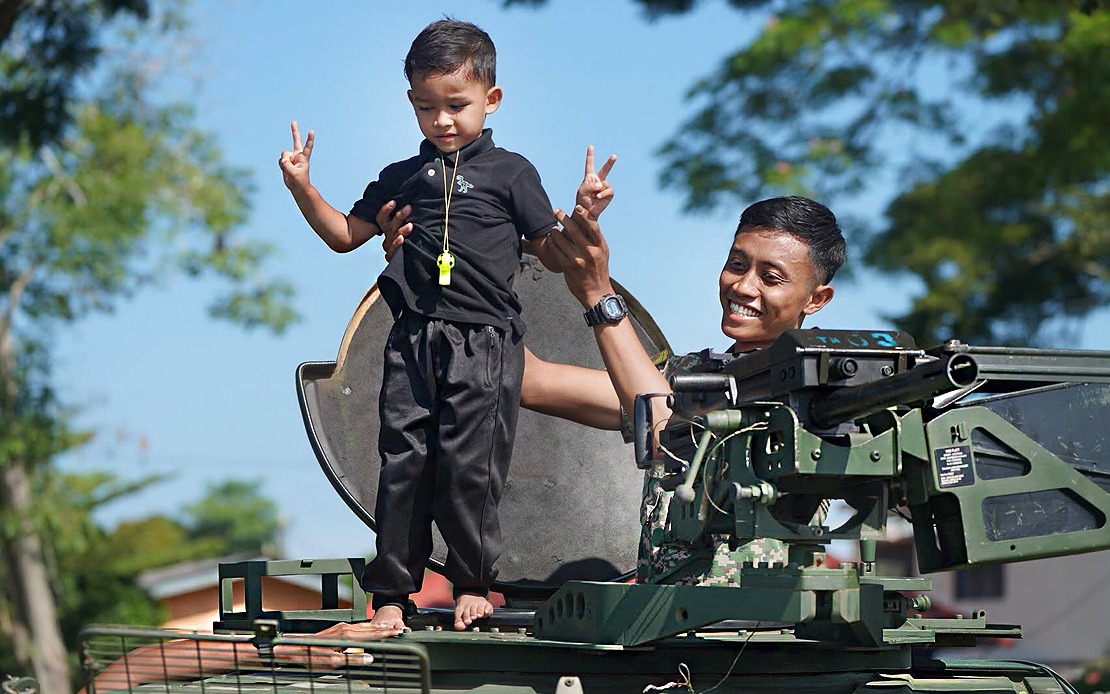
The Ministry of Defence has intensified efforts to strengthen bonds between the Malaysian Armed Forces and the community in Alor Gajah, rolling out a comprehensive social initiative that blends welfare provision with infrastructure development. Held at Padang Awam Kampung Gadek, the 'Program Jiwa Murni MADANI' represents a strategic effort to position defence and security institutions as active participants in civilian welfare and grassroots engagement rather than purely military entities.
This shift reflects a growing recognition across Southeast Asia that armed forces can play meaningful roles beyond security functions. By embedding the military in community development, Malaysia aims to foster trust, improve civil-military cohesion, and demonstrate how defence assets and personnel can address everyday local concerns. The Alor Gajah initiative illustrates this approach in practice, bringing together defence officials, soldiers, and community members for coordinated social action that touches health, economic opportunity, infrastructure, and spiritual life.
The scope of the programme was notably broad. Free health screenings provided direct medical support to residents, while career and volunteer exhibitions introduced locals to employment and civic participation opportunities. Entrepreneurship sessions and RAHMAH sales promoted economic engagement, and sports competitions fostered community recreation and bonding. Mobile government service counters brought administrative services directly to citizens, reducing bureaucratic friction and improving accessibility to state support. Together, these initiatives present the armed forces as embedded in the fabric of community life rather than removed from civilian concerns.
The infrastructure component carried substantial weight. The 9th Squadron of the Royal Engineers Regiment executed five community projects valued at RM179,200, demonstrating concrete resource commitment. These projects—playground repairs in Kampung Baru, school fencing at Sekolah Jenis Kebangsaan Tamil Durian Tunggal, futsal court construction in Taman Seri Kelemak, madrasah roof repairs at Seri Kemuning, and surau renovation at Kampung Paya Datuk Hilir—directly improved public facilities across multiple communities. By channelling military engineering capacity toward civilian benefit, Malaysia leverages existing defence infrastructure and expertise in ways that build goodwill and tangible improvements to local quality of life.
Deputy Defence Minister Adly Zahari's presentation of RM133,000 in funding represented a second pillar of support, distributed through the Service Centre Initiative to eight recipients serving diverse community needs. This funding benefited suraus, temples, shrines, and a school across the district, reinforcing the programme's inclusive character. The selection of recipients—spanning Islamic prayer houses, Hindu temples, Chinese shrines, and educational institutions—signals intentional outreach across religious and cultural boundaries, reflecting Malaysia's multicultural context and the defence ministry's commitment to serving all community segments equitably.
The distribution of 500 RAHMAH baskets to military veterans and residents demonstrated attention to vulnerable populations. These baskets, part of the government's broader price-control initiative, directly address cost-of-living pressures that have intensified across Malaysia and the region. By directing these resources toward MAF veterans, the programme also acknowledges its unique obligation to those who have served, reinforcing the social contract between the state and its defence personnel. This dual focus—supporting both general residents and veterans—reveals a holistic welfare approach that recognises interconnected vulnerabilities.
Complementing the social programme, the Religious Corps of the Malaysian Armed Forces organised 'Program Ilmu dan Muafakat MADANI' at Masjid Kelemak, combining spiritual engagement with community conversation. The programme included congregational prayers, religious lectures, charitable contributions, and direct mosque congregation engagement. This dimension is particularly significant in Malaysia's context, where Islam occupies a central role in national identity and governance. By integrating religious practice and community dialogue into defence ministry activities, MINDEF positions spiritual and moral dimensions as integral to military professionalism and civil-military partnership.
The integration of these programmes reflects a deliberate strategy outlined in Malaysia's National Defence Strategic Plan 2026-2030, specifically its Core 4 commitment to civil-military cooperation. Rather than treating such engagement as peripheral outreach, the defence ministry embeds CIMIC into its strategic planning, signalling that community relations represent a core defence function rather than an optional add-on. This formalisation suggests institutional commitment extending beyond individual initiatives and reflects understanding that security depends not only on military capability but on societal cohesion and public trust.
For Malaysian readers, this approach carries particular relevance as Southeast Asia navigates security challenges, economic pressures, and social fragmentation. Alor Gajah represents one site within a broader regional context where armed forces across the region are experimenting with enhanced civilian engagement. Thailand, Indonesia, and the Philippines have similarly pursued military-led community programmes, recognising that defence institutions must demonstrate legitimacy through service beyond security provision. Malaysia's approach, with its emphasis on welfare, infrastructure, and religious inclusion, offers a model calibrated to local values and structures.
The emphasis on facilities—community halls, religious buildings, educational infrastructure—reflects understanding that public space and shared facilities anchor community life and identity. By investing in these spaces, the defence ministry addresses material conditions that underpin social cohesion. The repair of playgrounds, for instance, creates safe spaces where children and families gather, strengthening informal networks that bind communities together. Similarly, upgrading religious facilities—suraus, temples, and shrines—affirms the defence ministry's respect for spiritual life and recognises religion as a legitimate domain for state engagement and support.
For veterans specifically, the programme acknowledgement carries weight in a country where military pension adequacy has been periodic concern. By bundling veteran support with broader community initiatives, the programme normalises welfare provision and integrates veterans into community participation rather than treating them as separate beneficiary class. This approach encourages veteran reintegration and signals that service to the nation carries continuing state recognition and material support.
The sustainability of such programmes depends on continued ministerial commitment and adequate resourcing. Whether the initiatives in Alor Gajah represent beginning phases of systematic expansion or remain localised efforts bears monitoring. If MINDEF aims to deepen CIMIC across Malaysia's diverse districts, scaling these programmes while maintaining quality and genuine community responsiveness will require sustained budget allocation, trained personnel, and mechanisms ensuring accountability to communities served.
Ultimately, the Alor Gajah initiative reveals defence institutions attempting to reposition themselves as stakeholders in civilian welfare and community development. Success depends not merely on infrastructure delivered or funds distributed, but on whether communities perceive these efforts as genuine commitment to shared prosperity rather than instrumental public relations. As Malaysia's defence strategy evolves, these community engagements will increasingly shape public perception of the armed forces and the civilian-military relationship that underpins national stability.

