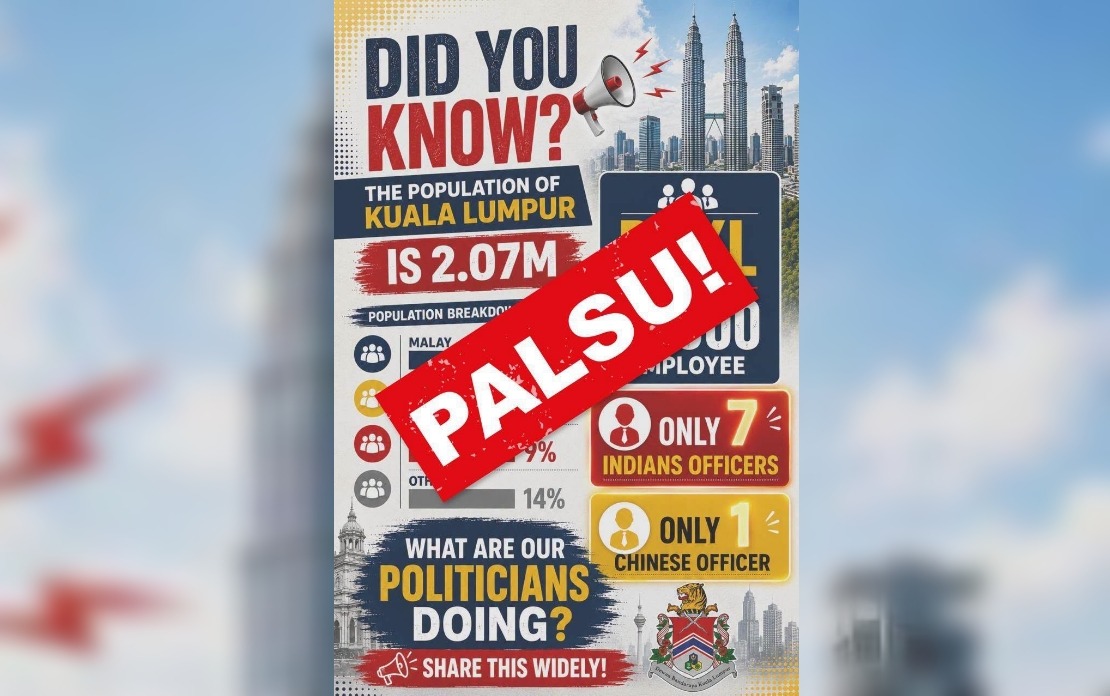
Federal Territories Minister Hannah Yeoh has moved to counter misleading information about the racial composition of Kuala Lumpur City Hall's workforce that has proliferated across social media during the election campaign period. The minister's swift intervention reflects mounting concerns about how unverified claims can weaponise diversity issues to inflame communal tensions at a politically sensitive time.
A WhatsApp poster that gained circulation claimed DBKL employed only seven Indian staff and a single Chinese worker, a characterisation Yeoh firmly rejected as inaccurate and unrepresentative of the local authority's actual human resources. The false figures stood in stark contrast to the verified data she disclosed, which showed the organisation's true employment profile as of July 1, 2026. According to official records, DBKL maintains a workforce of 9,131 employees across all categories, with Indian representation at 490 positions and Chinese employees numbering 22 staff members.
The discrepancy between the viral claim and documented reality reveals the potency of distorted workforce statistics as tools for sowing discord. Within professional ranks specifically, the management and professional group includes 10 Indian officers and two Chinese officers, figures that underscore how misleading headlines can obscure a more nuanced employment landscape. Yeoh's transparency in releasing these specific numbers demonstrates an attempt to neutralise the narrative by providing verifiable facts grounded in institutional records rather than internet rumours.
Yet the minister's acknowledgment that representation can be further enhanced suggests she does not dismiss concerns about diversity entirely. Rather than dismissing calls for greater inclusivity as unfounded, Yeoh positioned the government's response as proactive rather than defensive. This measured tone signals official recognition that while the WhatsApp claims were exaggerated, questions about equitable hiring and advancement merit serious examination. Such nuance matters in a multicultural democracy where minority communities monitor institutional access.
In response to the episode, Yeoh instructed DBKL to undertake a comprehensive audit of its recruitment operations. The authority will scrutinise hiring data, selection processes, promotion pathways and job advertisement distribution channels to identify any systemic barriers that may disadvantage qualified candidates from underrepresented groups. The explicit commitment to transparency, fairness and merit-based assessment reflected in these instructions establishes clear parameters for institutional reform. These principles address both the specific concerns raised by the misinformation campaign and broader questions about meritocratic hiring across Malaysian public sector bodies.
The call for such organisational review carries implications beyond DBKL itself. Local authorities nationwide increasingly face scrutiny regarding their workforce composition, and Kuala Lumpur's experience suggests that transparent data disclosure combined with structural reform may represent a model for addressing diversity concerns while resisting the exploitation of such issues by bad-faith actors. For Southeast Asian readers watching Malaysia navigate these tensions, the episode illustrates how disinformation campaigns target identity issues during electoral contests, and how fact-based institutional responses attempt to counter such tactics.
Yeoh also appealed to all stakeholders to resist the temptation to weaponise employment data for political advantage. Her statement distinguished between legitimate advocacy for fair hiring practices and opportunistic attempts to weaponise diversity concerns to deepen racial divisions. This framing matters because it creates conceptual space for genuine reform while drawing a firm line against those who exploit communal sensitivities for electoral gain. The minister's emphasis that misinformation should be corrected rather than amplified sets an expectation for responsible discourse during campaign periods.
The incident underscores broader challenges facing Malaysian institutions in the age of rapid information circulation. False claims can reach thousands before verification mechanisms activate, creating false impressions that persist even after correction. DBKL's case demonstrates how even local authority employment figures can become flashpoints in electoral competition when numbers are stripped of context or presented in distorted form. For Malaysian readers concerned about the integrity of public institutions, such episodes highlight the importance of institutional transparency and prompt fact-checking by authoritative sources.
The minister's intervention also reflects evolving standards for political discourse around diversity and representation. Rather than dismissing concerns about minority representation as illegitimate or celebrating any workforce composition as automatically acceptable, Yeoh's statement treats these matters as serious issues requiring data-driven analysis and continuous improvement. This approach acknowledges that questions about equitable access to public sector employment serve legitimate purposes while rejecting bad-faith distortion of facts to inflame communal tensions. For Malaysia's multicultural society, distinguishing between these two dimensions remains essential to maintaining social cohesion during contested elections.

