Twenty Malaysian university students gathered at the Kuala Lumpur Convention Centre to participate in the first-ever Minister's Cup Debate, an initiative designed to engage the younger generation in critical discussions about the nation's energy future. Held alongside the 7th International Sustainable Energy Summit (ISES) 2026, the competition marked a significant step in linking youth voices to policy-level conversations on renewable energy, an increasingly vital concern for Southeast Asian nations navigating the energy transition.
The debate centred on a substantive and timely motion: whether Malaysia should expand exports of renewable energy-based electricity to neighbouring countries while simultaneously meeting its own domestic energy requirements. This framing reflects genuine tensions facing policymakers—the potential economic benefits of becoming a regional renewable energy exporter weighed against the imperative to secure sufficient clean power for Malaysia's own growing population and industrial base. The question carries particular relevance in Southeast Asia, where energy security and cross-border energy trade are reshaping regional geopolitics and investment flows.
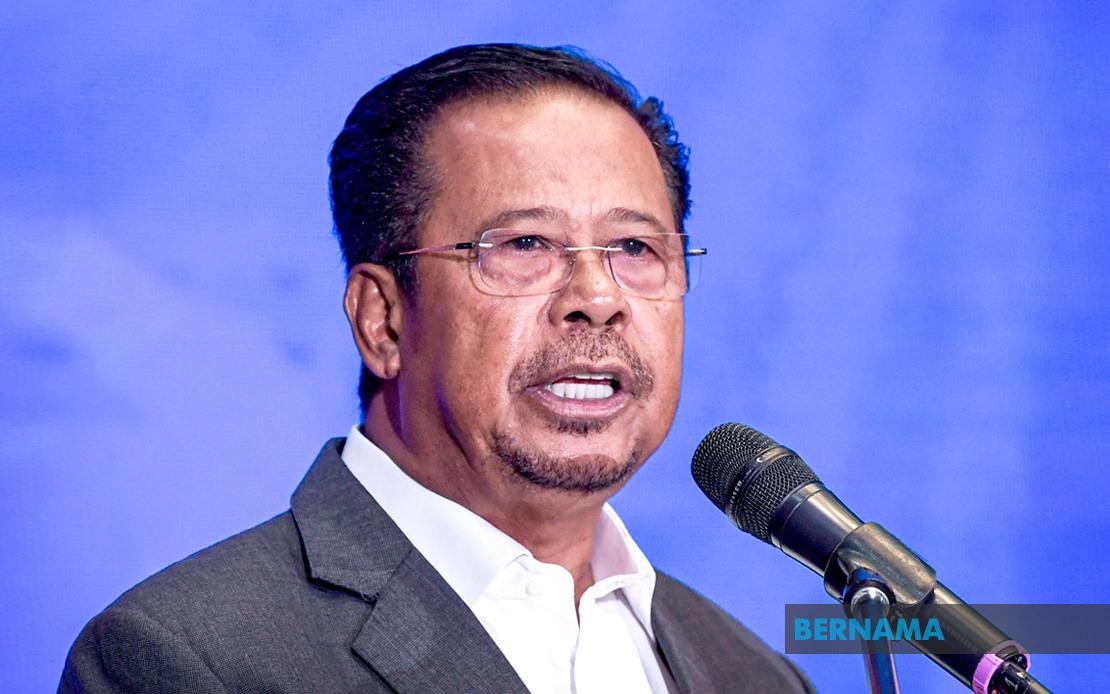
Deputy Minister of Energy Transition and Water Transformation Datuk Seri Abdul Rahman Mohamad presided over the awards ceremony, presenting the championship to the Government team and recognising Muhammad Uwais Mohd Hazril Munir @ Umar, a 20-year-old law student from Universiti Malaya, as the competition's Best Debater. The government's direct participation in the debate format—rather than merely observing or lecturing—signals a willingness to model reasoned argumentation on policy matters, an approach that can subtly influence how young people engage with authority and policy discourse.
The event drew further institutional weight with the presence of Tan Sri Dr Wan Ahmad Dahlan Abdul Aziz, Chief Secretary to the Government and chairman of the Sustainable Energy Development Authority Malaysia (SEDA). This attendance underscores how seriously the administrative apex regards energy literacy as a governance priority. In Malaysian context, where policy communication often flows top-down, creating platforms for bidirectional dialogue represents a modest but meaningful shift in how government engages with emerging opinion leaders among the youth.
The Minister's Cup Debate functions as the flagship programme of the Malaysia Energy Literacy Programme (MELP) 2026, a national initiative established to deepen public understanding of energy production, consumption, and management. MELP explicitly aims to equip Malaysians with accurate, verified information so they can make informed choices about energy use—a definition that encompasses not only household consumption patterns but also informed citizenship on energy policy matters. In a region where misinformation about energy sources spreads readily, particularly regarding renewable technology, such institutional commitment to verified information carries strategic importance.
Izzad Zalman Abdul Kader, SEDA's Strategic Communications director, articulated the deeper rationale for involving students in debate formats. He emphasised that such platforms strengthen energy literacy by encouraging young people to develop critical thinking and factual understanding of government policies. Crucially, Kader noted that debates grant participants the ability to challenge government positions—a framing that acknowledges legitimate space for dissent and alternative viewpoints within the policy conversation. This legitimation of critical engagement, particularly among university students who will shape Malaysia's future, may gradually influence how policy discussions occur in the broader public sphere.
Muhammad Uwais, the Best Debater award recipient, highlighted an often-overlooked function of formal debate: making complex technical subjects accessible to general audiences. By forcing advocates to present renewable energy concepts clearly and respond to counterarguments, debate theatres become laboratories for public communication. His observation that debate allows audiences to hear multiple perspectives addresses a real gap in Malaysia's energy information ecosystem, where technical details often remain confined to specialist publications and government pronouncements.
Afiq Athmar Mohamed, a 21-year-old business and economics student, emphasised the collaborative dimension of the initiative, noting that partnership between ministries, government agencies, and media amplified the event's reach and credibility. His reflection underscores how institutional coordination can elevate debate from campus exercise to recognised public discourse. Moreover, Afiq highlighted dual outcomes: raising awareness of energy supply challenges across demographic groups while simultaneously promoting understanding of the structural energy transition from fossil fuels to renewables. In Malaysia, where energy poverty and energy security intersect with developmental inequality, ensuring that younger Malaysians comprehend both the urgency and the complexity of this transition becomes foundational to future democratic consent for energy policies.
The renewable energy export question itself deserves deeper contextual examination. Malaysia possesses substantial solar and hydroelectric potential, and as regional demand for clean energy grows—driven by corporate net-zero commitments, manufacturing relocation, and rising electricity consumption in neighbouring economies—positioning Malaysia as a renewable energy hub could generate significant economic value. However, Malaysia's own electricity demand is projected to rise substantially through the 2030s as manufacturing and digital infrastructure expand. The debate motion crystallises this real strategic choice: whether to prioritise export revenues and regional energy leadership, or to ring-fence renewable capacity for domestic needs.
For Malaysian policymakers and the broader Southeast Asian energy community, cultivating a cohort of university students equipped to engage thoughtfully with such trade-offs carries long-term importance. These students will occupy positions in government, business, civil society, and media within the next decade, precisely when Malaysia's energy infrastructure decisions will lock in outcomes for decades. By introducing them now to evidence-based debate on energy choices, MELP and SEDA invest in the quality of future policy deliberation.
The inaugural nature of the Minister's Cup Debate also signals willingness to experiment with new formats for policy engagement. Traditional energy sector communication in Malaysia has relied heavily on technical briefings, government announcements, and expert commentary. Introducing competitive debate—where intellectual combat and persuasive skill matter as much as factual knowledge—diversifies how energy policy enters public consciousness. For regional observers, Malaysia's initiative may offer a model for how other Southeast Asian governments can deepen youth engagement with critical infrastructure decisions.
Looking forward, the success of this first Minister's Cup Debate may encourage expansion: additional debate topics on energy storage, grid modernisation, or just transition mechanisms could similarly engage students. The event also hints at broader questions about Malaysian civil society engagement with energy futures. If debate platforms can attract university-level talent and media attention, similar models might apply to other complex policy domains where youth input remains underutilised.
Ultimately, the Minister's Cup Debate represents a small but deliberate effort to democratise conversation about Malaysia's energy trajectory. By validating student voices, encouraging critical examination of government positions, and demonstrating that energy policy remains contested terrain where multiple reasonable perspectives exist, the competition subtly reinforces norms of informed citizenship. As Malaysia navigates its energy transition while positioning itself as a potential regional renewable energy player, ensuring that the next generation understands both the opportunities and constraints shaping that future becomes not merely educational but strategically necessary.

