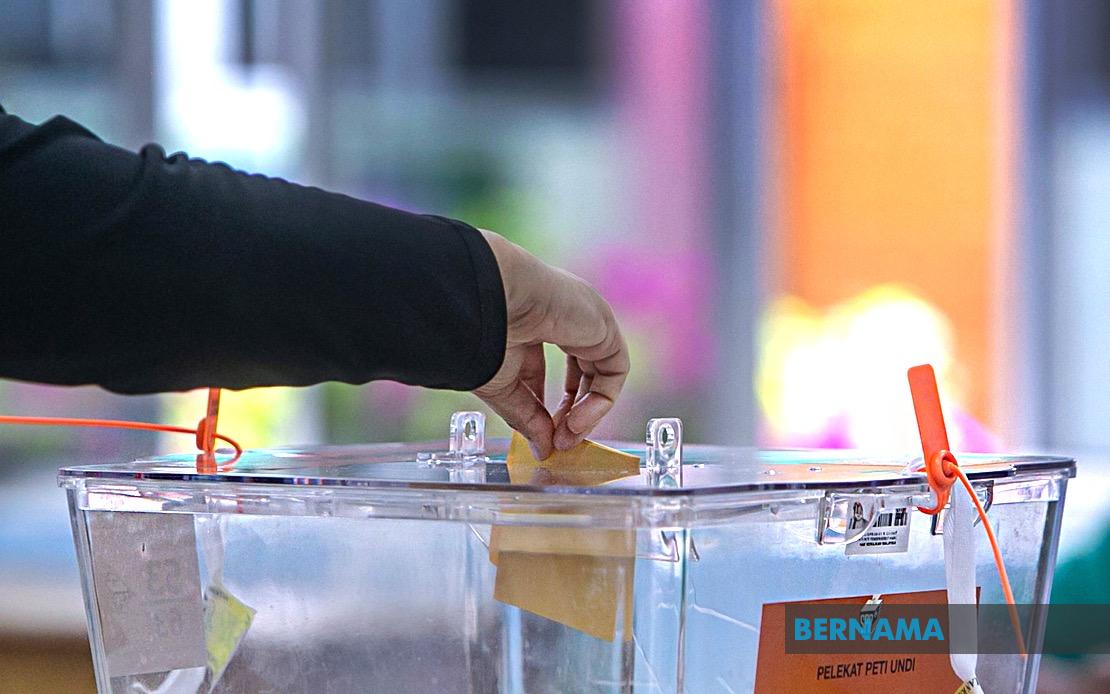
The Ministry of Youth and Sports (KBS) has taken a significant step to facilitate democratic participation among young Malaysians by requiring all Youth and Sports Skills Training Institutions (ILKBS) to consider granting special leave to enrolled students who need to return home to cast their ballots during general elections, state polls, or by-elections.
The directive, issued through the ministry's Youth Skills Development Division (BPKB) via formal notification to all ILKBS directors, reflects a policy shift aimed at removing barriers that might prevent eligible student voters from exercising their constitutional rights. This development carries important implications for Malaysia's broader commitment to encouraging youth civic engagement, a demographic historically showing lower voter turnout compared to older age groups.
The rationale behind the policy is straightforward yet consequential: the ministry acknowledges that every vote represents a voice in shaping the nation's trajectory. By removing the false choice between completing skills training and fulfilling civic duty, KBS recognizes that democratic participation and skills development are not mutually exclusive objectives but rather complementary aspects of developing responsible citizens. The statement emphasizes that ILKBS students should not face institutional barriers when seeking to vote.
The implementation framework establishes a structured application process rather than an automatic entitlement. Students seeking special leave must formally apply to their respective ILKBS management, which will evaluate requests based on several practical considerations. These include the distance from the training institution to the voter's designated polling centre, realistic travel time requirements, and the capacity to reorganize training and learning schedules without undue disruption. This graduated approach balances democratic facilitation with institutional continuity and accountability.
Crucially, final approval authority rests with individual ILKBS directors, allowing each institution flexibility to assess applications contextually. This decentralization acknowledges that institutional circumstances vary across the country's diverse geography and logistical realities. By vesting decision-making at the director level, the policy encourages informed judgment while maintaining systematic attendance record-keeping and prioritizing student welfare and safety—concerns particularly relevant given that many ILKBS students are residential or semi-residential learners.
The ministry has also emphasized the importance of advance notice and planning. ILKBS management must inform eligible student voters of this opportunity early enough to permit timely applications and coordinated travel arrangements. This proactive communication strategy aims to prevent last-minute chaos and ensures that voting logistics can be organized systematically rather than haphazardly. The emphasis on advance coordination reflects administrative best practices and demonstrates the ministry's serious commitment to operationalizing this policy effectively.
From a broader political perspective, this directive aligns with Malaysia's stated commitment to strengthening democratic institutions and encouraging informed civic participation, particularly among younger voters who will shape the nation's long-term political trajectory. Youth voter apathy has long concerned policymakers and democracy advocates, with competing demands on young people's time—including educational and training commitments—frequently cited as obstacles to participation. By removing institutional barriers, the government sends a signal that voting is recognized as a legitimate priority.
The policy also reflects international best practices and comparative trends across democracies that prioritize electoral accessibility. Several developed nations have implemented similar frameworks allowing students to take leave for voting, recognizing that removing practical obstacles to participation strengthens electoral legitimacy and democratic representation. Malaysia's adoption of this approach positions the country alongside jurisdictions treating voting facilitation as a government responsibility rather than an individual burden.
For ILKBS institutions themselves, the policy requires careful administrative calibration. Directors must establish clear evaluation criteria, communicate expectations transparently to students, and track approvals systematically to maintain institutional records while respecting democratic principles. This administrative complexity is manageable but non-trivial, particularly for larger institutions with numerous students and complex training schedules.
The measure also carries implications for Malaysia's broader youth engagement strategy. The ILKBS system trains thousands of young Malaysians in vocational and sports-related skills, positioning them as important demographic constituencies. By facilitating their political participation, the government invests in cultivating a cohort of youth who experience voting as normal and expected rather than as an obstacle requiring negotiation or sacrifice.
For students themselves, the policy represents tangible recognition that educational and training institutions exist within broader civic contexts. Rather than framing voting and training as competing obligations, the policy treats them as compatible responsibilities that responsible citizens can and should manage together. This messaging, reinforced through institutional practice, contributes to longer-term patterns of political engagement.
Moving forward, the practical success of this directive will depend substantially on how ILKBS institutions interpret and implement the guidance. Clear communication, reasonable approval decisions, and genuine logistical support will determine whether this policy meaningfully expands electoral participation among student voters or remains symbolic gesture with limited practical impact. The ministry's commitment to systematic implementation and its emphasis on advance notice suggest a serious approach to operationalization.
Ultimately, this directive reflects a recognition that removing institutional obstacles to voting represents good democratic governance. By enabling ILKBS students to participate in elections without penalty or impossible choices, the ministry contributes incrementally to a political culture that normalizes and facilitates civic engagement across demographic groups.

