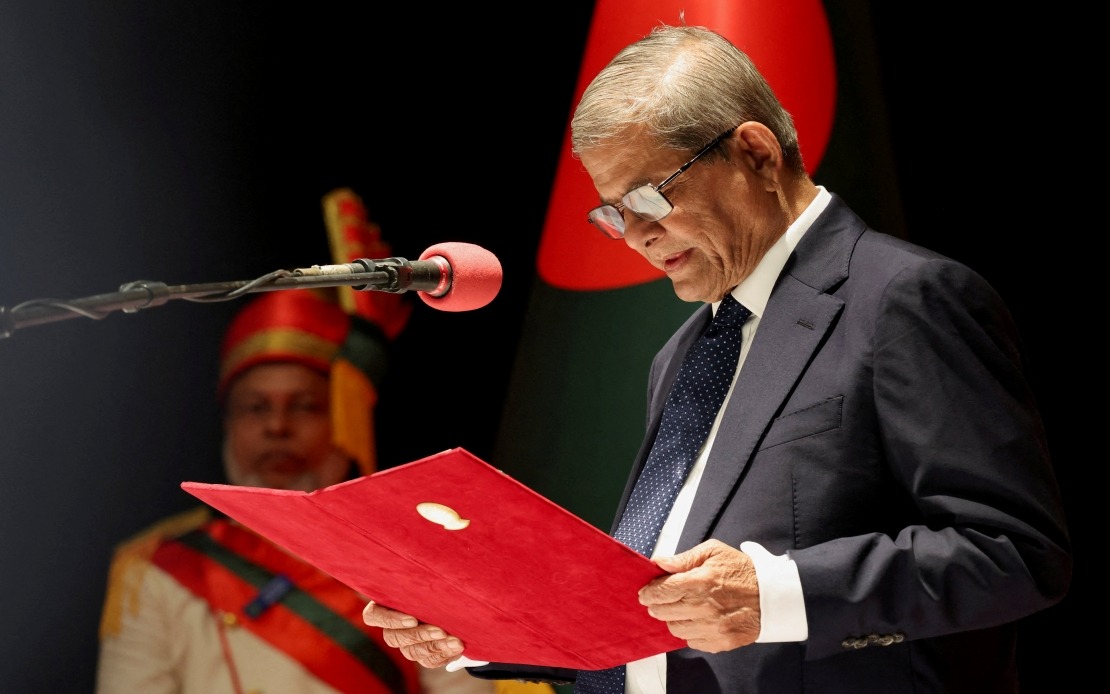
Mirza Fakhrul Islam Alamgir formally became Bangladesh's 23rd President on Friday evening when he took the oath of office in a ceremony held at the Darbar Hall of Bangabhaban. The event, attended by the nation's top political and administrative figures, marked a significant moment in Bangladesh's ongoing political transition and reflected the country's constitutional procedures for transferring executive authority. Acting Speaker Barrister Kayser Kamal presided over the oath administration as the incoming president pledged to uphold the Constitution and maintain the secrecy of his office.
The timing of Fakhrul's presidential inauguration carries considerable weight within Bangladesh's broader political landscape, coming amid the nation's recent institutional shifts. His election to this ceremonial but constitutionally significant position reflects the confidence placed in him by parliament members who cast their ballots in accordance with Bangladesh's constitutional framework. As a figure with deep roots in the country's political establishment, Fakhrul brings extensive experience to an office traditionally held by distinguished statesmen and political veterans.
The ceremonial proceedings followed customary protocols designed to ensure a seamless transfer of authority. Upon arriving at Bangabhaban, the official residence and workplace of the Bangladeshi head of state, Fakhrul received formal greetings from senior government officials before meeting with Acting President Hafiz Uddin Ahmad Bir Bikram. This exchange represented a crucial moment in the transition, embodying the constitutional principle that executive power passes from one holder to the next through established institutional channels rather than through disruption or uncertainty.
The gathering itself underscored the inclusive nature of the occasion, drawing representatives from across Bangladesh's political and administrative structures. Prime Minister Tarique Rahman's attendance demonstrated governmental solidarity with the incoming president, while the presence of the nation's chief justice symbolised the judiciary's recognition of the new executive authority. Members of parliament, cabinet ministers, and high-ranking civil and military officials all witnessed the proceedings, reflecting the constitutional importance accorded to the presidential office despite its primarily representative role in Bangladesh's parliamentary system.
Fakhrul's background makes his assumption of the presidency noteworthy for Southeast Asian observers tracking Bangladesh's political development. Having previously served as secretary-general of the Bangladesh Nationalist Party, one of the country's two major political organisations, he represents a generation of politicians who have navigated Bangladesh's complex institutional history. His elevation to the presidency suggests continued significance for the BNP within the nation's political architecture, even as the party has cycled in and out of direct governmental control.
The symbolic exchange of seats between the outgoing Acting President Hafiz Uddin Ahmad Bir Bikram and the newly sworn Fakhrul embodied constitutional continuity, a gesture that observers of South Asian politics will recognise as emphasising institutional stability over personality-driven leadership transitions. This ceremonial act carries particular resonance in Bangladesh, where the presidency has historically represented more than a merely ceremonial post, with the institution retaining constitutional powers that intersect with parliamentary authority in ways that require careful navigation.
Following the completion of his oath, Fakhrul signed the formal documents establishing his legal obligations and commitment to confidentiality regarding state matters. These signatures transformed his status from president-elect to sworn president, completing the constitutional requirements necessary for him to assume full presidential powers and prerogatives. The ceremony concluded with the performance of Bangladesh's national anthem, an act that traditionally marks the formal conclusion of such state occasions and reaffirms institutional commitment to national unity.
For Malaysia and other Southeast Asian nations, Fakhrul's presidency may influence Bangladesh's approach to regional diplomacy and multilateral engagement. As a senior political figure with substantial domestic experience, he brings particular perspectives to Bangladesh's foreign policy considerations, potentially affecting trade negotiations, security cooperation, and cultural exchanges with neighbouring countries. The composition of the audience, which notably included foreign diplomats, reflected international recognition of the presidential transition's significance.
The parliamentary election that preceded Fakhrul's swearing-in represented a formal expression of confidence in his suitability for the post, with lawmakers selecting him in accordance with the constitutional procedures governing presidential selection in Bangladesh's system. This process, while differing substantially from direct popular election, maintains democratic legitimacy through parliamentary representation and reflects institutional choices made during Bangladesh's constitutional development. Observers analysing Bangladesh's governance structures continue to debate the merits and implications of various institutional designs, with Fakhrul's election providing a case study in how these mechanisms operate in practice.
The transition to Fakhrul's presidency occurs within a broader context of Bangladesh's continuing evolution as a democratic nation. The country has experienced multiple constitutional frameworks, each reflecting particular historical moments and political settlements negotiated among competing interests. The smooth transfer of authority witnessed on Friday evening demonstrates the maturation of institutional processes even as Bangladesh confronts contemporary challenges ranging from economic management to social development and regional security considerations that demand sustained attention and capable stewardship.

