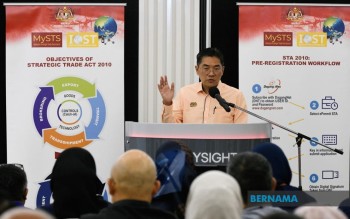
Malaysia's Ministry of Investment, Trade and Industry is redoubling its commitment to develop the electrical and electronics sector, recognising that sustained growth in this pivotal industry remains essential to the nation's economic resilience and global competitiveness. Deputy Minister Sim Tze Tzin underscored this priority while addressing industry stakeholders at events held in George Town, signalling that government support for the E&E ecosystem will intensify across multiple fronts. The ministry's focus reflects mounting international competition for semiconductor manufacturing and assembly capabilities, as well as the strategic importance of maintaining Malaysia's foothold in a tech supply chain increasingly vulnerable to geopolitical disruption.
The electrical and electronics sector, anchored by semiconductor manufacturing and related high-technology production, forms the backbone of Malaysia's industrial foundation and export earnings. Penang and the broader Northern Region have emerged as a global epicentre for advanced manufacturing, with hundreds of world-class technology firms establishing operations across assembly, testing, and packaging activities. This geographic concentration has transformed the northern corridor into one of Asia's most significant technology hubs, yet this very position also exposes Malaysia to heightened competitive pressure from other nations seeking to relocate or diversify semiconductor production away from traditional concentration points. The ministry's strategic push reflects awareness that complacency invites erosion of market share to rival destinations offering comparable infrastructure and workforce capabilities.
Sim highlighted that Malaysia's semiconductor industry occupies a strategic niche within global value chains, particularly in mid-tier and assembly-stage operations where the country has developed deep expertise and established networks. These segments, while less glamorous than cutting-edge chip design, generate substantial employment, export revenues, and supply chain integration that benefits the broader economy. However, the sector faces evolving challenges from automation, rising labour costs in developing economies, and the emergence of competing manufacturing hubs in Vietnam, Thailand, and Indonesia. Maintaining Malaysia's attractiveness therefore requires continuous investment in workforce development, infrastructure modernisation, and regulatory frameworks that facilitate rather than hinder technological advancement and foreign direct investment inflows.
Regional considerations add another dimension to MITI's strategic calculations. Penang's position as a technology manufacturing centre generates spillover benefits throughout the Northern Region, supporting logistics networks, service providers, and skilled labour markets that extend far beyond the island itself. A decline in E&E sector fortunes would reverberate across multiple states and impact thousands of firms operating within the broader supply ecosystem. This interconnectedness explains why the ministry views E&E sector development as a regional and national priority rather than merely an industrial policy matter. Supporting companies in this sector becomes a vehicle for distributing economic prosperity across geographically dispersed communities.
The ministry is simultaneously intensifying focus on export control compliance and strategic trade regulations, recognising that orderly governance of technology exports builds international confidence in Malaysia as a trusted trade partner. The Strategic Trade Act framework, administered through regional clinics and customer engagement days, provides an institutional mechanism for embedding compliance practices directly into corporate operations. By offering direct advisory services on product classification, permit applications, and regulatory interactions, MITI reduces friction costs for companies navigating the complex landscape of technology export rules. This support-plus-oversight approach aims to reconcile the dual imperatives of facilitating legitimate commerce while preventing diversion of sensitive technologies to problematic end-users or destinations.
Sim's observation that Malaysia's strong trade performance in the first half of the year should translate into improved worker compensation signals government interest in ensuring that sectoral success reaches beyond corporate shareholders and executives. This messaging, while relatively modest, acknowledges growing domestic scrutiny of corporate profit distribution and worker welfare. Manufacturing-dependent economies like Malaysia face persistent concerns that productivity gains concentrate at the top while front-line workers experience stagnant real wages. By publicly encouraging high-performing companies to share success through salary increases and bonuses, the deputy minister signals that government support for business is contingent on demonstrable commitment to shared prosperity. Whether this message translates into meaningful wage increases remains uncertain, but it reflects evolving political economy pressures that extend beyond traditional corporate-government alignment.
The Northern Region STA Clinic programme, which attracted 86 participants, illustrates the ministry's hands-on engagement with industry practitioners. These clinics function as knowledge-transfer forums where companies can access expert guidance on navigating regulatory frameworks that might otherwise appear opaque or burdensome. For smaller and medium-sized enterprises lacking dedicated compliance departments, such direct interaction with government agencies reduces uncertainty and promotes adherence to regulations through education rather than enforcement. This preventive approach to compliance builds trust between industry and regulators while improving overall regulatory effectiveness.
Government-industry collaboration emerges as the connecting thread throughout MITI's strategic narrative. The ministry frames Malaysia's competitive position not as a given but as something requiring continuous reinforcement through coordinated effort among state agencies, established multinational corporations, and domestic enterprises. This perspective acknowledges that manufacturing location decisions by multinational firms depend on multiple factors beyond cost—including regulatory predictability, workforce quality, infrastructure reliability, and government commitment to sector development. Countries that fail to demonstrate sustained, coherent commitment to key industries risk losing investment to rivals perceived as more supportive or stable.
Looking forward, Malaysia's E&E sector faces a juncture between defending existing market positions and positioning for emerging opportunities in artificial intelligence, advanced sensors, and next-generation telecommunications. The ministry's current strategy emphasises continuity and incremental improvement within established domains rather than transformative reinvention. While pragmatic, this approach may prove insufficient if technological disruption accelerates or major multinational firms shift production to entirely new locations. Malaysia will need to balance supporting current winners in semiconductor assembly with cultivating future capabilities in higher-value segments where margins are greater and technological moats harder for competitors to breach.

