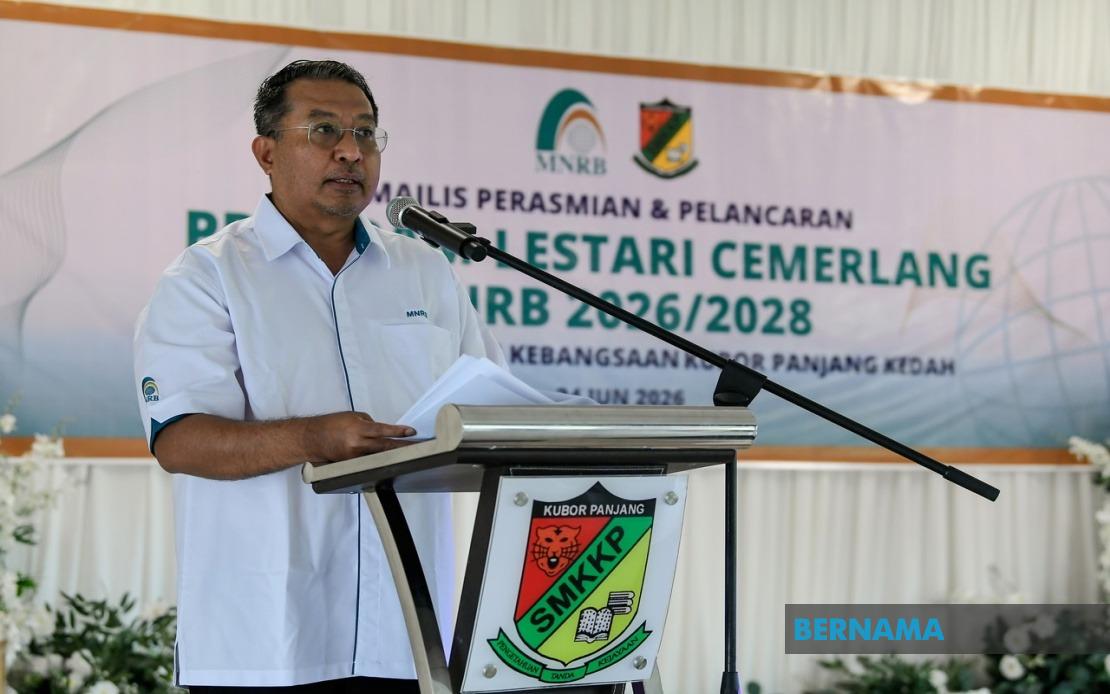
MNRB Holdings Berhad, a major investment holding company, has committed nearly RM600,000 to strengthen educational outcomes across six schools in different states through its Lestari Cemerlang Programme. The initiative, formally launched at Sekolah Menengah Kebangsaan Kubor Panjang in Pendang, Kedah, represents the company's sustained effort to bolster school excellence in underserved communities. The programme's expansion to SMK Kubor Panjang marks a significant milestone, adding to earlier initiatives in Perak, Pahang, Negeri Sembilan, Melaka and Selangor.
Datuk Rudy Rodzila Che Lamin, interim president and group chief executive officer of MNRB, framed the initiative as part of the company's broader corporate social responsibility strategy that began in 2011. Rather than focusing solely on financial transfers, the programme adopts a comprehensive approach to school development that recognises rural schools often face resource constraints limiting their ability to compete academically and structurally with urban counterparts. This philosophy positions MNRB's intervention as catalytic investment designed to unlock latent potential rather than create dependency.
The Lestari Cemerlang Programme targets three interconnected objectives: raising academic performance, fostering character development, and pursuing institutional excellence. These pillars acknowledge that educational quality extends beyond examination results to encompass the cultivation of responsible citizens capable of contributing meaningfully to society. The deliberate emphasis on rural areas reflects a strategic choice to address regional disparities, a persistent challenge in Malaysia's education landscape where geographic location continues to influence access to quality learning resources and opportunities.
Practical implementation manifests through diverse interventions tailored to school needs. Participating institutions have benefited from enhanced remedial and enrichment classes for Form Five students, critical during the crucial examination preparation period. Motivational camps and student development programmes address the psychological and social dimensions of learning, recognising that adolescent engagement requires inspiration beyond curriculum content. The company has also upgraded physical infrastructure, including learning facilities that modernise classroom environments.
A particularly innovative component involves the MNRB Smart e-Learning Room, equipped with interactive smart television and broadband connectivity. This intervention directly addresses the digital divide affecting rural schools, enabling educators to leverage technology-enhanced pedagogies previously inaccessible due to budget constraints. As Southeast Asian nations prioritise digital literacy and technology integration in education, such initiatives become increasingly consequential for ensuring that students in peripheral areas develop competencies essential for contemporary employment markets.
Beyond immediate school-level support, MNRB operates a parallel scholarship mechanism—the Tabung Biasiswa MNRB—extending financial assistance to exceptional students from adopted schools pursuing tertiary qualifications in fields aligned with the company's operations. Insurance, takaful, and finance sectors represent Malaysia's growing financial services ecosystem, and this targeted scholarship approach strategically develops a talent pipeline while ensuring recipient students study disciplines with direct employment relevance. The company has already sponsored fourteen students from previous partner schools, with eight subsequently joining MNRB upon graduation.
For SMK Kubor Panjang, the programme extends scholarships to five top-performing students, covering educational pathways through diploma, bachelor's and master's levels. This multi-tier support acknowledges that sustained academic excellence requires long-term commitment, and students from less affluent backgrounds often lack the financial buffer allowing them to pursue advanced qualifications without economic anxiety. By guaranteeing financial security throughout tertiary education, MNRB removes a significant barrier to upward mobility for capable rural students.
The formal launch at SMK Kubor Panjang, officiated by Kedah State Education Department deputy director (Learning Sector) Ishak Awang, reflects government endorsement of the private sector's educational contributions. Such collaboration between corporate entities and state education authorities increasingly characterises Malaysian school development, particularly in addressing resource gaps public funding alone cannot resolve. Government attendance signals recognition that corporate investment complements rather than substitutes public education provision.
The programme's breadth—encompassing sports infrastructure through jersey sponsorship, environmental initiatives through school greening efforts, and technological advancement through digital learning facilities—demonstrates understanding that school excellence requires holistic development. Students develop within complex institutional ecosystems where physical environment, technological access, athletic opportunity, and environmental consciousness all influence educational outcomes and personal formation.
For regional observers, MNRB's investment model offers instructive lessons regarding corporate engagement with public education. Rather than philanthropic gestures lacking systemic impact, the company has designed sustained, multifaceted interventions targeting foundational areas: academic support, character formation, infrastructure modernisation, and talent development. The explicit linkage between scholarship recipients and company employment creates accountability mechanisms ensuring investments yield measurable human capital outcomes.
The Lestari Cemerlang Programme also illustrates how Malaysian corporations can address regional development asymmetries through education-focused corporate social responsibility. Rural schools frequently struggle with teacher retention, infrastructure maintenance, and student motivation—challenges that corporate partnership can ameliorate through targeted resource allocation and institutional collaboration. As Malaysia pursues equitable development across all regions, corporate initiatives filling educational gaps become increasingly vital to reducing opportunity disparities.
Moving forward, the programme's success will depend on sustained commitment beyond launch celebrations. Educational transformation requires persistence, as students progress through academic levels and institutional practices require time to consolidate. The company's decision to expand from five schools to six suggests confidence in the model's effectiveness and commitment to scale impact, though rigorous evaluation of academic outcomes and student trajectories would strengthen understanding of the initiative's effectiveness and guide future iterations across Malaysia's diverse school landscape.

