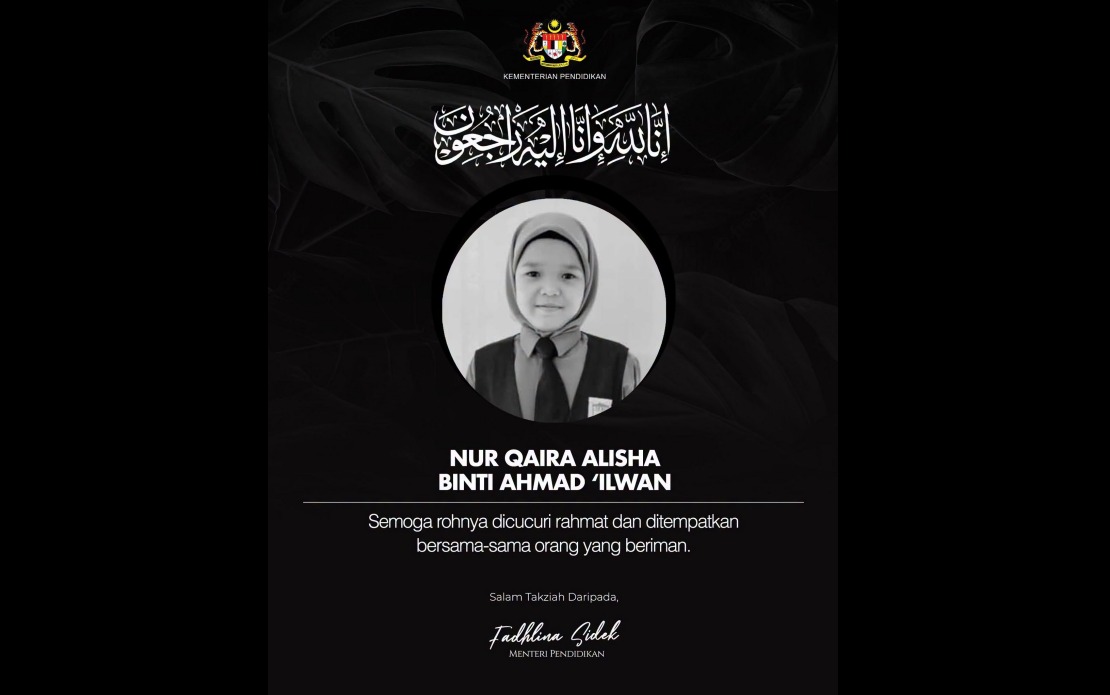
Education Minister Datuk Seri Fadhlina Sidek has instructed the Ministry of Education's Integrity Unit to pursue further investigation into a formal complaint lodged by the family of Nur Qaira Alisha Ahmad Ilwan, a Year Four pupil who died earlier this year. The minister emphasised that any action taken must comply with established protocols and uphold fairness principles applicable to all involved parties. Her intervention signals the gravity with which the ministry regards the incident and reflects growing scrutiny over student welfare safeguards in Malaysian schools.
The case has drawn nationwide attention due to its tragic circumstances and the allegations surrounding the child's participation in school sporting activities. According to the family's account, Nur Qaira had suffered from a documented heart condition since infancy—specifically from three months old—and held an official exemption from participating in school sports. Despite this medical clearance being on file at the school, the family maintains that a teacher directed the pupil to take part in a running event during the house sports selection process on April 15. The incident has prompted questions about communication protocols between medical professionals, school administration, and teaching staff regarding students with chronic conditions.
Fadhlina confirmed that the Kedah State Education Department had already undertaken an initial investigation into the family's complaint, though the findings of that inquiry remain unclear. Her decision to escalate the matter to the MOE's Integrity Unit suggests the initial review may have revealed matters requiring higher-level scrutiny or that the family sought additional oversight. The ministry's involvement at this level indicates the potential for systemic issues rather than isolated incidents, raising questions about how schools across the country manage medical exemptions and duty-of-care obligations.
The minister's statement prioritised the family's wellbeing and acknowledged their loss with expressions of condolence. She stressed that the Education Ministry's immediate focus centres on providing the bereaved family with appropriate support and space to grieve, reflecting a shift in how government agencies publicly acknowledge tragedies involving young citizens. Such pronouncements, however carefully worded, often come under scrutiny from grieving families who may require answers alongside sympathy.
Nur Qaira's medical history presents the central concern in this case. The child had been managing dilated cardiomyopathy—a condition affecting the heart's pumping capacity—for most of her life. According to medical records provided by the family, she was formally exempted from physical education and sports participation due to this diagnosis. The fact that such documentation existed but allegedly was not consulted or respected by school staff raises questions about institutional record-keeping systems and staff training regarding special medical needs.
The sequence of events after April 15 proved catastrophic. Within nine days of the sports day incident, Nur Qaira developed severe symptoms including vomiting and facial swelling, which prompted admission to Sultanah Bahiyah Hospital in Alor Setar. Medical examination revealed heart failure caused by decompensated dilated cardiomyopathy—a condition where the heart muscle weakens significantly and loses its ability to pump blood effectively. Medical literature suggests that physical exertion can precipitate such decompensation in patients with underlying cardiomyopathy, though establishing definitive causation in individual cases requires detailed clinical analysis.
The pupil's subsequent death at the hospital has left her parents seeking accountability and clarity regarding whether the school's actions contributed to the fatal deterioration. This raises profound questions about institutional liability in Malaysian schools, the training teachers receive regarding students with medical conditions, and whether existing frameworks adequately protect vulnerable pupils. The case will likely influence how education administrators nationwide review their protocols for managing children with chronic illnesses.
Fadhlina's reference to applying rules while maintaining justice suggests the investigation will navigate complex territory. School officials may argue they were unaware of the exemption, that miscommunication occurred, or that standard procedures were followed. Meanwhile, the family seeks accountability for what they view as negligence. The Integrity Unit's role will centre on determining whether established safeguards were properly implemented and whether any breach of duty occurred.
From a broader perspective, this incident exposes potential gaps in Malaysia's school safety infrastructure. Many developing and middle-income countries face challenges in systematising information about student health vulnerabilities across multiple staff members and administrative departments. Teachers often lack formal training in recognising and accommodating chronic medical conditions, and communication between parents, medical professionals, and schools can prove inadequate. The case serves as a catalyst for the ministry to potentially strengthen nationwide protocols.
The investigation's findings may result in policy reforms, staff retraining initiatives, or changes to how medical exemptions are documented and communicated within school systems. Other parents of children with chronic conditions will likely scrutinise the outcomes closely, seeking reassurance that their own children's medical needs will be appropriately recognised and respected by educational institutions. Schools across Malaysia may face increased pressure to review their existing procedures and demonstrate compliance with duty-of-care standards.
For Southeast Asian readers, this case reflects universal challenges that transcend borders. Countries throughout the region grapple with balancing inclusive school environments—where all children participate in activities—with appropriate protections for those with medical vulnerabilities. Malaysia's response to this tragedy will likely influence how neighbouring countries approach similar issues and whether regional best-practice guidelines emerge regarding student health documentation and staff accountability.
The Integrity Unit's investigation will ultimately determine whether systemic failures, individual negligence, or unavoidable circumstances contributed to Nur Qaira's death. Regardless of the conclusions, her case has already prompted important conversations about how Malaysian schools protect their most vulnerable students and whether current safeguards require strengthening. The family's courage in pursuing this matter may ultimately benefit countless other children with chronic conditions across the country's education system.

