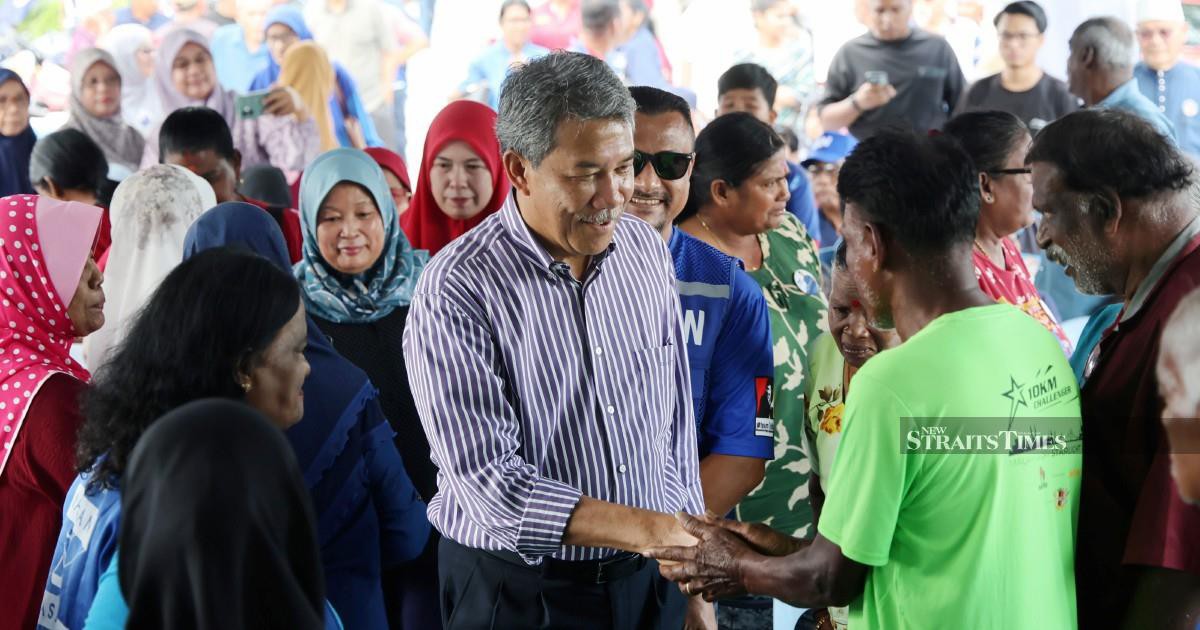
Foreign Minister Datuk Seri Mohamad Hasan has signalled his readiness to relinquish his Cabinet post whenever Prime Minister Datuk Seri Anwar Ibrahim deems it necessary, demonstrating a posture of institutional loyalty amid Malaysia's continuing political flux. Speaking in Rembau, the minister framed his position as one of subordination to the premier's directives, implying that no personal attachment to his current role would obstruct a transition if the leadership decided a change was warranted.
The statement from Mohamad Hasan, commonly known as Tok Mat, carries significance within Malaysia's intricate political culture, where ministerial reshuffles frequently signal broader shifts in coalition dynamics or adjustments to address public sentiment and parliamentary mathematics. His explicit willingness to step aside reflects both the contingent nature of ministerial appointments and the delicate balance required to maintain Cabinet cohesion in a diverse coalition government. By publicly articulating this position, he preempts any perception that personal ambition might override the prime minister's authority to structure his government according to shifting priorities.
The timing of such a declaration warrants examination, as Malaysia has experienced successive waves of Cabinet restructuring since Anwar Ibrahim assumed office. Each reshuffle has involved calculations regarding factional representation, state-based support, and the need to satisfy coalition partners from Pakatan Harapan, Barisan Nasional, and other supporting blocs. Mohamad Hasan's ministerial tenure in the Foreign Affairs portfolio places him at the intersection of Malaysia's diplomatic engagement with regional and global actors, making the Foreign Ministry a portfolio of strategic consequence for any government.
The foreign portfolio specifically carries weight in Southeast Asian politics, as it shapes Malaysia's positioning within ASEAN, manages relations with major powers including China and the United States, and determines Malaysia's approach to pressing regional issues from maritime disputes to trade negotiations. Any transition in the foreign minister's office would inevitably require attention to continuity in ongoing diplomatic initiatives, relationship management, and the representation of Malaysian interests abroad. Mohamad Hasan's declaration thus occurs against a backdrop where both stability and flexibility remain important considerations for the government.
Within Umno, the party that Mohamad Hasan represents within the broader coalition, ministerial positions carry significant symbolic weight and influence over internal party dynamics. His willingness to relinquish office without resistance suggests confidence in his standing within the party or an assessment that maintaining political goodwill with the prime minister takes precedence over retaining a particular portfolio. This calculus reflects the pragmatic nature of Malaysian politics, where figures frequently transition between ministerial roles or retire from active politics while maintaining influence through party structures and other political mechanisms.
The statement also reflects broader understandings about Cabinet stability and ministerial responsibility that have evolved in Malaysian governance. Ministers serve at the pleasure of the prime minister and can be reassigned or dismissed without formal parliamentary procedures, unlike in Westminster systems where certain constraints protect ministerial tenure. This constitutional reality underpins the deference that Mohamad Hasan expressed, making his declaration less a gesture of unusual magnanimity and more an acknowledgment of the structural realities governing his position.
For Malaysian observers and international analysts monitoring Malaysian political developments, such statements provide insight into the stability of the current government and the degree of cohesion within the ruling coalition. Periodic reassertions of loyalty by senior figures can either stabilise a government by demonstrating discipline and unity, or conversely, they may signal underlying tensions that necessitate such public reaffirmations. The frequency and context of such declarations warrant attention when assessing whether the current government structure faces internal pressures that might eventually manifest in more substantial political realignments.
The Foreign Ministry's international relationships and ongoing diplomatic portfolios mean that any personnel change would require careful management. Malaysia maintains complex relationships across Southeast Asia through ASEAN mechanisms, bilateral engagements with neighbours including Singapore, Thailand, and Indonesia, and broader great-power relations that have become increasingly consequential given regional geopolitical competition. A foreign minister transition would necessitate briefings, relationship continuity measures, and possibly a learning period for any successor to master the detailed dossiers governing Malaysia's diplomatic posture.
Moreover, Mohamad Hasan's background and tenure as foreign minister have accumulated relevant experience and international credibility that represent institutional assets. His resignation would mean reallocating these human resources within the government structure, requiring identification of alternative ministerial roles suited to his seniority and capabilities, or alternatively, his movement into non-Cabinet political roles within Umno's hierarchy. Such transitions, while common in Malaysian politics, entail adjustments that governments must navigate carefully to maintain organisational coherence and preserve factional balance.
The declaration also carries implications for Malaysian domestic politics beyond the immediate question of ministerial tenure. It reinforces the principle of prime ministerial authority within the Cabinet system and demonstrates that senior figures acknowledge this hierarchy despite their political standing and party affiliations. In a political environment where coalition partners occasionally contest decisions or where factional tensions within parties surface in public disputes, such demonstrations of deference serve to consolidate the formal authority structures through which governance operates.

