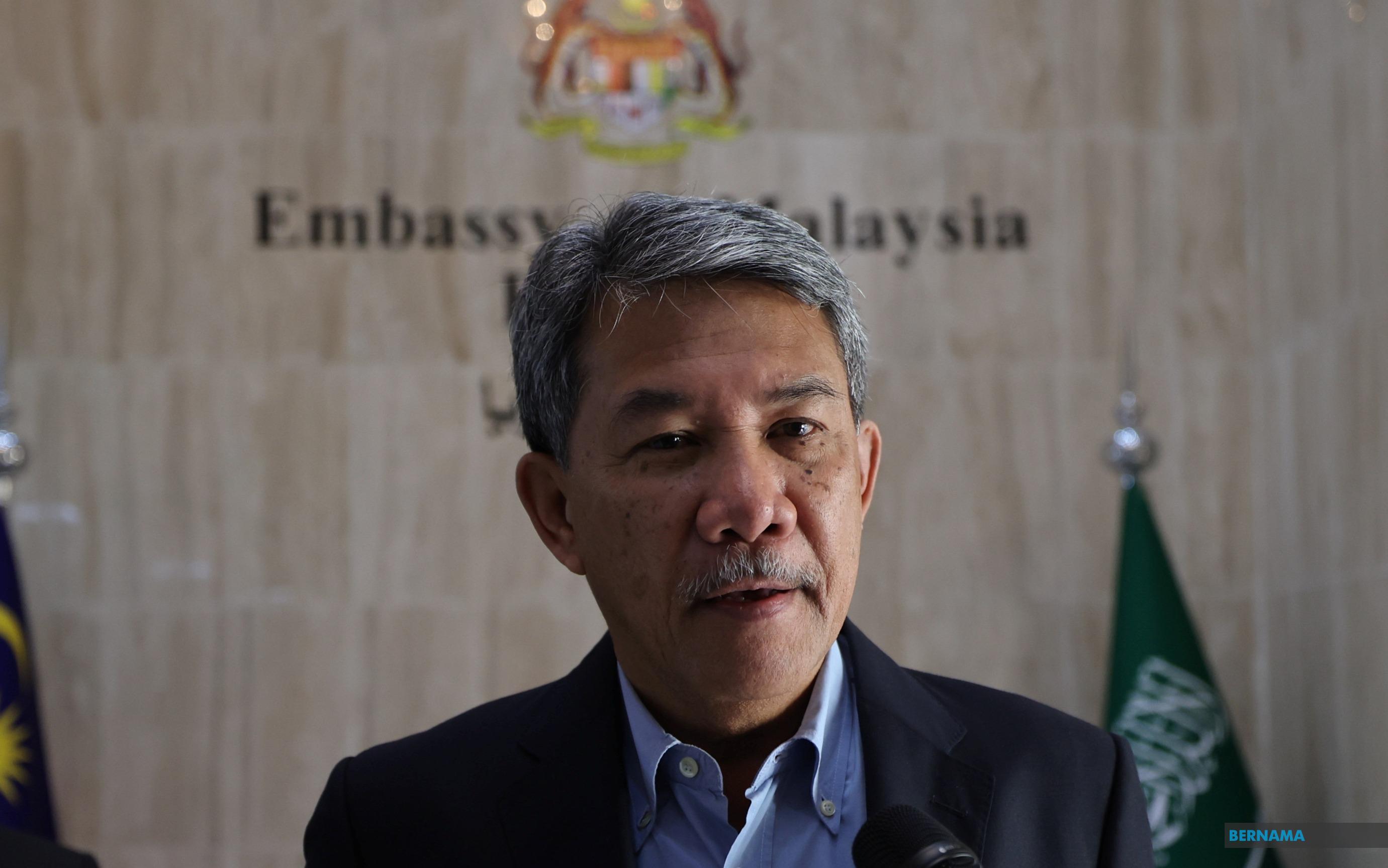
Foreign Minister Datuk Seri Mohamad Hasan is undertaking an official three-day working visit to Brunei Darussalam from August 20 through August 22, a trip centred on deepening bilateral ties and addressing long-standing regional concerns. The Ministry of Foreign Affairs confirmed the visit will facilitate two significant diplomatic engagements: the 27th Malaysia-Brunei Exchange of Letters Implementation Meeting on August 21, followed by the 27th Malaysia-Brunei Annual Leaders' Consultation on August 22. These scheduled forums represent the ongoing institutional framework through which Kuala Lumpur and Bandar Seri Begawan manage their complex bilateral relationship and chart joint development priorities.
The Exchange of Letters meeting assumes particular importance as a working-level mechanism for translating high-level commitments into tangible cooperation. Mohamad Hasan will share the chair with Brunei's Second Minister of Foreign Affairs, Datuk Seri Setia Erywan Mohd Yusof, indicating the meeting's significance for both governments. This annual exercise has evolved beyond ceremonial protocol to become a critical forum where both nations assess progress on agreements negotiated during the previous year's leaders' consultation, identify emerging areas of mutual benefit, and troubleshoot implementation challenges that may have arisen.
A central focus of the EOL meeting will be the thorny issue of maritime and terrestrial boundaries between Malaysia and Brunei. The precise demarcation of land and sea frontiers remains a persistent matter requiring sustained diplomatic attention in Southeast Asia, where numerous territorial questions continue to demand patient negotiation. Malaysia and Brunei, despite their geographic proximity and strong historical ties, have worked methodically through official channels to address these boundary concerns. The bilateral framework provides a structured environment where technical experts and diplomatic officials can advance discussions without public acrimony, allowing both nations to pursue resolution at a measured pace.
Economic cooperation stands as another pillar of the bilateral agenda. Trade data reveals the scope of commercial ties between the two countries, though recent figures suggest fluctuations. In 2025, bilateral trade totalled RM5.86 billion, equivalent to USD 1.37 billion, representing the volume of goods and services exchanged across the Brunei-Malaysia border. However, the first half of 2026 recorded RM2.38 billion in bilateral trade, or USD 0.6 billion, indicating a decline from the annualised pace of the previous year. These movements warrant closer scrutiny during the EOL meeting, as both governments examine underlying causes—whether reflecting seasonal adjustments, structural shifts in trade patterns, or new competitive dynamics in the region—and identify opportunities to reinvigorate commercial exchange.
The subsequent Annual Leaders' Consultation represents the apex of Malaysia-Brunei diplomatic engagement, bringing together the highest-ranking officials from both capitals to set strategic direction. These consultations serve as the ultimate arbiter of bilateral policy, allowing Kuala Lumpur and Bandar Seri Begawan to align on regional issues, discuss security matters, and ensure that working-level negotiations remain anchored to shared political will. The ALC mechanism reflects both nations' commitment to institutional stability and structured dialogue at a time when regional tensions and global uncertainties create pressures on smaller economies to either deepen partnerships or risk marginalisation.
For Malaysia, Brunei holds strategic significance beyond raw trade volumes. The sultanate occupies a crucial position on the island of Borneo, sharing maritime boundaries with Sarawak and Sabah, and controlling access to significant oil and gas reserves in the South China Sea. A stable, cooperative relationship with Brunei helps Malaysia secure its eastern frontier, ensures peaceful resolution of boundary disputes, and facilitates coordinated responses to transnational challenges including maritime security, environmental protection, and climate adaptation. The Brunei visit thus carries implications extending beyond bilateral commerce to encompass Malaysia's broader security architecture and regional standing.
Brunei's role in ASEAN and its participation in regional mechanisms like the East Asia Summit and ASEAN Regional Forum also render the bilateral relationship meaningful in multilateral contexts. Enhanced coordination between Kuala Lumpur and Bandar Seri Begawan on regional issues strengthens ASEAN's collective voice and enables more coherent responses to challenges ranging from maritime disputes to pandemic preparedness. The working visit demonstrates Malaysia's commitment to maintaining vibrant relations with all ASEAN partners, even smaller or less economically dominant ones, reflecting the principle that regional stability depends on inclusive, respectful engagement.
The timing of Mohamad Hasan's visit also reflects Malaysia's diplomatic calendar and its prioritisation of neighbourhood relations. In an era when global supply chains remain fragmented, geopolitical competition intensifies, and transnational challenges demand coordinated responses, bilateral visits at ministerial level signal commitment and sustain momentum on difficult issues. The explicit mention of boundary matters in the Foreign Ministry statement underscores that despite years of negotiation, these issues remain live and require sustained high-level attention rather than relegation to technical committees alone.
Looking ahead, the outcomes of both the EOL meeting and the ALC-27 will likely be reflected in joint statements or communiqués that elaborate on agreed action items, timelines for resolving outstanding matters, and new areas of cooperation. Such documents serve as public affirmations of goodwill and provide benchmarks against which progress can be measured in subsequent years. For Malaysian stakeholders—whether businesses seeking to expand operations in Brunei, officials managing maritime zones, or policymakers concerned with regional stability—the deliberations during these three days carry tangible implications for how bilateral relations will evolve and what new opportunities or constraints may emerge.

