Malaysia's Foreign Minister Datuk Seri Mohamad Hasan is heading to Jeddah to represent the country at an extraordinary session of the Organisation of Islamic Cooperation's Council of Foreign Ministers, where member nations will assess the evolving situation in Palestine and coordinate their diplomatic responses. The one-day gathering, scheduled for August 27, marks another opportunity for the Islamic world's 57-member bloc to align its collective stance on an issue that remains deeply significant across the Muslim-majority region and beyond.
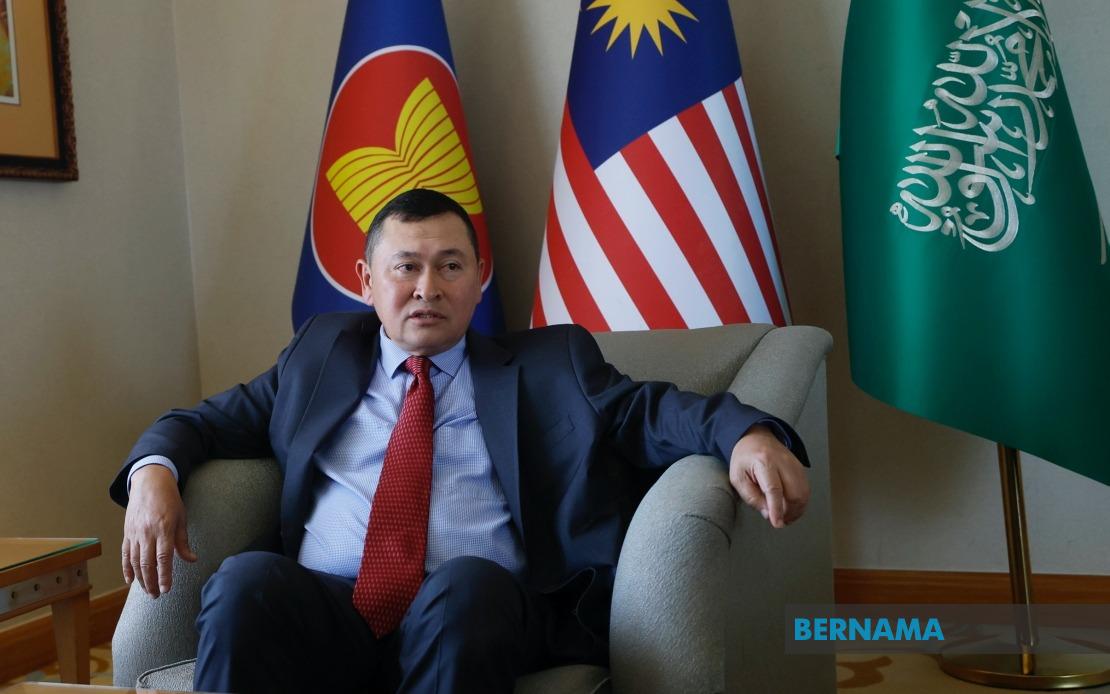
According to Datuk Syed Bakri Syed Abdul Rahman, Malaysia's ambassador to Saudi Arabia and permanent representative to the OIC, this convening builds upon earlier diplomatic efforts to forge consensus among Islamic nations regarding Palestine. The deliberations are designed to move beyond rhetorical commitments and establish concrete mechanisms through which OIC states can amplify their influence on the international stage. For Malaysia specifically, the gathering provides a critical venue to articulate national positions while learning from allied nations' perspectives on strategies that might yield tangible political gains.
During his intervention, Mohamad will deliver Malaysia's formal national statement, which will emphasise the nation's consistent and principled position on Palestinian rights. The statement will underscore Malaysia's recognition of the Palestinian people's legitimate entitlement to self-determination and their aspiration to establish a fully independent and sovereign nation-state. Notably, Malaysia's framing explicitly references the pre-1967 borders as the territorial baseline for such a state, a formulation that aligns with broader Arab and Islamic consensus but contrasts sharply with Israeli positions and complicates peace negotiations.
The Malaysian delegation's prepared remarks will not shy away from condemning what Kuala Lumpur characterises as Israeli aggression and military operations directed against Palestinian populations. Particular emphasis will be placed on the humanitarian toll of the conflict, with Syed Bakri highlighting the catastrophic conditions prevailing in Gaza, where civilian casualties, infrastructure destruction, and shortages of essential goods have created a deepening humanitarian emergency. Simultaneously, Malaysia intends to draw international attention to the West Bank, where Palestinian communities face mounting pressure from Israeli military presence and the expansion of settlements deemed illegal under international law.
Beyond rhetorical condemnation, Malaysia is positioning itself as an advocate for elevated international engagement and stronger collective action by the OIC membership. The nation's diplomatic messaging emphasises that the current trajectory is unacceptable and that mere expressions of concern are insufficient; rather, OIC members must pursue substantive measures that effectively constrain Israeli actions and protect Palestinian interests. This framing reflects Malaysian leadership's assessment that rhetorical posturing without corresponding practical initiatives risks eroding the credibility and efficacy of Islamic-world diplomacy.
A significant element of Malaysia's engagement involves humanitarian assistance, which the country views as both a moral imperative and a demonstration of Muslim solidarity with affected populations. Syed Bakri reiterated Malaysia's commitment to ensuring that aid flows to Palestinians in need, a priority that reflects domestic constituencies' expectations and Malaysia's self-identification as a responsible member of the global Muslim community. The ambassador stressed that Malaysia hopes the international community, particularly OIC nations, will maintain pathways for humanitarian material to reach Gaza and other affected territories, irrespective of political divisions.
The gathering is also expected to address the election of the OIC's secretary-general, introducing an institutional dimension to the meeting beyond the Palestinian question. This procedural matter carries strategic significance, as the secretary-general's nationality, background, and policy orientations influence the bloc's advocacy priorities and diplomatic approach. For Malaysia and other nations with distinctive regional interests, the leadership selection process offers opportunities to shape the OIC's institutional direction.
Resolutions are anticipated to emerge from the meeting, specifically addressing Palestine and Al-Quds Al-Sharif—the Arabic designation for Jerusalem and its holy sites, which holds profound religious significance for Muslims worldwide. Such resolutions will likely combine explicit condemnation of Israeli military actions against Palestinians with calls for coordinated OIC responses. By framing the resolutions in these terms, member states aim to construct a unified narrative that emphasises both moral denunciation and pragmatic coalition-building among Islamic nations.
Beyond the formal agenda, Mohamad's attendance creates bilateral opportunities. Malaysian officials have flagged that the Foreign Minister will hold separate bilateral discussions with counterparts from several nations, conversations that will explore avenues for deepening partnerships across multiple dimensions. These engagements will focus on strengthening economic and commercial ties, identifying new business opportunities, and expanding trade and investment flows—a pragmatic approach that recognises that sustained international influence requires multifaceted engagement, not merely solidarity statements on contentious geopolitical questions.
For Malaysia specifically, participation in such OIC forums serves multiple functions within a broader strategic framework. Domestically, engagement reinforces the government's credentials as a defender of Muslim interests and Palestinian rights, positioning the nation as a principled player in Islamic-world affairs. Regionally, Malaysia's voice contributes to Southeast Asian representation within global Islamic diplomacy, potentially influencing how OIC positions account for Southeast Asian Muslim communities' perspectives. Internationally, Malaysian participation signals that Islamic nations remain engaged on Palestine despite competing priorities, maintaining this issue's salience even as other regional and global crises demand attention.
The extraordinary meeting reflects underlying tensions within the OIC regarding how to translate consensus on Palestinian rights into effective international action. While member states uniformly affirm Palestinian self-determination in principle, implementation strategies diverge based on individual nations' geopolitical circumstances, relationships with Western powers, and strategic priorities. Malaysia's delegation will need to navigate these complexities while maintaining principled advocacy, a balancing act that increasingly characterises Muslim-world diplomacy on Israel-Palestine.

