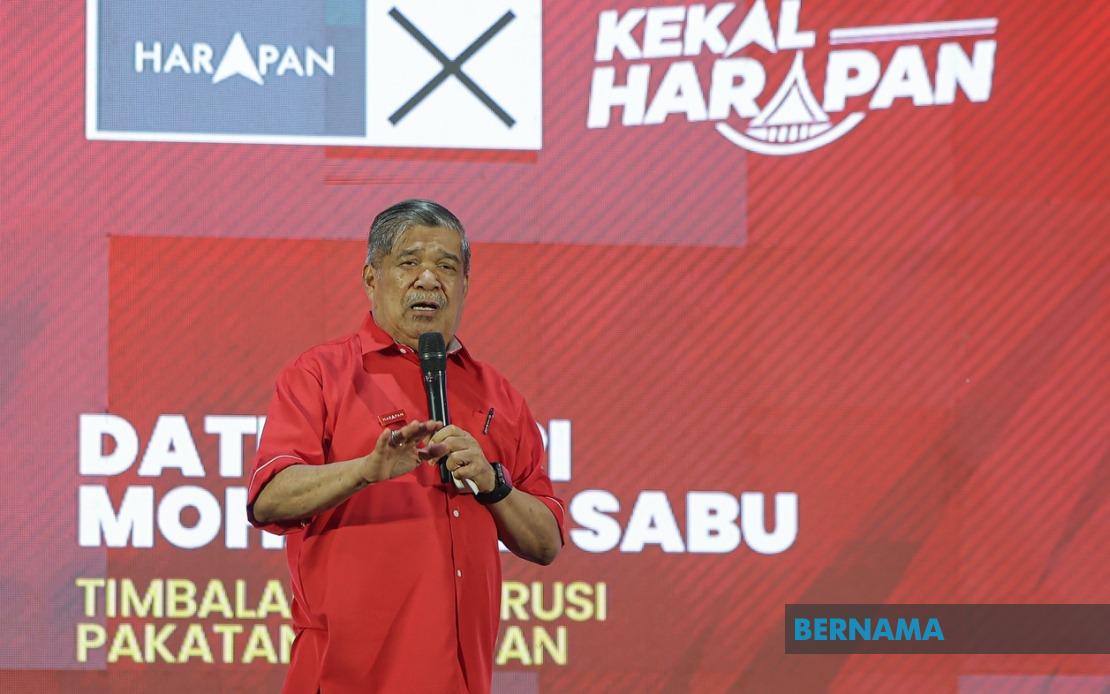
Amanah president Datuk Seri Mohamad Sabu has called on voters in Negeri Sembilan to reject what he characterises as 'marriage-divorce politics', a practice he associates with parties that repeatedly abandon political alliances in pursuit of power and influence. Speaking in Seremban on July 22, the Amanah leader framed the issue as a fundamental threat to the nation's democratic institutions and long-term political coherence. His remarks come amid ongoing coalition negotiations and shifting political dynamics across Malaysian states, where smaller parties have sometimes leveraged their pivotal positions to negotiate better terms or ministerial portfolios.
The phrase 'marriage-divorce politics' encapsulates Mohamad Sabu's critique of political opportunism, where parties prioritise immediate electoral advantage and ministerial appointments over consistent ideological positioning or voter mandates. He argued that such behaviour corrodes public trust in democratic representation and creates an unstable foundation for governance. In Malaysian politics, where coalition governments have become increasingly common, this pattern of shifting allegiances has been particularly pronounced, with parties sometimes switching sides between state and federal levels or renegotiating agreements within months of implementation. This dynamism, while reflective of Malaysia's complex multi-party system, raises legitimate questions about whether voters can reliably anticipate policy continuity or representative accountability.
Mohamad Sabu traced the trajectory of one party's political movements as an illustrative example, detailing a sequence of coalition changes spanning multiple electoral cycles. According to his account, the party aligned itself with Barisan Nasional before breaking away to join Pakatan Rakyat, then reversed course again. Following a brief period with UMNO-BN, the party subsequently moved to Bersatu before abandoning that alliance. Now, he suggested, the same party was attempting to cultivate relationships with other political actors. This pattern underscores how Malaysian politics, despite its competitive nature, has sometimes been characterised by fluid and transactional relationships rather than substantive programmatic differences. The narrative he presented invites voters to question whether such parties possess genuine policy commitments or whether electoral considerations wholly dictate their strategic direction.
The Amanah leader's intervention reflects broader concerns within the Pakatan Rakyat coalition about maintaining political discipline and coherence, particularly in states where coalition governments depend on narrow majorities. When component parties prove unreliable or willing to negotiate with rival coalitions, state governments become vulnerable to sudden collapse, disrupting development initiatives and creating periods of governance uncertainty. For Negeri Sembilan specifically, which has seen competitive state politics and periodic shifts in government composition, Mohamad Sabu's remarks appear calibrated to consolidate Pakatan Rakyat's voter base before electoral contests by positioning the coalition as more principled than rivals.
The concept of political stability that underpins his argument resonates with governance literature emphasising that democracies function most effectively when parties maintain reasonably consistent platforms and coalition memberships. Frequent realignments can divert political energy away from policy implementation toward internal negotiations and compromise-seeking. Additionally, voters become less able to assess which policies they are actually selecting for when parties constantly realign their associations. In Malaysia's context, where communal and regional interests already fragment the electorate along multiple dimensions, the additional volatility introduced by coalition fluidity complicates the task of forming stable mandates.
However, Mohamad Sabu's framing also reflects Pakatan Rakyat's specific strategic interests, particularly in protecting state governments where the coalition depends on smaller parties or independents. When he urges voters to reject such behaviour, he implicitly positions Amanah and its coalition partners as more trustworthy custodians of electoral mandates. This rhetorical move attempts to convert concerns about political instability into direct support for Pakatan Rakyat, even as other coalition members might themselves have engaged in complex political negotiations. The critique thus serves both a principled argument about governance and a partisan advantage, though the two are not necessarily contradictory.
From a Southeast Asian perspective, Malaysia's experience with coalition fluidity offers cautionary lessons. Thailand and Cambodia have grappled with even more severe forms of political instability driven partly by coalition volatility, where military interventions have been justified, in part, by claims that political parties proved incapable of governing coherently. While Malaysia's democratic institutions remain considerably more robust, the underlying concern about whether frequent coalition changes ultimately undermine effective governance and public confidence in democracy warrants serious consideration. Voters throughout Southeast Asia have grown increasingly frustrated with perceived political opportunism and disconnection between campaign promises and actual policy delivery.
The mobilisation of Negeri Sembilan voters around this issue also reflects demographic and electoral arithmetic specific to that state. As a battleground state with competitive state-level politics, Negeri Sembilan presents opportunities for both coalitions to expand their influence. By framing the election partially around questions of political reliability and institutional stability, Mohamad Sabu attempts to appeal to voters who might otherwise be persuadable but who care primarily about honest governance rather than specific policy positions. This strategy acknowledges that in contemporary Malaysian politics, meta-political concerns about how parties conduct themselves often weigh heavily in voter decisions, especially among younger or less ideologically committed voters.
Moving forward, the effectiveness of Mohamad Sabu's appeal will likely depend on whether Pakatan Rakyat's own conduct in Negeri Sembilan and other states demonstrates the principled coalition behaviour he advocates. Any perceptions that Amanah or its partners have themselves engaged in opportunistic negotiations could undermine the credibility of such messaging. Additionally, voters may distinguish between relatively stable long-term coalition arrangements and tactical adjustments made in response to changing circumstances. The challenge for political parties across Malaysia's coalitions lies in demonstrating that their repositioning reflects genuine strategic recalibration rather than mere opportunism, a distinction that voters and observers continue to debate.
Ultimately, Mohamad Sabu's intervention addresses a persistent tension in Malaysian democracy between accommodating the pragmatic necessities of coalition-building and maintaining principled political commitments. As the country continues to navigate multiparty competition and coalition governance, questions about how to balance coalition flexibility with political stability will remain central to electoral discourse and voter choice across regional and state elections.

