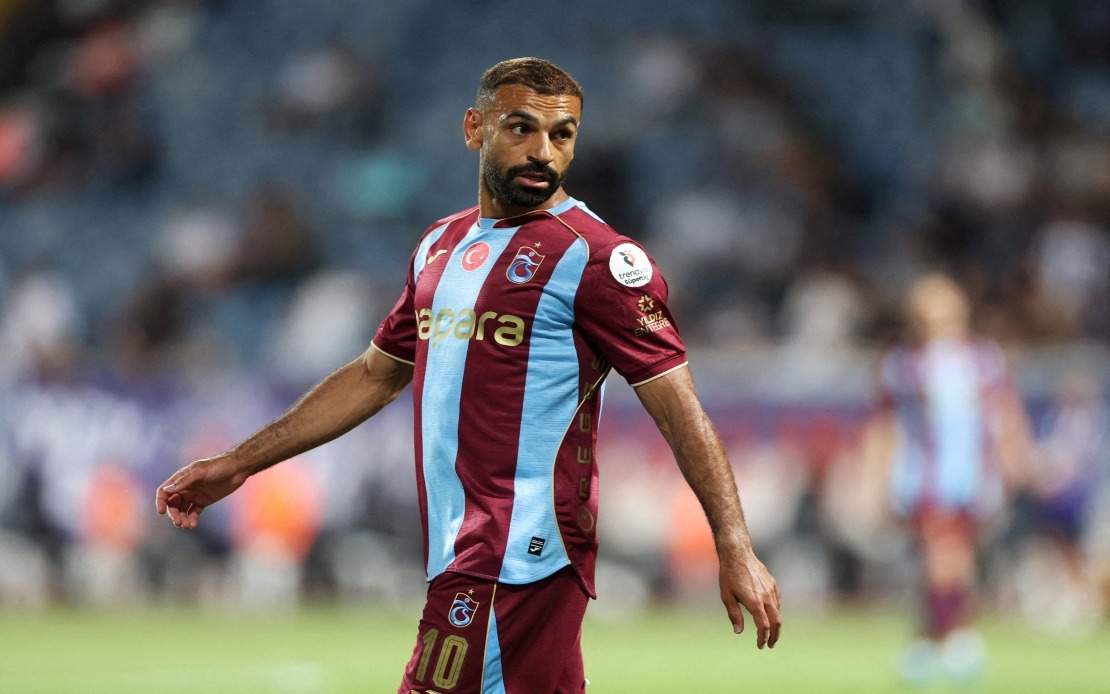
The transfer of Mohamed Salah to Trabzonspor is generating far more than sporting headlines in Egypt—it has sparked a commercial wave across one of Cairo's most iconic shopping districts. Within a fortnight of the Egyptian forward joining the Turkish club, his claret-and-blue No. 10 jersey has become a visible fixture in sports retailers throughout Khan el-Khalili bazaar, Cairo's centuries-old marketplace that attracts tourists and locals alike. The rapid appearance of merchandise signals both the depth of Salah's celebrity within Egypt and the commercial acumen of local shopkeepers who recognised immediate demand for memorabilia tied to one of the Arab world's most recognisable athletes.
The bazaar, which has long served as a cultural hub and tourist destination, recently hosted Egyptian President Abdel Fattah el-Sisi and French President Emmanuel Macron, underscoring its status as a symbol of Cairo's cosmopolitan identity. Shop owners have responded to the Salah phenomenon by prominently displaying his Trabzonspor jersey alongside his Egypt national team shirt, creating a visual narrative that bridges his domestic and international football identities. According to traders operating in the market, the jerseys are moving at competitive prices ranging from 400 to 500 Egyptian pounds, equivalent to approximately US$8 to US$10, positioning them as accessible items for ordinary supporters rather than luxury collectibles.
The enthusiasm extends well beyond commercial transactions. Egyptian and Arab football enthusiasts have shared videos and images celebrating Salah's reception in Turkey, with the broader regional audience viewing his transfer as a point of pride rather than a loss. This perspective reflects how football stardom in the Arab world transcends national boundaries, with Salah's achievements viewed as a reflection of wider Arab excellence and capability. His move to a major European league, even one in Turkey rather than Western Europe, has been framed positively by supporters who see his integration into Turkish football as an opportunity for cross-cultural representation and sporting achievement.
One shopper at Khan el-Khalili, visibly moved by Salah's departure yet optimistic about his prospects, donned the Trabzonspor jersey outside a retail outlet and expressed his well-wishes in Arabic, saying may God ensure Salah's success in Turkey. Such informal testimonies reveal the emotional investment ordinary Egyptians have in Salah's career trajectory. His status extends far beyond that of a professional athlete—he represents a tangible connection between Egypt and the wider world, embodying national pride in an increasingly globalised sports ecosystem. For many Egyptians who may not follow football regularly, Salah's accomplishments and career moves command attention and generate conversation.
Egyptian sociologist Said Sadik has characterised Salah's role in contemporary geopolitical relations as operating in the realm of soft power, functioning as a cultural bridge between Egypt and Turkey at a moment when the two nations are working to strengthen diplomatic and people-to-people connections. This analytical framework moves beyond sport into the territory of international relations, where individual celebrities can influence perceptions, build goodwill, and create opportunities for deeper engagement. Sadik noted that Salah's transfer was significant enough to feature in discussions between Turkish Foreign Minister Hakan Fidan and Egyptian Foreign Minister Badr Abdelatty during Fidan's official visit to Egypt on August 14, suggesting that even foreign ministries recognise the diplomatic dimensions of such high-profile sporting movements.
The cross-cultural reception Salah has experienced in Trabzonspor represents, from this analytical perspective, evidence of strengthening bonds between Turkish and Egyptian populations at the grassroots level. When Turkish football supporters enthusiastically welcome an Egyptian player, and Egyptian traders respond by stocking merchandise tied to that player's new club, an informal network of cultural exchange is activated. Sadik emphasised that this dynamic is neither accidental nor trivial, arguing that Egyptians' particular devotion to Salah—extending even to those who do not typically consume football content—naturally translates into commercial activity around his career developments.
The merchandising phenomenon in Khan el-Khalili also reflects broader patterns in how modern sports marketing operates within the Arab world. Traditional marketplaces, rather than being displaced by digital commerce, have adapted to incorporate contemporary consumer desires. The bazaar's historic character—its stone archways, narrow alleyways, and generations-old trading traditions—now coexists with modern sports memorabilia, creating a unique commercial ecosystem where ancient and contemporary meet. This spatial integration symbolises how Arab societies are negotiating modernity while maintaining connection to traditional institutions and spaces.
For Malaysian and Southeast Asian observers, the Salah phenomenon offers instructive insights into how individual athletes can transcend sport to become vehicles for national identity and international relations. Similar to how regional footballers are celebrated across Southeast Asia, Salah's profile demonstrates the particular intensity of celebrity culture in the Arab world, where individual achievements are frequently interpreted through nationalist and pan-Arab lenses. The commercial response in Cairo reflects dynamics that resonate across Asia, where football stars command enormous cultural influence and generate economic activity that ripples through multiple sectors.
The diplomatic undertones of Salah's transfer are particularly noteworthy given current geopolitical alignments in the Middle East. Turkey and Egypt have experienced periods of tension in recent years, making sporting and cultural exchanges particularly valuable as non-threatening avenues for rapprochement. Salah's presence in Turkish football provides a neutral, apolitical space where citizens of both nations can express appreciation and pride without engaging contentious political issues. This soft power dimension—where individual excellence becomes a tool for building state relationships—is increasingly recognised by diplomatic establishments as a legitimate component of foreign policy architecture.
The story of Salah's Trabzonspor jersey in Khan el-Khalili ultimately illustrates how contemporary globalisation operates at multiple levels simultaneously. International football transfers generate immediate commercial consequences in distant cities; foreign ministries acknowledge sporting developments as relevant to diplomatic agendas; sociologists analyse cultural symbolism embedded in merchandise sales; and ordinary shopkeepers and supporters navigate their emotional attachments and commercial interests through products tied to a single athlete. This layered reality—where sport, economics, diplomacy, and personal identity intersect—characterises twenty-first century globalisation in ways that traditional analyses often overlook.

