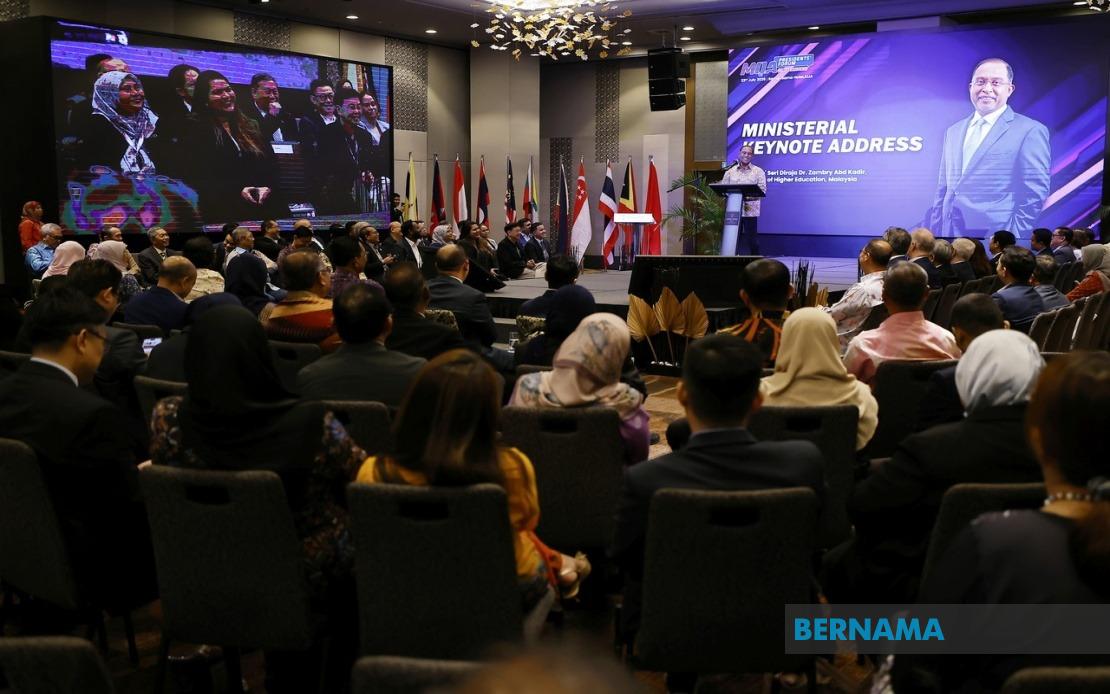
The Ministry of Higher Education has committed to resolving a critical accommodation crisis sweeping through Malaysia's polytechnic system, with Higher Education Minister Datuk Seri Dr Zambry Abd Kadir pledging immediate intervention at institutions grappling with hostel shortages. The shortage emerged as polytechnics welcomed over 30,000 new students for the 2026/2027 academic session beginning in June, a figure representing remarkable uptake that has simultaneously strained physical infrastructure across the technical education network.
The root cause of this accommodation pressure reflects a deliberate policy shift championed by the government to redirect more SPM graduates toward vocational and technical pathways rather than pursuing purely academic routes. Polytechnics and skills institutions have become increasingly attractive alternatives to traditional universities, with application volumes reaching unprecedented levels that exceeded planning forecasts. The 125 per cent achievement rate in applications—meaning applications vastly outpaced available places—demonstrates the growing appeal of TVET qualifications among school leavers and their families seeking practical, employment-focused training.
Dr Zambry framed the situation as fundamentally positive during remarks delivered at the 2026 Malaysian Qualifications Agency Presidents' Forum in Sepang, emphasizing that the accommodation challenge essentially represents success in government policy implementation. Rather than viewing overcrowding as failure, the minister positioned it as evidence that the push to encourage technical education adoption has resonated with Malaysian students. This reframing carries significance because it shapes public perception of what is objectively a resource management problem.
However, the accommodation issue cannot be dismissed as merely a positive byproduct of success. Numerous polytechnics house students in ageing hostel buildings dating back decades, structures that have deteriorated considerably and now operate beyond their designed capacity. Some facilities suffer from maintenance backlogs accumulated over years of deferred repairs, creating conditions that may compromise student welfare and learning outcomes. The ministry has formally identified problematic hostels requiring substantial restoration work, particularly those in demonstrably poor structural or sanitary condition.
The government has received budget requests from MOHE to fund comprehensive repair and maintenance projects at affected polytechnics. Dr Zambry indicated that approval processes are underway and expressed confidence that remedial works would proceed, using the Islamic expression "Insya-Allah" to signal anticipated positive outcomes. These repairs presumably encompass structural reinforcement, plumbing and electrical system upgrades, and basic amenity improvements across multiple institutions nationwide.
Dr Zambry instructed Polytechnic and Community College Education Department director-general Dr Shamsuri Abdullah to implement immediate tactical measures addressing student placement and related logistical concerns. This delegation suggests the ministry is pursuing both short-term solutions to manage current intake pressures and longer-term infrastructure investments. Short-term approaches might include optimizing existing space allocation, adjusting occupancy ratios, or arranging alternative accommodation arrangements where polytechnic hostels prove insufficient.
The surge in polytechnic applications reflects broader economic and social trends within Malaysia. Employers increasingly value TVET credentials as manufacturing, construction, and services sectors face skilled workforce shortages. Parents and students recognize that technical qualifications provide faster pathways to employment compared to extended degree programs. Additionally, polytechnics offer more accessible entry points for students who do not achieve sufficient SPM grades for university admission, broadening participation in higher education.
Regionally, Malaysia's experience mirrors challenges across Southeast Asia as nations prioritize technical education to address skills mismatches in rapidly evolving economies. Thailand, Vietnam, and Indonesia similarly report increasing polytechnic enrolments, though infrastructure development has frequently lagged demand. Malaysia's policy push to double down on TVET represents a sound long-term strategy, yet executing this transition smoothly requires proportional investment in facilities, staffing, and support services.
The accommodation crisis also raises equity concerns. Students relegated to poor-quality hostels endure substandard living conditions that may impair academic performance and wellbeing. If repairs are delayed or underfunded, disadvantaged cohorts—particularly students from lower-income backgrounds who depend on hostel accommodation—face disproportionate hardship. The ministry must therefore ensure that facility improvements reach completion within reasonable timeframes rather than extending indefinitely.
Looking forward, the polytechnic sector requires strategic capacity planning that aligns infrastructure with realistic enrolment projections. If the 125 per cent application rate reflects genuine sustained demand rather than a temporary spike, polytechnics must plan facility expansions accordingly. This means budgeting not merely for repairs to existing hostels but for construction of additional accommodation blocks at institutions serving rapidly growing student populations. Failure to invest proactively will perpetuate crises as each intake cycle brings renewed accommodation pressure.
The higher education ministry's commitment to addressing the accommodation issue demonstrates responsiveness to a pressing challenge, yet success ultimately depends on translating political commitments into executed repair contracts and completed construction projects. Malaysian polytechnic students deserve adequate living facilities that support their educational pursuits, making hostel upgrades not optional luxuries but fundamental requirements for a functioning technical education system.

