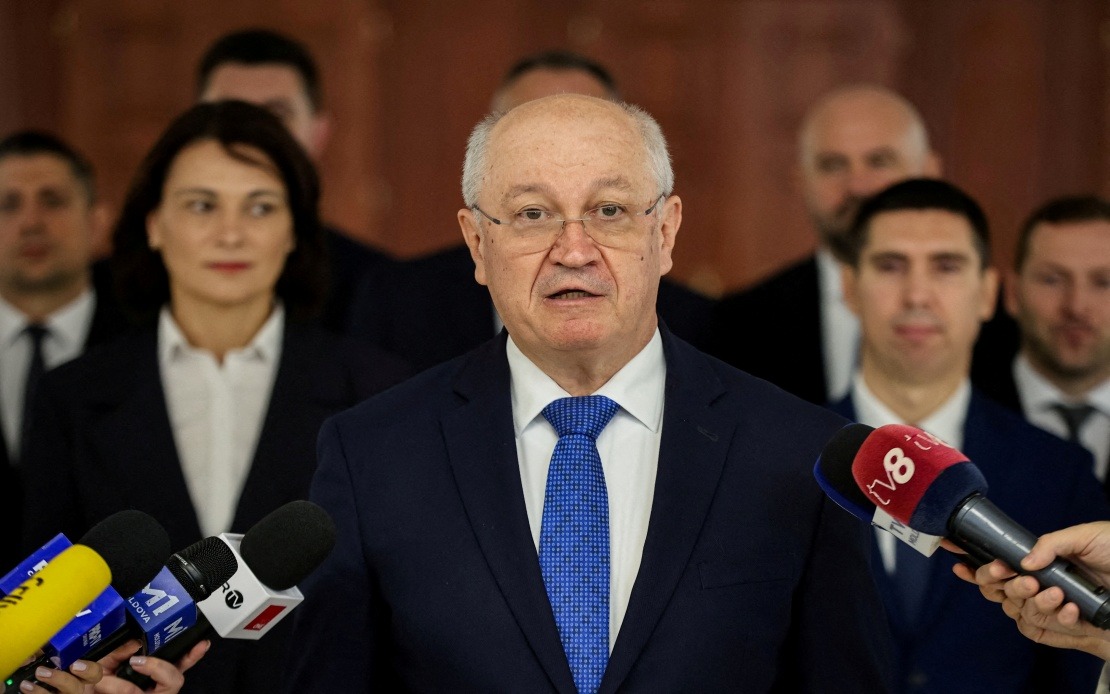
Alexandru Munteanu, who has served as Prime Minister of Moldova for roughly eight months, announced his resignation on Friday through a statement posted on the social media platform X, signalling an unexpected political shift in the Eastern European nation. The announcement came without extensive elaboration on the specific circumstances driving his departure, with Munteanu offering only a philosophical explanation rooted in his personal standards.
The departing premier's departure carries significance for Moldova, a small nation wedged between Romania and Ukraine that has experienced considerable political turbulence in recent years. Munteanu's exit represents another chapter in the country's ongoing governmental instability, particularly as Moldova navigates complex relationships with both European institutions and its influential neighbours. The timing of his resignation, arriving without prior warning of a brewing crisis, suggests internal disagreements may have been simmering beneath the surface for some time.
In his resignation statement, Munteanu emphasised the conceptual tension between maintaining personal integrity and fulfilling his official responsibilities. His phrase—that he could no longer carry out his mandate "in accordance with my principles and convictions"—indicates a fundamental misalignment between his values and either government policy direction or operational demands placed upon him. Such language typically signals disagreement over specific governance decisions rather than a desire for leisurely retirement or pursuit of alternative employment.
Moldova's political landscape remains notoriously fractious, with competing factions frequently clashing over European integration, relations with Russia, and domestic reform priorities. Prime ministers in the country rarely complete full terms without encountering serious opposition from parliament or within their own coalitions. Munteanu's relatively brief tenure of eight months mirrors patterns observed in several previous administrations, suggesting structural challenges in forming stable governing coalitions.
The resignation occurs amid broader regional uncertainty affecting Eastern Europe. Ukraine's ongoing conflict with Russia, Romania's EU membership obligations, and Moldova's aspirations toward closer European integration create a complex geopolitical environment. Domestic priorities such as economic stabilisation, anti-corruption initiatives, and institutional strengthening frequently become entangled with these external pressures, complicating the work of Moldova's executive leadership.
For Malaysian and Southeast Asian observers, Moldova's political volatility serves as a reminder of how smaller nations can experience governance instability when caught between competing great-power influences. While Malaysia's geographic position and regional context differ substantially from Moldova's, the underlying dynamics of managing national interests amid external pressures present universal challenges for developing democracies across the globe.
Munteanu's departure necessitates a succession process in Moldova, likely involving negotiations between parliamentary parties to form a new government or identify a replacement premier. These negotiations could prove protracted, potentially leaving Moldova with interim governance arrangements during a sensitive period. The precedent established by Munteanu's departure—prioritising principle over political survival—may either strengthen public confidence in democratic norms or be interpreted as evidence of governmental dysfunction depending on how subsequent leaders are selected and perceived.
The absence of detailed explanation in Munteanu's announcement leaves room for speculation regarding the precise causes of his resignation. Political observers will scrutinise parliamentary records, coalition agreements, and policy disagreements from recent months to construct a fuller picture of events leading to his decision. Whether the resignation reflects disagreement over European integration, domestic corruption-fighting efforts, budgetary priorities, or other matters remains unclear from the public record.
Moldova's international partners, including European Union institutions and democratic watchdog organisations, will likely monitor developments closely to assess whether the transition proceeds smoothly and maintains democratic standards. The manner in which Moldova's political system manages this leadership change will carry implications for the country's continued progress toward European integration and international credibility.
As Moldova navigates the practical challenges of replacing its prime minister, the broader question of governmental stability in the country remains unresolved. Successive leaders departing amid principle-based objections could indicate either a healthy insistence on ethical governance or a pattern of institutional weakness. The coming weeks will illuminate which interpretation proves accurate and what direction Moldova's government takes under new leadership.

