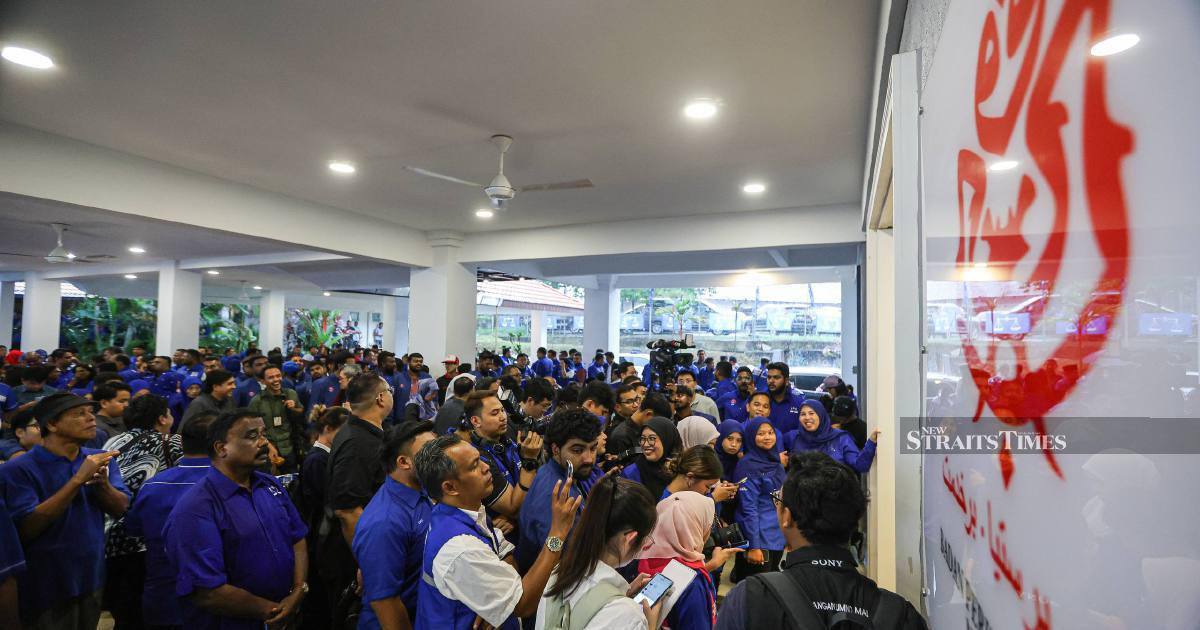
The Johor Umno headquarters in Johor Baru has become a focal point of political activity as Barisan Nasional mobilises its machinery ahead of the state election. The coalition's top leadership, party members, and grassroots supporters have assembled for what represents a critical juncture in electoral preparation: the formal announcement of candidates contesting the 16th state election. The gathering reflects the heightened intensity of campaign activity in Malaysia's southern state, where political fortunes are being shaped through careful candidate selection and deployment across constituencies.
Candidate announcements represent more than ceremonial exercises in Malaysia's electoral calendar. They signal the culmination of internal negotiations, factional reconciliation, and strategic positioning within coalition partners. For Barisan Nasional, which has governed Johor for decades, the selection process carries particular weight, as it determines not only who will represent the coalition but also how party strengths will be balanced across the state's electoral districts. The gathering at party headquarters underscores the formal nature of these decisions and their importance to both party structures and the broader electorate.
Johor holds distinctive significance within Malaysia's political landscape. As the nation's second-largest state by population and a traditional Barisan Nasional stronghold, outcomes here reverberate across the peninsula and influence national political momentum. State elections in Johor typically attract attention from federal leadership and party strategists nationwide, as results often foreshadow broader electoral trends. The assembly of senior coalition figures at this candidate announcement reflects recognition of these stakes and the need for unified party messaging as campaigns transition toward public engagement phases.
The timing of candidate announcements generally indicates how quickly parties will move into active campaigning. Once candidates are formally unveiled, political parties typically accelerate grassroots mobilisation, media engagement, and policy articulation. For supporters and members gathered at the headquarters, the announcement event itself serves as a morale-building exercise, generating enthusiasm that translates into campaign volunteer recruitment and financial contributions. The visible convergence of party machinery at a central location amplifies this momentum-building effect across organisational networks.
Barisan Nasional's approach to candidate selection in Johor reflects the coalition's broader organisational structure. As a multi-party alliance, Barisan Nasional must balance representation among its constituent members, including Umno, MCA, MIC, and Sabah and Sarawak-based partners. Johor, with its substantial Malay-Muslim majority and significant Chinese and Indian communities, requires careful calibration of candidate placement to optimise coalition electoral performance. The headquarters gathering likely includes representation from multiple coalition partners coordinating their respective candidate slate rollouts.
Political candidate announcements also function as media opportunities, allowing party leadership to communicate messaging frameworks and campaign priorities to the public and press. Senior leaders present at such events typically deliver remarks establishing thematic directions for campaigns, whether emphasising development achievements, addressing specific voter concerns, or positioning themselves against opposition parties. These statements, delivered at formal gatherings rather than ordinary press conferences, carry heightened symbolic weight and signal party unity and confidence.
For Malaysian political observers, candidate announcements provide crucial intelligence about how parties assess electoral dynamics and competitive situations across individual constituencies. Candidate quality, seniority, and placement offer insights into which seats parties consider winnable, which they might be yielding, and where they expect closest contests. The selection of incumbent legislators to defend their seats or moves to new constituencies reveals calculations about political ground conditions and internal power dynamics. Such information proves valuable for analysts tracking subtle shifts in electoral strategy and coalition confidence levels.
The Johor state election campaign will unfold within Malaysia's broader political environment, where questions about Pakatan Harapan's consolidation, Perikatan Nasional's trajectory, and Barisan Nasional's recovery from recent setbacks remain unresolved. Johor presents particular interest because the state has maintained stronger Barisan Nasional support than peninsular Malaysia generally, potentially offering the coalition an opportunity to demonstrate sustained relevance and voter confidence. However, opposition parties have progressively strengthened their positions even in traditionally safe territories, meaning no assumptions about outcomes should be taken for granted.
Campaign dynamics in Johor will likely reflect broader themes resonating across Malaysia: economic conditions and cost-of-living pressures, youth unemployment, infrastructure development, healthcare accessibility, and governance integrity. State-specific issues, including industrial development corridors, port operations, and agricultural sector challenges, will also feature prominently. Candidates and parties will need to address these practical concerns while articulating governing philosophies and developmental visions that differentiate them from competitors.
The convergence of Barisan Nasional figures at the Johor headquarters marks the transition from internal preparation to public-facing campaign activity. Once candidates are formally announced, political competition intensifies measurably, with opposition parties launching counter-attacks, independent candidates declaring intentions, and electoral machinery across the political spectrum mobilising supporters. The next weeks will determine whether the momentum evident at this gathering translates into actual electoral success or proves ephemeral.