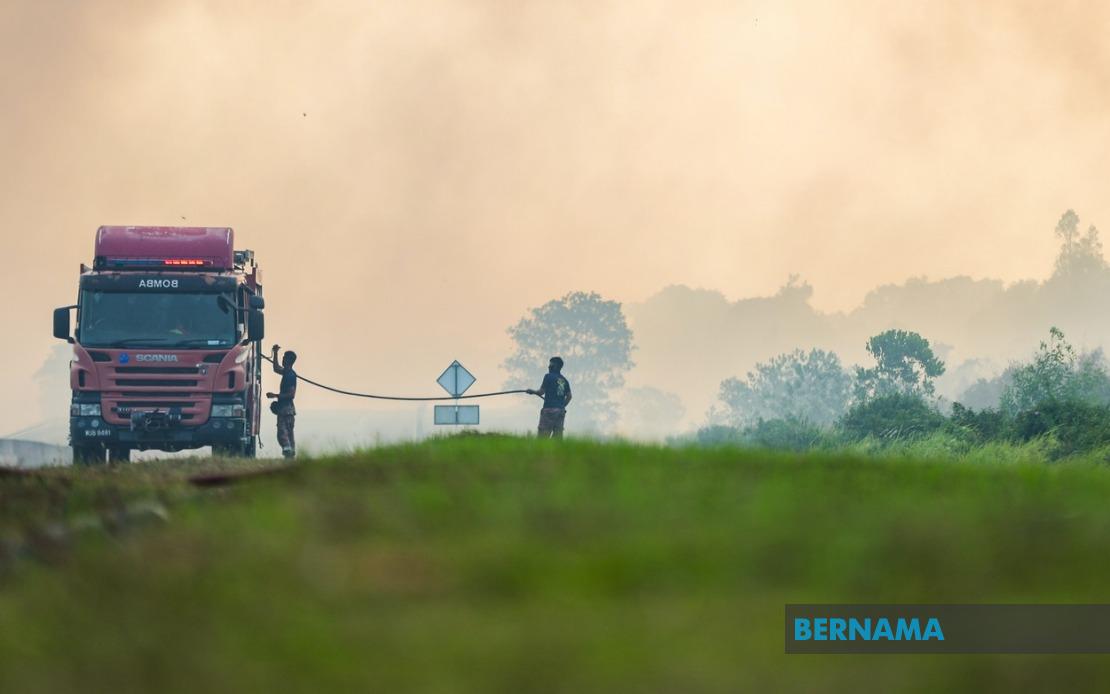
Firefighting teams have made substantial progress in combating a major peatland fire that erupted on Monday along Jalan Bypass Punggai-Sebana Cove near Kota Tinggi in Pengerang, Johor. By late afternoon on August 26, crews had successfully extinguished more than 29 hectares of the 51.4-hectare affected area, marking a significant milestone in the ongoing suppression operation that has stretched across two distinct operational zones.
The scale of this firefighting effort reflects the severity of peatland blazes in Malaysia, which pose particular challenges due to the combustible nature of peat soil. Unlike surface fires that can be quickly contained, peat fires burn beneath the ground and can reignite unexpectedly, requiring intensive and sustained firefighting strategies. Sungai Rengit Fire and Rescue Station's operations commander Fire Superintendent II Baharuddin Idris disclosed that continuous 24-hour operations had been maintained since ignition, emphasizing the relentless nature of the suppression campaign necessary to prevent further spread.
The firefighting operation was being conducted across two carefully demarcated sectors, reflecting the geographical complexity of the incident. Sector A, the more challenging zone, still required attention across more than 21 hectares at the time of the afternoon update, with teams working simultaneously on both direct firefighting and establishing strategic firebreaks to contain flames. Sector B demonstrated remarkable progress, having been almost entirely extinguished, suggesting that operational strategies had proven effective in at least one theatre of operations.
Recognizing the limitations of ground-based firefighting in controlling such an extensive peatland fire, authorities escalated the response by deploying aerial resources. An aircraft supporting the firefighting operation obtained clearance from the Air Operations Control Centre (PGOU) and became airborne at 2.30 pm, enabling the application of water and fire retardants from above. This augmentation of ground forces with aerial capabilities represents standard practice for large-scale peatland incidents in Malaysia, where topography and vegetation density often restrict access for land-based equipment.
The inter-agency coordination required to mount such a comprehensive response underscores the complexity of modern disaster management in Malaysia. The operation drew personnel from multiple organizations including 36 firefighters from the fire and rescue service, nine personnel from the Malaysian Civil Defence Force (APM), 14 from Ranhill SAJ, two environmental specialists from the Department of Environment, and three representatives from the Pengerang Municipal Council. This diverse composition ensured that technical expertise, equipment capabilities, and local knowledge could be mobilized simultaneously.
Peatland fires carry particular significance for Southeast Asian environmental and public health concerns. The Pengerang incident occurs within a region where peatland ecosystems remain vulnerable to uncontrolled burning, which not only destroys irreplaceable carbon-rich soils but also generates substantial transboundary haze. The location near Kota Tinggi places this fire within close proximity to populated areas, making effective suppression essential for protecting residents from hazardous air quality and potential property damage.
The intensity and scale of firefighting operations required indicates that initial fire prevention measures may have been insufficient or that natural factors contributed to rapid fire propagation. Peatland areas require specialized management protocols, including controlled water levels that naturally inhibit combustion. The fact that a fire of this magnitude could develop and spread across 51.4 hectares suggests either that preventive management standards were inadequate or that drought conditions had created exceptionally hazardous circumstances.
The timeline of operations—with the fire breaking out on Monday and still requiring intensive suppression by August 26—demonstrates the persistence of peatland blazes once ignited. Unlike conventional vegetation fires that may be controlled within hours, peat fires demand sustained commitment because subsurface combustion continues even after surface flames appear extinguished. The commitment to round-the-clock operations reflects this reality and the determination to prevent resurgence.
For Malaysian environmental authorities and regional policymakers, this incident reinforces lessons about peatland conservation and fire prevention. The economic costs of such operations, encompassing personnel deployment, equipment utilization, and aircraft engagement, run into substantial figures annually. Investment in preventive measures—including proper peatland water management, vegetation control, and early detection systems—often proves more cost-effective than responding to major incidents after ignition occurs.

