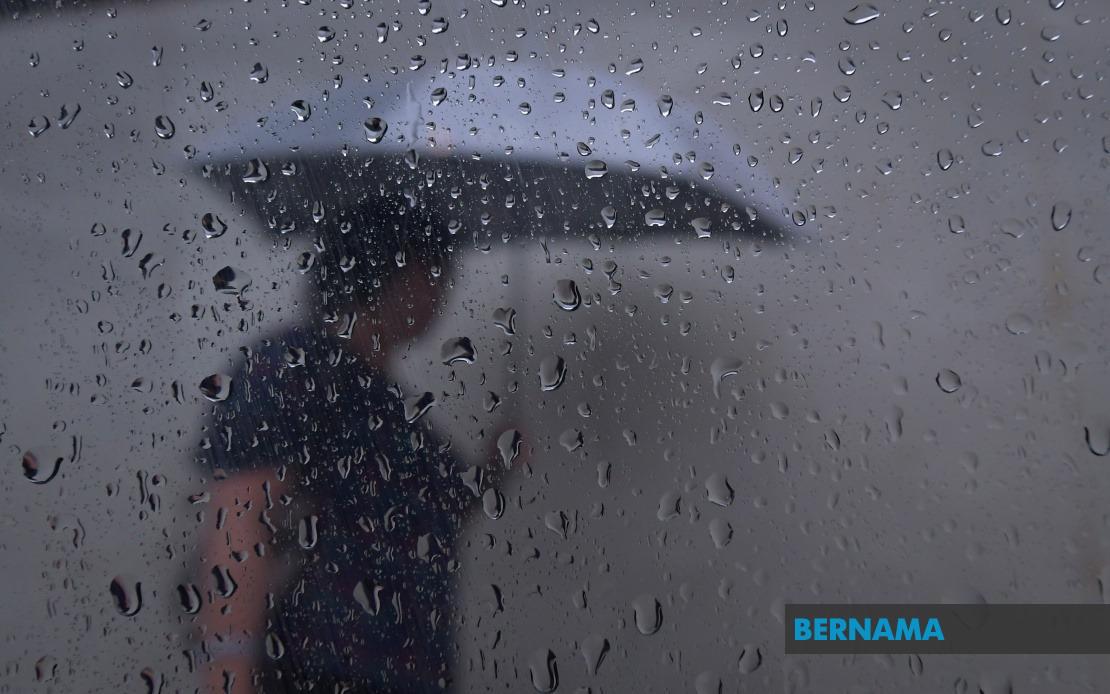
Weather conditions are set to complicate early voting arrangements for Johor's highly anticipated 16th state election, with the Johor Meteorological Department cautioning voters and election officials about incoming precipitation across multiple districts. The meteorological authority has identified Batu Pahat, Muar, Pontian, and Tangkak as areas most vulnerable to morning showers, potentially affecting the logistics and voter turnout during the early polling phase scheduled to begin at dawn.
Azlai Ta'at, the directing officer of the Johor Meteorological Department, provided detailed forecasts that paint a complex meteorological picture for the election's initial phase. Meanwhile, other population centres including Johor Bahru, Segamat, Kluang, Kota Tinggi, Mersing, and Kulai are anticipated to experience generally favourable conditions in the early hours, allowing voters in these areas to proceed without weather-related disruptions during the morning period.
The forecast takes on heightened significance given that deteriorating weather patterns are expected to sweep across all of Johor's districts by afternoon, with thunderstorms predicted to develop as voting progresses into the latter half of the day. This meteorological progression has prompted officials to encourage voters to cast their ballots during morning hours, strategically avoiding the more turbulent afternoon conditions that could impede the voting process or discourage participation among the broader electorate.
Early voting has particular importance for specific voter segments who cannot participate in Saturday's general polling day. The election framework permits 24,751 early voters to cast their ballots at 64 designated early voting centres operating across the state from 8 am onwards. This early voting mechanism accommodates personnel serving in defence and law enforcement roles whose duties preclude attendance at regular polling stations, ensuring comprehensive democratic participation across all segments of the eligible population.
The early voting constituency comprises military and police personnel alongside their spouses, reflecting constitutional arrangements that recognise the scheduling constraints of uniformed services. Specifically, 12,041 members of the Malaysian Armed Forces and their spouses constitute one portion of this cohort, while 12,710 Royal Malaysia Police and General Operations Force personnel and their spouses form the complementary group. These individuals represent essential public service sectors whose operational commitments necessitate alternative voting mechanisms.
Closing times for early voting centres have been staggered to accommodate different location variables and voter registration densities. Rather than uniform closure hours, election authorities have implemented a flexible system whereby centres will shut their doors at varying times between noon and 6 pm, depending on local circumstances and the total number of registered voters assigned to each facility. This approach attempts to balance operational efficiency with the practical realities of weather disruption that may affect staffing or voter movement.
The upcoming state election encompasses a substantial electoral commitment, with 2,727,926 eligible voters ultimately registered to participate across 1,140 polling stations. The geographic and demographic scale of this electoral exercise underscores why meteorological forecasts gain operational relevance—weather conditions affecting even a single district can impact thousands of voters and stretch already-pressured administrative resources. The state's dispersed geography, spanning coastal and inland regions with varying topographic features, naturally creates localised weather variations that election authorities must anticipate and manage.
Candidate competition reflects the stakes embedded in this electoral cycle, with 172 individuals contesting 56 state legislative seats. This candidate-to-seat ratio indicates relatively competitive contests in many constituencies, suggesting that voter turnout and demographic participation patterns may prove decisive in determining final outcomes. Consequently, weather obstacles that suppress participation in any given district could theoretically alter electoral mathematics and representation patterns.
The Saturday polling date represents the culmination of weeks of campaigning and administrative preparation, with approximately 2.7 million ordinary voters anticipated to participate in general voting. Early voting therefore constitutes an integral preliminary phase that both tests electoral machinery and accommodates voters whose professional obligations prevent Saturday participation. The combination of early and general voting phases distributes electoral activity across multiple days, theoretically reducing congestion at individual polling centres while ensuring that no citizen faces insurmountable participation barriers.
For Malaysian voters and regional observers, this electoral exercise in Johor carries broader significance within Southeast Asia's democratic landscape. State-level elections serve as crucial testing grounds for electoral administration, technology implementation, and democratic processes before national-level contests. Weather management during such elections, though seemingly technical, reflects the sophistication of electoral coordination and the extent to which authorities can maintain democratic integrity despite logistical challenges.
The meteorological department's public warnings represent important voter information, enabling citizens to plan their participation strategically around predicted weather patterns. By communicating morning showers in specific districts alongside afternoon thunderstorms statewide, authorities empower voters to make informed timing decisions that maximise their ability to participate while minimising personal inconvenience. Such transparent communication between technical agencies and the electorate reinforces public confidence in electoral processes and demonstrates institutional responsiveness to citizen needs.

