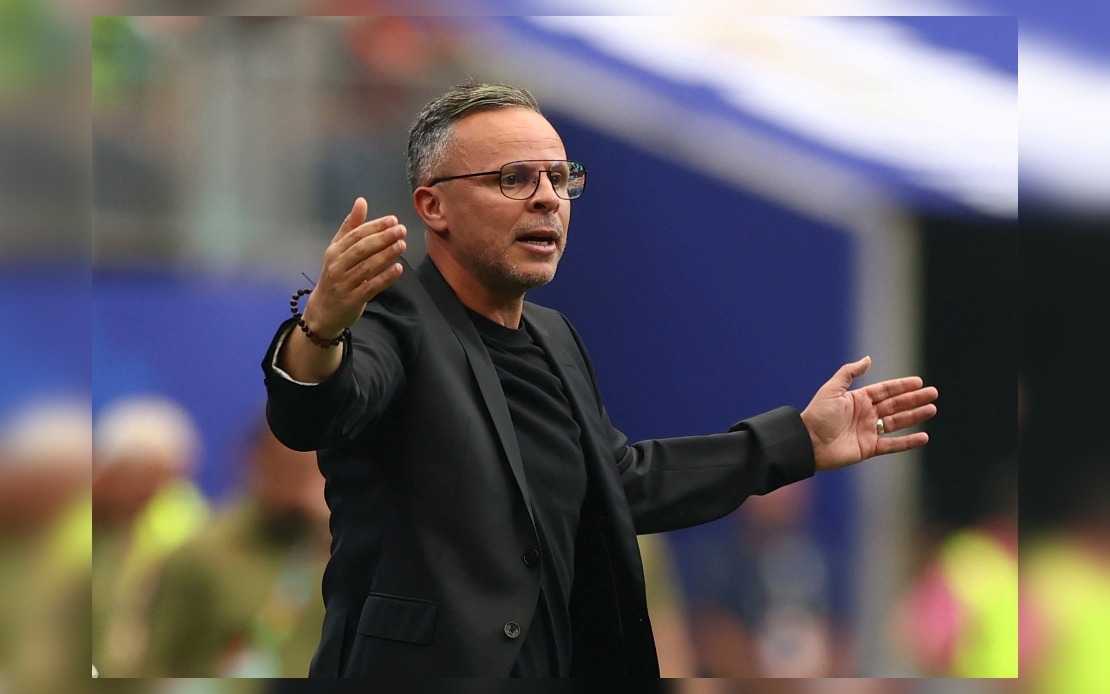
Morocco has moved beyond the status of a surprise World Cup participant and now commands recognition as a serious tournament contender, according to head coach Mohamed Ouahbi. His assessment comes after the Atlas Lions produced a dominant second-half performance to dispatch Canada 3-0 in the Round of 16 match held in Houston, propelling them toward a quarterfinal encounter with France. The emphatic nature of the victory, combined with Morocco's progression to the knockout stages, underscores a fundamental shift in how the North African side is perceived within global football circles.
Ouahbi emphasised during his post-match remarks that the international perception of Morocco has fundamentally changed. Speaking at the press conference, he noted that discourse surrounding the team now centres on its credentials as a major footballing nation rather than dwelling on improbable achievements or underdog success stories. He acknowledged the immense pride this recognition brings to the nation while insisting that the team's ambitions extend well beyond the current tournament stage. His confident assertion that "this is only the beginning" signals Morocco's intent to consolidate its position as a consistently competitive force in international football.
The match itself presented an intriguing tactical narrative, with Canada demonstrating considerable intensity and aggression throughout the opening 45 minutes. The co-host nation pressed high, generated attacking opportunities through rapid transitions, and succeeded in forcing Morocco into uncharacteristic errors. Canada's strategy of constant pressure and quick transitions created genuine problems for the Moroccan defence during the first half, suggesting that the anticipated cakewalk some observers might have predicted never materialised. However, the gulf in class between the two sides became apparent following the interval.
Morocco's second-half resurgence proved decisive, with tactical adjustments made by Ouahbi demonstrating the difference between reactive management and strategic intervention. Azzedine Ounahi scored twice during this period, establishing himself as a key creative force, before Soufiane Rahimi added a late goal that sealed the emphatic victory. When discussing the pivotal changes implemented at half-time, Ouahbi revealed that his team shifted toward a more controlled approach, emphasising passing movements that exploited spaces behind Canada's defensive line. This tactical adjustment forced the Canadian side into a more defensive posture, negating the directness and aggression that had characterised their first-half display.
The coaching staff's identification of these vulnerabilities and subsequent adjustment illustrates Morocco's growing maturity in tournament football. Rather than simply absorbing Canada's intensity and hoping to weather the storm, Morocco actively responded by reshaping its approach to exploit specific weaknesses in the opposing formation. The passing sequences designed to stretch Canada's backline created space for attacking movement and generated the offensive superiority that ultimately produced three goals. This problem-solving approach, repeated across multiple World Cup encounters, has become a hallmark of this Moroccan generation.
Ouahbi's pre-match assessment that Canada would prove the most difficult opponent yet, despite the eventual 3-0 scoreline, reflects a measured and professional perspective often absent from coaches facing less organised opposition. He resisted the temptation to diminish Canada's contribution or dismiss the victory as routine. Instead, he acknowledged that Round of 16 matches rarely produce lopsided results, suggesting that large margins of victory are exceptions rather than rules at this stage of global football tournaments. This contextualisation demonstrates respect for the opposition whilst reinforcing Morocco's exceptional performance.
The broader context of Morocco's tournament trajectory adds considerable significance to Ouahbi's remarks about the team's elevated standing. Morocco's progression to the quarterfinals for a second consecutive World Cup cycle, building upon its remarkable semifinal appearance in 2022, establishes a pattern of sustained excellence rather than a singular breakthrough achievement. The African continent's football hierarchy has shifted perceptibly, with Morocco among several nations demonstrating that consistent investment in youth development, tactical sophistication, and mental resilience produces results on the sport's grandest stage. The team's ability to perform in different tournament conditions and against varied opposition styles reinforces its credentials.
The upcoming quarterfinal matchup against France, who defeated Paraguay 1-0 at Boston Stadium, presents Morocco with an opportunity to further validate its credentials against the traditional powerhouse that eliminated them in recent competitive encounters. Ouahbi's statement that the team harbours no desire for revenge but rather seeks to advance as far as possible reflects a mature and forward-looking perspective. His commitment to continuing with the same tactical approach and psychological confidence that has carried Morocco through earlier rounds suggests consistency in methodology. The emphasis on making the Moroccan people proud, rather than pursuing specific revenge narratives, demonstrates an understanding that the team's significance transcends individual matchups.
For Southeast Asian observers and football enthusiasts in the region, Morocco's trajectory carries relevant lessons regarding the development pathways available to nations outside traditional footballing hierarchies. The combination of youth investment, coaching stability, and tactical innovation has enabled Morocco to challenge established powers consistently. Similar approaches, should they be implemented across Southeast Asian football systems, might gradually elevate the region's competitive standing. Morocco's insistence that it remains hungry and ambitious despite considerable success demonstrates that plateau mentality need not follow tournament progression.
Ouahbi's closing remarks emphasised the team's determination to sustain its momentum rather than accept incremental progress as satisfactory achievement. The stated objective of reaching the final represents genuine ambition rather than empty rhetoric, given Morocco's demonstrated ability to implement tactical adjustments and respond to opposing strategies effectively. The team's confidence appears grounded in tactical competence and demonstrable performance rather than overconfidence or wishful thinking. Morocco has presented itself as genuinely challenging opposition for any remaining World Cup competitor, firmly establishing its credentials beyond surprise narrative or feel-good story frameworks.

