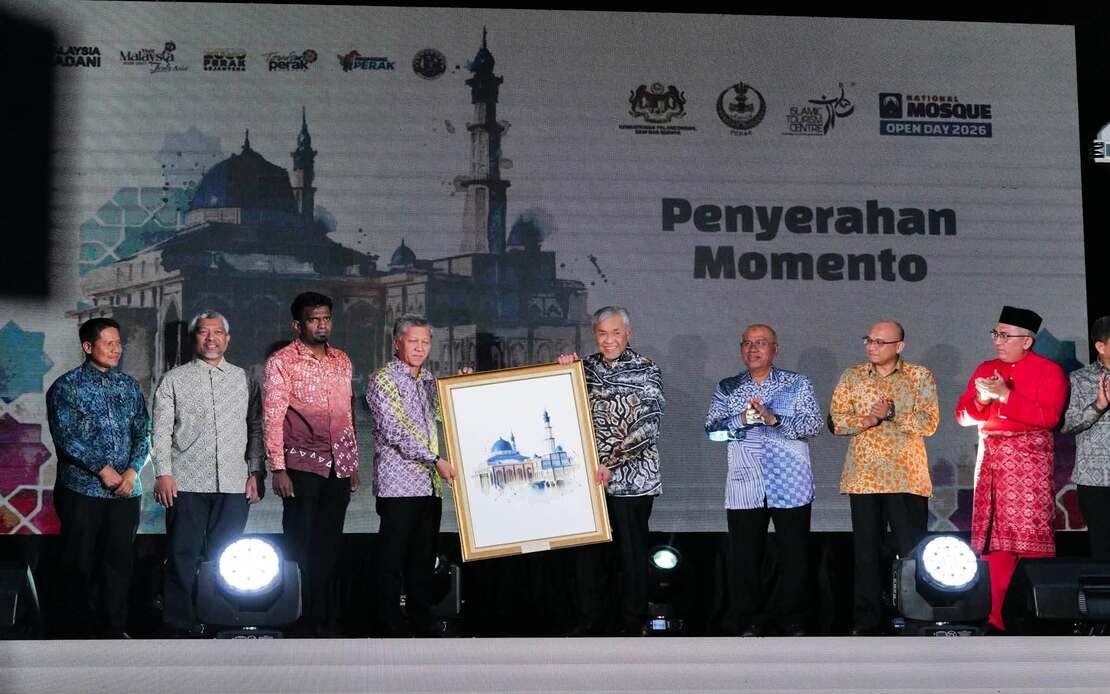
Deputy Prime Minister Datuk Seri Dr Ahmad Zahid Hamidi has urged the nation's mosques to play a dual role as both spiritual sanctuaries and tourism destinations, arguing that such integration need not compromise their fundamental purpose. Speaking at the official launch of the National Mosque Open Day 2026 in Bagan Datuk, Ahmad Zahid outlined a vision where mosque visits become integral to tourists' discovery of Malaysia's Islamic heritage, cultural richness, and civilisational achievements.
The concept reflects growing recognition across Southeast Asia that religious and cultural institutions can attract international visitors while deepening local engagement with faith. Ahmad Zahid emphasised that when tourists visit Malaysian mosques, they should depart not merely with photographs but with meaningful memories of the nation's people and Islamic values. He positioned events such as the National Mosque Open Day as vehicles for achieving this dual objective, creating platforms where mosque communities extend genuine hospitality to visitors of all backgrounds.
According to Ahmad Zahid, expanding such initiatives across the country would provide unprecedented opportunities for dialogue and mutual learning. By opening mosque doors to diverse audiences—regardless of age, religion, or background—these institutions create spaces where interfaith understanding flourishes naturally. This approach addresses a critical challenge in contemporary Malaysia: bridging perception gaps about Islam and demonstrating through lived experience that the faith emphasises compassion, wisdom, and benevolence rather than exclusivity.
The Deputy Prime Minister highlighted how welcoming practices and genuine interactions with visitors serve as powerful instruments for presenting Islam authentically. In an era when religious misunderstandings often spread through distance and abstraction, direct exposure to mosque communities and their values offers counterintuitive but effective antidotes. Such engagement, he suggested, transforms mosques from places perceived as closed or intimidating into vibrant community spaces where visitors encounter the lived reality of Malaysian Islam.
Masjid Tuminah Hamidi in Bagan Datuk, which Ahmad Zahid dedicated as a waqf (endowment) in honour of his parents following its completion in 2023, has recently received designation as Malaysia's 98th Tourism Mosque. The Islamic Tourism Centre, operating under the Ministry of Tourism, Arts and Culture, selected the facility based on its distinctive architectural merit and its integrated Islamic knowledge gallery. This recognition underscores how contemporary mosque design and educational programming can enhance tourism appeal while strengthening the institution's primary religious mission.
The Islamic Tourism Centre's Director-General, Mohammad Faisal Abu Suaib Khan, indicated that Malaysia's mosque sector possesses substantial untapped potential for tourism development. With 6,851 mosques nationwide, Khan noted that identifying and promoting those with unique architectural features, historical significance, or specialised educational facilities could substantially expand Malaysia's Islamic tourism portfolio. The Centre is actively collaborating with the Department of Islamic Development Malaysia and state religious authorities to establish consistent standards and coordinate mosque participation in tourism initiatives.
These institutional partnerships reflect the infrastructure now being developed to support mosque-centred tourism as a legitimate economic and cultural activity. The Islamic Tourism Centre has pioneered certification programmes including the Muslim-Friendly Tourism and Hospitality Assurance and Recognition scheme, which establishes quality benchmarks across the sector. Complementary initiatives such as Muslim-Friendly Tourist Guides training ensure that visitor experiences meet professional standards whilst remaining rooted in authentic Islamic hospitality principles.
The broader framework guiding this sector emphasises what authorities describe as a "Muslim-Friendly, not Muslim-Only" philosophy. This distinction proves crucial for Malaysian context: it signals that mosques opening to tourists need not sacrifice their primary identity or exclude local Muslim worshippers. Rather, tourism integration occurs in ways that enhance overall mosque functionality, generate resources for maintenance and community programmes, and leverage existing facilities more efficiently. The approach acknowledges that many mosques already host diverse visitors and community groups; formalising and professionalising these activities simply makes existing practice deliberate and sustainable.
The National Mosque Open Day 2026, held August 13-15 at Masjid Tuminah Hamidi and Dataran Bagan Datuk, demonstrated this integration through diverse programming combining spiritual observance, cultural displays, recreational activities, and family-oriented engagement. Such events require careful curation to balance reverence for sacred space with accessibility for curious visitors unfamiliar with mosque etiquette. When executed thoughtfully, they model how religious institutions can maintain spiritual integrity whilst becoming more open and welcoming.
For Malaysian tourism authorities and the broader Ministry of Tourism, Arts and Culture, mosque-centred tourism represents a significant strategic opportunity. Malaysia competes regionally with Indonesia, Thailand, and other destinations for Muslim-focused tourism revenues, particularly from growing middle-class populations in Southeast Asia and South Asia. Developing mosque tourism products with proper standards, professional guides, and quality assurance mechanisms positions Malaysia as a premium destination for culturally and spiritually conscious travellers seeking authentic experiences beyond conventional beach and shopping tourism.
The economic implications extend beyond immediate visitor spending. Mosque tourism initiatives can revitalise smaller towns and rural areas—as evidenced by Bagan Datuk's selection as a venue—distributing tourism benefits beyond major urban centres. Local hospitality sectors, transportation services, and cultural industries benefit when rural mosques attract visitor traffic. Additionally, heritage-focused tourism often encourages mosque restoration and maintenance, preserving architectural treasures that might otherwise deteriorate from insufficient funding.
Yet the success of this integration depends fundamentally on how mosque communities perceive and manage tourism activity. Ahmad Zahid's emphasis on hospitality and authentic interaction reflects awareness that tourism can feel extractive or disrespectful if not carefully governed. Establishing clear protocols for visitor conduct, prayer times, photography restrictions, and dress codes protects the sanctity of worship whilst demonstrating that mosques operate according to consistent principles. Training programmes for guides and volunteers ensure that tourism encounters become educational moments rather than superficial transactions.
The mosque tourism initiative also carries subtle diplomatic and soft power dimensions. As Malaysia positions itself as a bridge between Western and Islamic worlds, showcasing well-maintained, architecturally sophisticated mosques welcoming to diverse visitors projects an image of confident, inclusive Islamic identity. This counters narratives portraying Islam as resistant to external engagement or unwelcoming to non-Muslims. For Malaysian policymakers, such positive international perceptions support broader regional and trade objectives whilst strengthening domestic intercommunal cohesion.
Moving forward, the continued expansion of Tourism Mosque designations and supporting infrastructure will likely depend on identifying and developing additional facilities with distinct appeal. Some mosques may emphasise architectural heritage, others Islamic educational programmes, and still others community social services. This diversity allows tourists to explore different expressions of Islamic institutional life across Malaysia, enriching their understanding beyond any single mosque visit.

