A devastating collision on a major route in Johor has claimed the lives of two family members, with an 83-year-old woman and her 58-year-old daughter losing their lives in the incident near Muar on Wednesday morning. The accident, which occurred at 10.30 am on Jalan Temenggung Ahmad near Parit Unas, involved two vehicles and has prompted renewed attention to road safety concerns in the region.
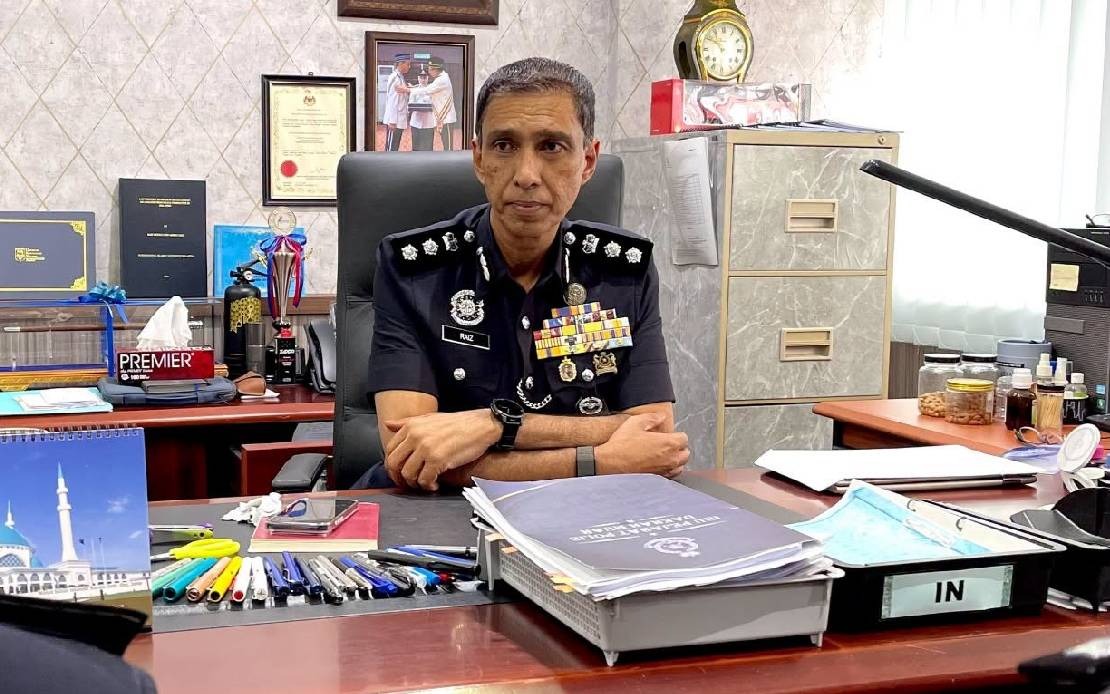
According to Muar District Police Chief ACP Raiz Mukhliz Azman Aziz, preliminary findings indicate that a Perodua Myvi being operated by the daughter suddenly veered out of its designated lane and entered the opposing traffic flow. The precise circumstances that led to the vehicle losing control remain under investigation, though such incidents often point to factors ranging from mechanical failure to driver error or sudden medical episodes.
The collision that followed was violent and consequential. The Myvi collided head-on with a commercial lorry that was travelling from Muar town towards Parit Jawa, leaving little chance for either driver to avoid the impact. The force of the crash proved immediately fatal for the daughter at the scene, while her elderly mother sustained injuries severe enough to require emergency hospital care.
Despite receiving treatment at Sultanah Fatimah Specialist Hospital in Muar, the 83-year-old succumbed to her injuries while under medical care. The tragic outcome underscores the vulnerability of elderly passengers in motor vehicle accidents, particularly when they sustain significant trauma. The hospital, a major medical facility serving the Muar district, became the location where the family's ordeal ended.
The operator of the lorry, a 35-year-old man, escaped with injuries to his hands and legs, injuries he is receiving treatment for at the same hospital. His survival, while fortunate, still represents a traumatic experience and physical harm resulting from the accident. The professional driver's involvement in such an incident also raises questions about the safety protocols for heavy vehicle operators on regional roads.
For Malaysian road users, this incident exemplifies a pattern of dangerous driving conditions on secondary highways connecting towns across the peninsula. The road where the accident occurred serves as a vital transportation corridor in Johor, regularly carrying both private vehicles and commercial traffic. The mixing of these vehicle types at varying speeds creates inherent risks, particularly at locations without divided highways or comprehensive safety barriers.
The Perodua Myvi, one of Malaysia's most commonly owned vehicles, represents a significant portion of domestic road traffic. Its involvement in fatal accidents has been documented repeatedly, though this reflects its prevalence rather than any specific safety deficiency. However, the loss of vehicle control—the apparent trigger for this tragedy—remains a concern that encompasses everything from tyre condition to steering system maintenance.
Police have classified the investigation under Section 41(1) of the Road Transport Act 1987, a provision that addresses fatal accidents and carries significant legal implications. This statutory framework allows authorities to examine all factors contributing to the collision, including potential driver negligence, mechanical failure, or environmental conditions affecting road safety. The investigation will likely take weeks to complete.
The authorities have appealed to the public for any information relating to the accident, signalling that eyewitness accounts or dash camera footage could prove valuable in establishing the precise sequence of events. Community cooperation with such investigations has historically aided Malaysian police in understanding accident causation and subsequently implementing safety recommendations.
This tragedy resonates particularly with Malaysian families, as it involves the loss of an elderly parent and adult child—a devastating combination that affects multiple generations of relatives. Such incidents often trigger broader discussions about road conditions, driver behaviour, vehicle maintenance standards, and the adequacy of emergency medical response times in regional areas.
For Johor residents and regular users of trunk roads in the state, the accident serves as a sobering reminder of the constant dangers present on busy transportation routes. While Malaysia has implemented various road safety campaigns and infrastructure improvements, the persistence of fatal collisions suggests that additional measures—whether technological, regulatory, or educational—remain necessary to reduce mortality rates.

