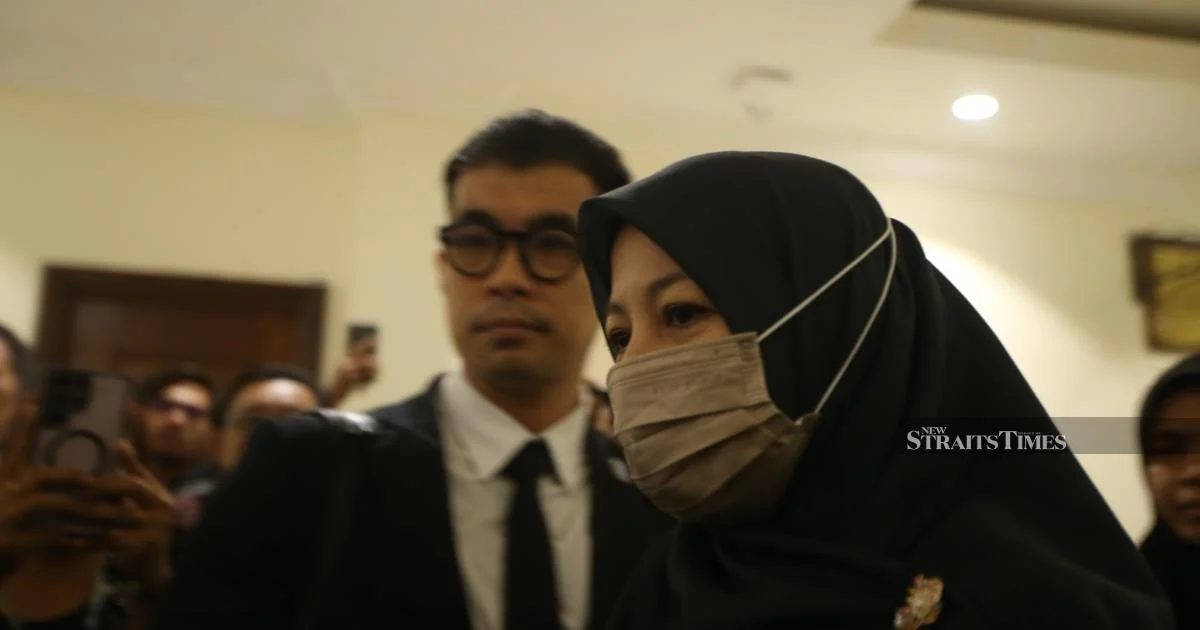
A mother's anguished admission during coroner's court proceedings in Kota Kinabalu has shed light on the profound personal tragedy surrounding the death of Zara Qairinah Mahathir. Noraidah Lamat testified that she deeply regretted her choice to enrol her daughter at SMKA Tun Datu Mustapha, a revelation that underscores the emotional weight of parental responsibility when tragedy strikes a child.
The statement, made within the formal setting of judicial inquiry, represents a mother grappling with the permanent consequences of a decision made with presumably good intentions. Educational placements represent one of the most consequential choices parents make, balancing aspirations for their children's advancement with considerations about institutional environment and individual suitability. In this instance, Noraidah Lamat's expressed regret during testimony suggests that hindsight has revealed significant concerns about whether the school environment was appropriate for her daughter's circumstances.
Coroner's courts serve as critical mechanisms for examining deaths that occur under unclear or potentially preventable circumstances. When a parent testifies about regretting a specific institutional choice preceding a child's death, the court record becomes a repository of grief, accountability, and the investigation into what safeguarding measures might have been inadequate. Such testimony often carries implications for how educational institutions, particularly boarding schools and residential programmes, approach student welfare and duty of care.
SMAK Tun Datu Mustapha, located in Sabah, is an Islamic religious secondary school that draws students from across Malaysia. Like many specialised educational institutions, it caters to students seeking religious education alongside conventional academic curricula. Parents who select such schools typically weigh multiple factors including academic reputation, religious instruction quality, and perceived safety measures. When outcomes prove tragic, the question of institutional accountability becomes unavoidable.
The context of regret expressed in a coroner's court differs fundamentally from casual parental second-guessing. This setting demands examination of whether institutional systems failed, whether warning signs were missed, or whether the broader support ecosystem proved insufficient. For parents navigating Malaysia's diverse educational landscape—from international schools to religious institutions to residential academies—such cases raise urgent questions about what safeguards genuinely exist and how institutions handle vulnerable students.
Sabah's education sector, like much of Malaysia's school system, operates within a complex framework balancing federal oversight, state autonomy, and institutional independence. When tragedies occur within educational settings, they often expose gaps between prescribed protocols and actual implementation. Noraidah Lamat's testimony becomes part of an ongoing national conversation about school safety, pastoral care, and the mechanisms through which parents can ensure their children receive adequate protection and support while pursuing education away from home.
The emotional toll on families who lose children to circumstances that might have been prevented or better managed cannot be overstated. A parent expressing regret in such circumstances is not merely voicing hindsight wisdom but confronting a permanent absence that no decision can reverse. Yet such testimony, preserved in official records, serves broader purposes: establishing whether systemic improvements are warranted and whether other families might benefit from identified safeguarding enhancements.
Educational institutions in Malaysia serving residential student populations operate under increasing public scrutiny regarding their duty of care. Standards regarding supervision, mental health support, peer safety, and intervention protocols have evolved significantly, particularly following previous incidents that prompted institutional reviews. The experience of Zara Qairinah Mahathir's family and Noraidah Lamat's expressed regret contributes to ongoing pressure for continuous evaluation of whether these standards adequately protect all students, particularly those who may be vulnerable or in crisis.
For parents throughout Malaysia and Southeast Asia making decisions about their children's schooling, cases that reach coroner's courts carry cautionary weight. They prompt necessary reflection about what questions should be asked during school selection processes, what warning systems exist should children experience difficulties, and what recourse mechanisms operate if concerns arise. The visibility of such cases through court proceedings means institutional reputations are linked increasingly to demonstrated safety outcomes rather than merely academic credentials.
The broader implications of testimony from bereaved parents like Noraidah Lamat extend to policy conversations within Malaysian education circles about residential school governance, mandatory reporting protocols, mental health service accessibility within schools, and family communication standards. When a parent testifies about regretting an institutional choice, it signals that whatever circumstances led to their child's death, the decision architecture that brought them there deserves examination and potentially reform.

