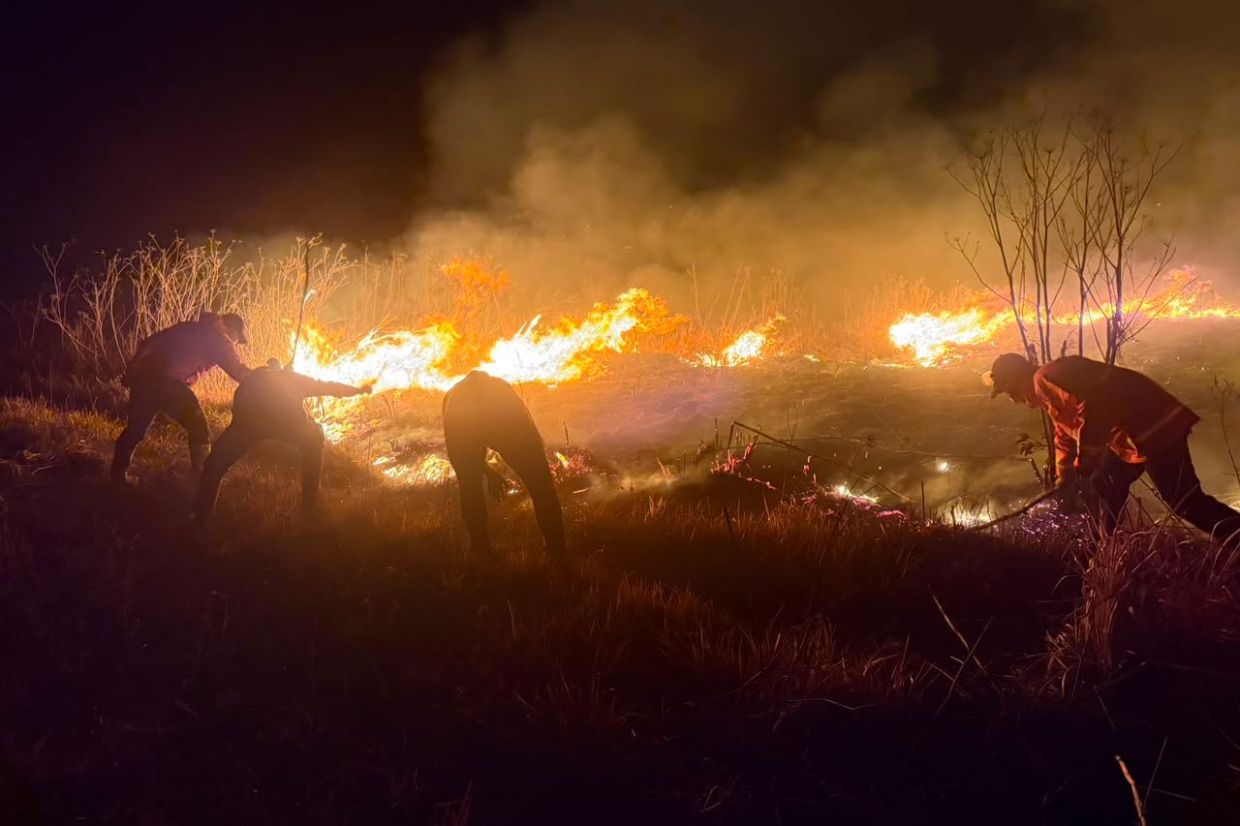
A destructive wildfire consuming the slopes of Mount Bromo in Indonesia's East Java province has now ravaged approximately 520 hectares of forest and grassland, with meteorological conditions continuing to worsen the situation. Officials reported on Sunday that the blaze, which reignited with particular intensity late Saturday evening, has proven increasingly difficult to control as powerful wind patterns sweep across the volcanic landscape, carrying embers and flames from higher elevations toward lower-lying areas of the Bromo Tengger Semeru National Park.
Rudijanta Tjahja Nugraha, head of the Bromo Tengger Semeru National Park Authority, explained that the dramatic expansion of the fire's footprint occurred following a significant flare-up that occurred during the night. The flames have consumed not only the steep volcanic slopes but have also advanced into the extensive savanna regions that characterise much of the park's terrain. This dual spread represents a particular challenge for firefighting operations, as different vegetation types require distinct suppression strategies and resources.
The rapidly intensifying weather conditions have emerged as a critical factor accelerating the fire's progression. Wind velocities strengthened considerably from Saturday afternoon onwards, creating ideal conditions for the flames to race across the landscape at speeds that have outpaced containment efforts. Nugraha attributed much of the fire's aggressive behaviour to the combination of persistent gusty winds and accumulated dried vegetation throughout the park. When wind and fuel moisture levels align in such unfavourable ways, even relatively contained blazes can explosively expand within hours.
The accumulated dryness of the region's vegetation has substantially heightened the park's vulnerability to rapid fire spread. Grasses, shrubs, and other plant matter throughout Mount Bromo's ecosystem have desiccated to dangerous levels, creating highly combustible conditions across the landscape. This natural tinderbox state means that once ignition occurs, the fire encounters minimal resistance from moisture in its fuel sources, allowing it to spread with exceptional speed and intensity that overwhelms typical firefighting capacity.
Responding to the escalating emergency, the Bromo Tengger Semeru National Park Authority implemented comprehensive closure measures beginning at 10 o'clock Saturday evening. All access points to Mount Bromo have been sealed to visitor traffic, with no timeframe specified for reopening. This precautionary decision protects the thousands of tourists who routinely visit the iconic volcano while simultaneously freeing personnel and resources for active firefighting operations. The park authority has established protocols allowing affected visitors to either reschedule their planned visits or receive full monetary reimbursement, a significant financial concession reflecting the severity of the situation.
Forestry Minister Raja Juli Antoni has directed law enforcement authorities to lead the investigative process into the fire's origins, stepping back from direct ministerial intervention in favour of formal criminal inquiry procedures. Although preliminary assessments by the national park authority suggested human activity as the suspected cause, Antoni's statement emphasised the government's commitment to pursuing and prosecuting those responsible. He warned that individuals found guilty of deliberately burning forest or agricultural land face prosecution under existing environmental and forestry laws, with penalties prescribed to match the severity of damage inflicted.
The Mount Bromo incident carries significant implications for Indonesia's broader environmental management challenges, as the country continues grappling with recurring seasonal wildfire episodes that extend beyond this particular volcano. The rapid spread documented at Mount Bromo exemplifies how quickly natural disasters can escalate when weather patterns, fuel conditions, and inadequate preventive measures converge. For Malaysia and other Southeast Asian nations sharing similar tropical and equatorial climates, the Indonesian experience serves as a cautionary reminder of the substantial risks posed by transboundary smoke haze and the importance of regional cooperation on environmental monitoring and disaster response.
The closure of Mount Bromo affects a significant tourism revenue stream for East Java province, as the volcanic landscape ranks among Indonesia's most visited natural attractions, drawing international visitors alongside domestic travellers. The economic impact extends beyond lost ticket revenues to encompass disruptions to local hospitality services, guide employment, and associated commercial activity throughout the region. Tourism operators face uncertain timelines regarding when normal operations might resume, complicating business planning and creating financial strain across the sector.
The incident highlights persistent gaps in Indonesia's forest management and fire prevention infrastructure, despite the nation's vast experience with wildfire phenomena. While seasonal conditions inevitably create heightened fire risk in tropical regions, the acceleration and scale of spread at Mount Bromo suggest that early detection systems, preventive ground clearance, and rapid initial response capabilities may require enhancement. Regional cooperation frameworks focusing on information sharing, resource deployment coordination, and scientific research into local fire behaviour patterns could strengthen collective preparedness across Southeast Asia's shared ecosystems and airsheds.

