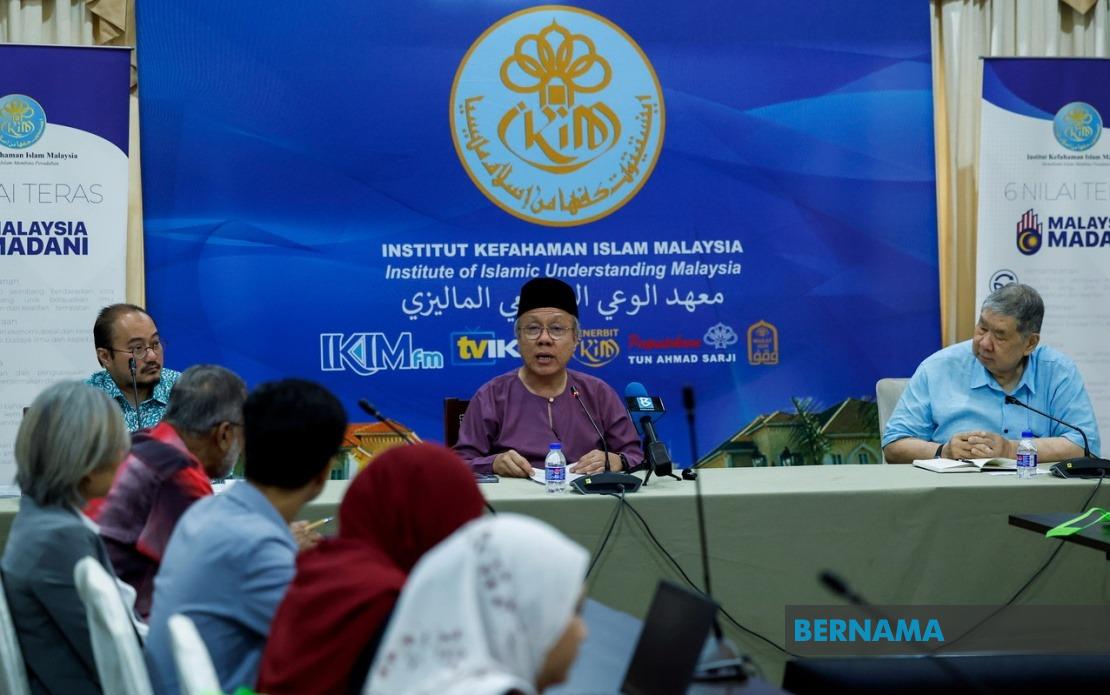
Three major Malaysian institutions brought together local journalists for a focused educational session on the ongoing Tabung Haji Royal Commission of Inquiry, representing a coordinated effort to shape media coverage and public understanding of one of the country's most significant financial governance issues. The Malaysian Press Institute (MPI), in partnership with the Institute of Islamic Understanding Malaysia (IKIM) and Lembaga Tabung Haji (TH), convened the programme at IKIM's headquarters in Kuala Lumpur, drawing participation from more than 20 media practitioners alongside senior leaders from each organisation.
The initiative underscores growing recognition among Malaysian institutions that effective communication channels with the press are essential during periods of institutional scrutiny. Tabung Haji, which manages the savings and investments of millions of Malaysian Muslims saving for the Hajj pilgrimage, has faced intense public scrutiny following the establishment of the RCI. The briefing session, conducted in a closed-door format to encourage candid discussion, lasted nearly two hours and focused specifically on TH's responses to the inquiry's findings and the strategic measures being implemented to restore depositor confidence. Mustakim Mohamad, Tabung Haji's Group Managing Director and Chief Executive Officer, led the substantive discussion, providing detailed explanations and fielding journalist inquiries about the institution's governance transformation and forward-looking initiatives.
MPI president Datuk Yong Soo Heong framed the collaboration as an essential convergence of institutional interests, emphasising that accurate information flows represent a cornerstone of responsible journalism during periods of institutional reform. His remarks following the session highlighted how media practitioners require access to verified, authoritative sources when reporting on complex financial and governance matters affecting millions of Malaysians. The programme, Yong suggested, demonstrated that deliberate knowledge-sharing between institutions and media serves broader national interests by preventing information vacuums that might otherwise be filled by speculation or incomplete narratives. He also indicated that similar programmes could be expanded to other Malaysian states, potentially through dialogue forums or community town halls that bring local journalists into direct conversation with institutional leadership.
A particularly significant dimension of the initiative emerged through the framing offered by IKIM Director-General Associate Professor Datuk Dr Mohamed Azam Mohamed Adil, who sought to recontextualise the RCI issue within a broader narrative about institutional integrity rather than allowing it to become entangled with religious or communal sensitivities. His statement that the inquiry should be understood as a matter of management accountability and trust rather than as a religious or racial controversy attempted to steer media discourse toward governance principles applicable across all Malaysian institutions. This framing carries particular weight given that Tabung Haji occupies a unique position as an Islamic financial institution entrusted with managing resources connected to the fifth pillar of Islam, making it especially vulnerable to narratives that blur governance concerns with broader religious or communal anxieties.
The emphasis on credibility restoration reflects an awareness among Malaysia's institutional and media leadership that public confidence in major financial institutions remains fragile, particularly following high-profile governance failures that have affected Malaysian society over recent years. Tabung Haji's credibility as a repository for the savings and aspirations of working-class and middle-class Muslims depends significantly on demonstrated transparency, accountability mechanisms, and evidence of genuine reform implementation. The media literacy programme appears designed to equip journalists with sufficient contextual understanding and verified information to report on institutional changes with confidence and precision, thereby contributing to informed public assessment rather than feeding anxiety or scepticism rooted in incomplete information.
The collaboration between MPI, IKIM and Tabung Haji also signals broader institutional thinking about the relationship between media engagement and institutional reform in Malaysia. Rather than adopting adversarial or defensive postures toward press scrutiny, the three organisations chose to invest in direct knowledge transfer and dialogue with journalists. This approach reflects understanding that media practitioners operating under deadline pressure and competing information demands may benefit substantially from structured access to authoritative sources and leadership willing to explain complex institutional transformations in accessible terms. The closed-door format allowed for substantive questioning without the performative dimensions that public hearings might entail.
For Malaysian readers and the broader Southeast Asian context, this initiative illuminates ongoing debates about institutional governance, media responsibility, and public trust in an era when major organisations face intensified scrutiny through multiple information channels. The Tabung Haji RCI represents more than a single institutional issue; it touches fundamental questions about how Malaysia's financial system protects ordinary citizens' savings, how institutions respond when governance failures occur, and how media can report on complex reform processes with sufficient depth and accuracy. The literacy programme suggests that Malaysia's institutional leadership recognises these broader implications and is actively engaging media as partners in the process of restoring public confidence through informed, accurate reporting.
The messaging from all three organisations converged on a single strategic theme: that this is fundamentally a story about institutional credibility, governance reform, and the restoration of trust through demonstrated accountability. By positioning the RCI not as a crisis to be managed but as a necessary process producing institutional strengthening, the collaborating organisations attempted to encourage media narratives that acknowledge problems while emphasising substantive remedial action. This framing carries implications for how Malaysian society processes institutional failures more broadly, potentially establishing templates for how other organisations facing governance scrutiny might engage media and public understanding.

