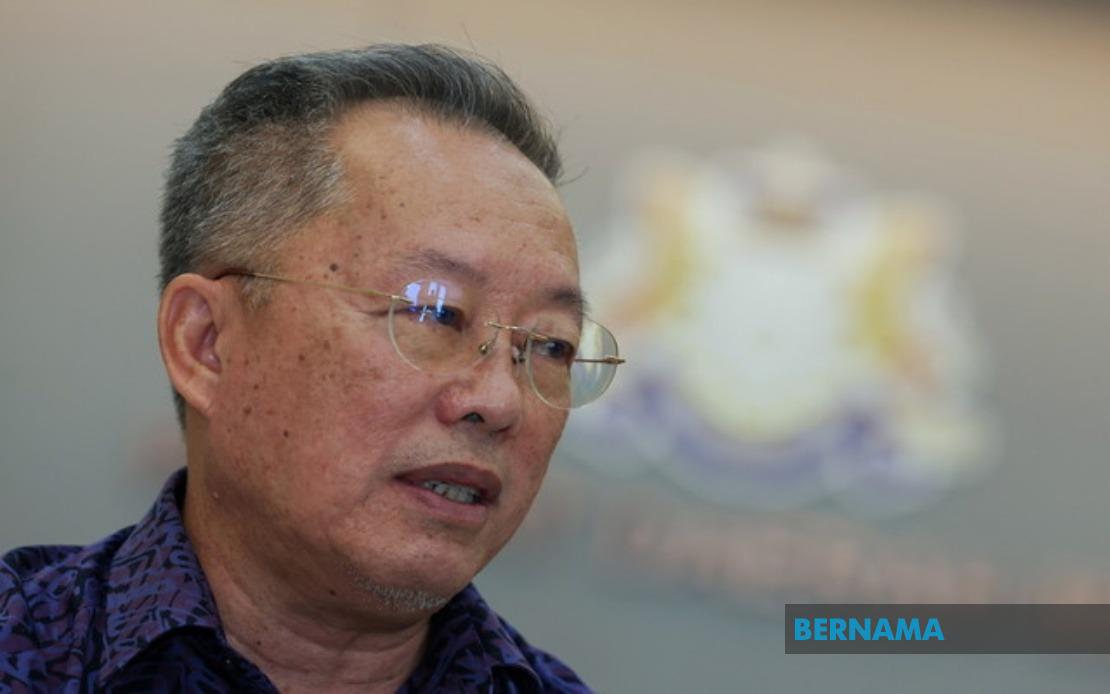
The Muar District Office has pushed back against suggestions that it prevented a government event featuring Prime Minister Datuk Seri Anwar Ibrahim from proceeding as planned, asserting instead that organisers were asked to shift the gathering to another location based on administrative principles. District Officer Zainal Eran clarified that the community engagement programme, originally scheduled for the Sungai Balang Mukim Penghulu Complex, was successfully held at Pantai Leka Food Court Square following consultations between the Muar District Administration and the Johor State Development Office. The relocation, according to Zainal, reflected the district's commitment to ensuring that government buildings are not deployed for activities of a political nature, a foundational concern in maintaining institutional neutrality.
The controversy surrounding the venue change has generated discussion in political circles as Johor prepares for its state election on July 11, with early voting scheduled for July 7. The timing of the Prime Minister's visit to Muar—a district considered a stronghold for ruling coalition parties—had raised questions about whether the gathering constituted a campaign event. Zainal's explanation provides the official position that the district administration acted to safeguard the non-partisan character of public facilities rather than to obstruct the Prime Minister's agenda. This distinction matters significantly in Malaysian electoral politics, where the line between government activity and party campaigning has often blurred, inviting scrutiny from election observers and opposition parties.
According to Zainal, several factors informed the decision to request relocation. The district administration received less than 24 hours' advance notice and lacked comprehensive programme details, circumstances that made coordinating logistics difficult and left insufficient time for thorough planning. Such abbreviated notice periods can strain administrative capacity, particularly when events are expected to draw senior government officials and substantial public attendance. The district's insistence on proper procedure reflects standard administrative practice, though critics might argue that government flexibility should accommodate the Prime Minister's schedule. The tension between procedural rigour and executive convenience remains a recurring theme in how Malaysian bureaucracies interact with political leadership.
The district administration's concerns about maintaining neutrality appeared validated when inspectors visited the venue on the morning of the event and observed political party flags already decorating the surrounding area. This discovery, according to Zainal, underscored the necessity of the earlier relocation decision. Although the official campaign period for the Johor election had not yet commenced, the visible presence of partisan symbols suggested that the event was being positioned as part of wider political mobilisation efforts. The discovery prompted district authorities to take further steps ensuring that state government facilities would not be perceived as platforms for partisan activities, even if those facilities technically remained available for public use.
The successful execution of the programme at Pantai Leka Food Court Square, Zainal emphasised, demonstrated that the district's actions facilitated rather than hindered the Prime Minister's engagement with the Muar community. The gathering drew federal government leaders, agency officials, and rural residents, achieving its stated objective of fostering direct dialogue between the government and constituents. The attendance and orderly nature of the event suggest that the venue change did not diminish its effectiveness or the public participation it generated. Zainal's framing of the outcome presents the relocation not as an obstacle but as a pragmatic adjustment that preserved both the event's purpose and administrative principles around government facility usage.
For Malaysian readers, this incident reflects ongoing tensions in how governance intersects with electoral politics. Government resources, buildings, and the Prime Minister's time are finite, and their deployment inevitably carries political implications, particularly during election periods. The Muar situation exemplifies how district-level administrators navigate these complexities, attempting to balance deference to federal leadership with their institutional duty to maintain the appearance and substance of governmental impartiality. The district officer's public statements also serve to establish an official record that might be referenced if allegations of obstruction are raised in wider forums.
The timing of this clarification is strategically significant. With the Johor election less than two weeks away, any suggestion that state administrative machinery was used to hinder the federal government—or conversely, that the federal government was using state facilities for campaign purposes—could have fuelled narratives about institutional conflict or electoral impropriety. Zainal's detailed explanation, offered directly to media, moves to counter such narratives preemptively. His emphasis that the programme ultimately proceeded and succeeded attempts to neutralise the obstruction narrative while reinforcing the district's commitment to proper procedures.
The broader context involves the complex relationship between Putrajaya and Kota Kinabalu, with Johor remaining a crucial electoral battleground in Malaysian politics. Any perception that federal and state mechanisms are working at cross-purposes during elections can amplify partisan divisions and undermine public confidence in institutional neutrality. The incident, while ostensibly administrative in nature, carries implications beyond Muar. It signals to other district offices how senior officials expect them to manage events involving federal leadership during election periods—balancing responsiveness with procedural adherence and maintaining the separation between government and party functions.
Zainal's call for all parties to cease politicising the matter reflects a desire to de-escalate what could become a substantive controversy. His assertion that the programme proceeded peacefully and orderly, and that the relocation was a minor logistical adjustment rather than a meaningful obstacle, constitutes the official closing position on the incident. Whether this characterisation fully satisfies opposition parties or observers focused on electoral fairness remains uncertain, but the district's documented reasoning provides administrative justification for its decision. For Malaysian administrators elsewhere managing similar situations, the Muar approach offers a template: document the rationale, emphasise procedural concerns, and demonstrate that the activity ultimately proceeded successfully.
The Johor state election represents a significant political test for the ruling coalition and the state government. Every incident, including this venue relocation, contributes to narratives about governance and institutional conduct. The Muar District Office's proactive clarification attempts to shape how this episode is remembered and interpreted. As Malaysian electoral politics continue to grapple with questions about the appropriate use of government resources and facilities during campaign periods, cases like this provide practical examples of how district-level administrators interpret and implement principles of neutrality. The successful holding of the Prime Minister's engagement programme, despite the venue change, ultimately allows the district to claim that administrative integrity and political accessibility were both preserved.

