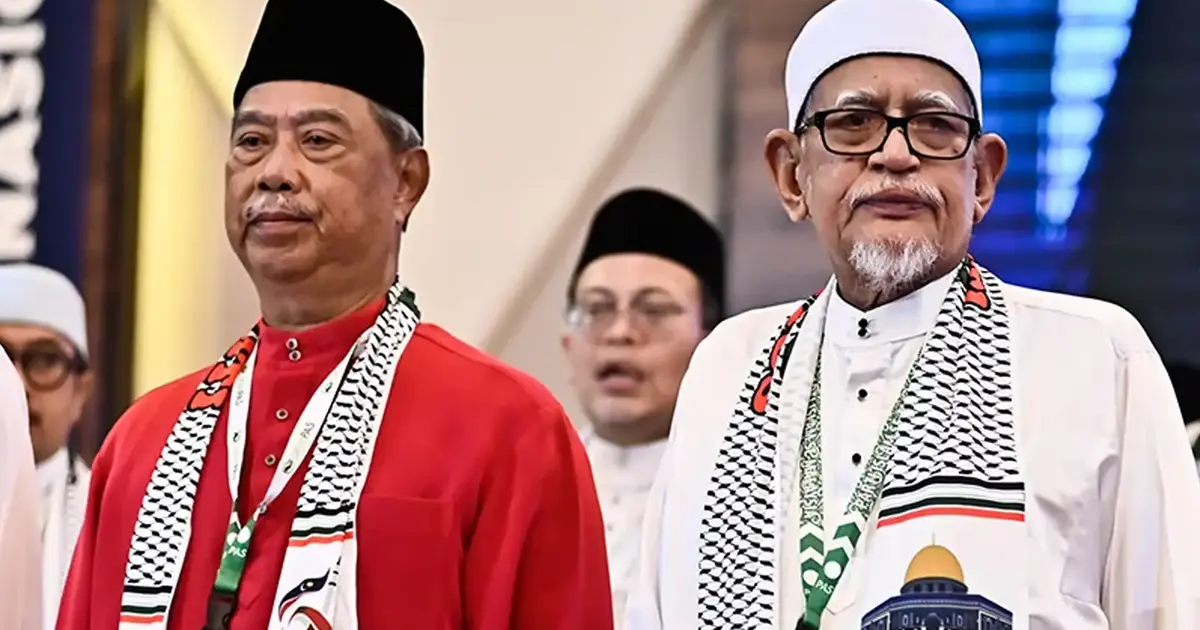
Bersatu president Muhyiddin Yassin has launched a scathing attack on PAS, accusing the Islamic party of engaging in separate talks with Barisan Nasional while simultaneously maintaining membership within the Perikatan Nasional coalition. The criticism reflects deepening tensions within the opposition alliance that has presented itself as a unified challenge to the ruling government, exposing fault lines that could reshape Malaysia's volatile political landscape.
Muhyiddin's public rebuke centers on what he characterises as PAS acting unilaterally without consulting coalition partners, a violation of the understanding that undergirds political alliances in Malaysian politics. Such coordinated discussions with rival political blocs, he argues, fundamentally contradict the principles upon which Perikatan Nasional was constructed, and they jeopardise the strategic coherence necessary for the coalition to function as an effective political force.
The dispute underscores a persistent challenge facing opposition coalitions in Malaysia: maintaining unity among parties with divergent interests, ideological orientations, and geographical bases. PAS, as an Islamic-focused party with a significant membership base primarily in northern Peninsular Malaysia and particular strongholds in certain states, has historically demonstrated flexibility in its political partnerships. This pragmatism, while sometimes enabling electoral gains in specific regions, has frequently created friction with secular-leaning or ethnically-focused coalition members who question whether such manoeuvring serves collective objectives or primarily advances PAS's parochial interests.
The timing of Muhyiddin's accusations carries particular significance within Malaysia's current political context. After the 2022 upheaval that saw Barisan Nasional return to power under Ismail Sabri Yaakob and subsequently under Anwar Ibrahim's government, opposition coalitions have struggled to maintain coherence. Perikatan Nasional itself has faced repeated tests to its stability, with defections, leadership disputes, and policy disagreements creating an impression of instability that undermines its effectiveness as a political alternative.
Barisan Nasional's ongoing engagement with various opposition figures and parties reflects a calculated strategy to exploit coalition fragmentation. By entertaining discussions with ambitious politicians or parties seeking leverage or alternative partnerships, Barisan maintains pressure on existing alliances while positioning itself as an attractive option for those dissatisfied with their current political homes. PAS's openness to such conversations may reflect calculations that its interests could be better served through different arrangements, or it may simply represent exploratory discussions designed to maintain optionality.
For PAS specifically, the calculus is complex. As a party with Islamic credentials and conservative social policies, it has faced persistent tension between its ideological commitments and pragmatic political alliances. Engagement with Barisan Nasional, which has historically included parties and leaders less sympathetic to an Islamic agenda, creates obvious ideological contradictions that party members and supporters may question. Simultaneously, PAS may view such discussions as necessary insurance against remaining locked into coalitions where its concerns are marginalised or where electoral prospects appear dim.
The implications for Malaysian politics extend beyond the immediate dispute between two coalition partners. If Perikatan Nasional fractures or becomes substantially weakened, it alters the competitive landscape facing the incumbent government. A divided opposition makes governing significantly easier for any ruling coalition, as it fragments opposition votes and reduces the coherence of critical scrutiny. Conversely, if opposition parties manage to consolidate their efforts despite friction, they could potentially pose a genuine electoral threat in future contests.
Muhyiddin's willingness to publicly criticise PAS rather than manage the disagreement privately suggests that frustrations within Perikatan Nasional run deep. In Malaysian politics, public denunciations of coalition partners typically indicate either severe breakdown in internal mechanisms for conflict resolution or a deliberate decision to position one's party more favourably with external audiences. Either interpretation suggests the coalition is experiencing substantial stress that may not be easily resolved through routine internal discussions.
Regional observers will closely watch how this dispute develops, as the stability of opposition coalitions affects not merely domestic Malaysian politics but the broader Southeast Asian political environment. Malaysia's position as a regional democracy means that its coalition dynamics influence perceptions of political competition and democratic competition in the wider region. Sustained coalition fragmentation could alternatively benefit incumbent parties seeking to consolidate power with reduced electoral competition, or it could create opportunities for new political configurations to emerge.
For voters and civil society, the episode illustrates a fundamental challenge facing Malaysian democracy: the tension between short-term political self-interest and long-term coalition sustainability. Parties must balance their individual ambitions and ideological commitments against the need for collective action to present voters with genuine alternatives. When that balance breaks down, both the quality of democratic competition and the prospects for constructive political change suffer.

