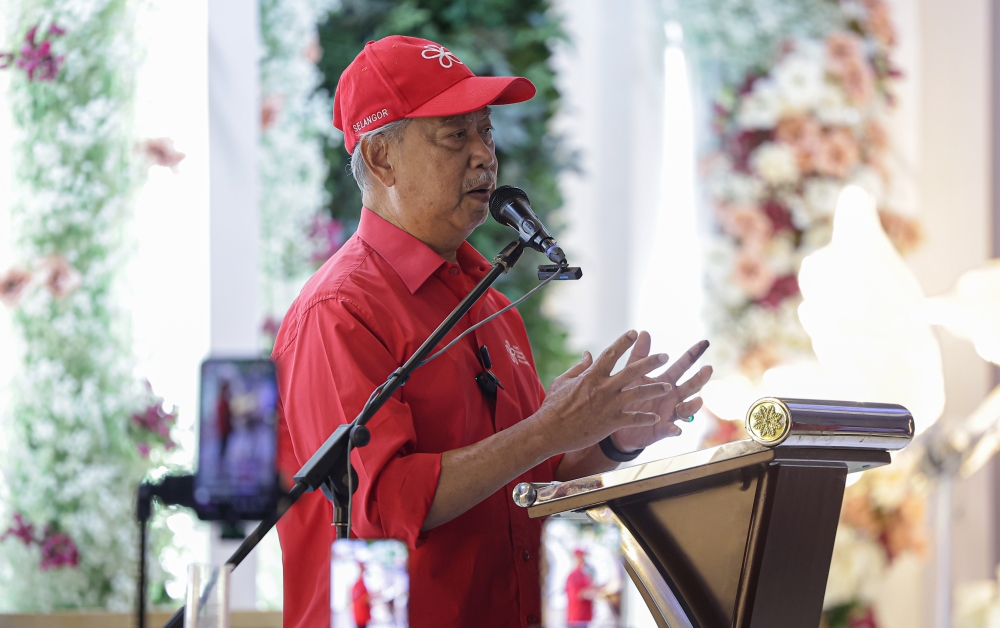
Tan Sri Muhyiddin Yassin has positioned Parti Pribumi Bersatu Malaysia as the nation's only genuine opposition voice in parliament, a striking assertion that underscores the fractured state of Malaysia's political opposition and the dramatic reshuffling of alliances that has characterised recent years. His declaration comes at a moment when the traditional opposition bloc—once anchored by Pakatan Harapan—has splintered into competing factions, each seeking to position itself as the authentic alternative to the ruling government.
The Bersatu chairman's claim reflects a broader reality: Malaysia's opposition space has become increasingly crowded and ideologically fragmented. What was once a cohesive multi-racial coalition spanning from urban progressives to Islamic conservatives has fractured into separate parliamentary groups pursuing different strategic objectives. This fragmentation has significantly diluted opposition effectiveness in holding government accountable, a critical institutional function in any functioning democracy.
Bersatu's positioning as the sole true opposition rests on its assertion that it remains fundamentally distinct from the government machinery while maintaining consistent parliamentary scrutiny. The party argues that other opposition components have either compromised their stance through selective cooperation with government parties or have become so ideologically narrowed—focusing primarily on religious or ethnic constituencies—that they no longer represent a broad-based alternative governance platform. This argument carries weight among observers who note that fractionalised opposition often struggles to articulate coherent policy alternatives.
The practical implications of this fragmentation extend beyond parliamentary theatre. A truly effective opposition serves multiple functions: it scrutinises government expenditure and policy implementation, provides alternative policy frameworks for public consideration, and creates mechanisms through which diverse grievances can be aggregated and represented. When opposition forces scatter into competing blocs, each seeking tactical advantage rather than strategic coordination, these institutional checks weaken considerably.
Muhyiddin's assertion also carries personal and party-political calculation. Bersatu has experienced its own trajectory of shifting alliances, having transitioned from its founding position within Pakatan Harapan to various coalition configurations. For Bersatu to claim unique opposition status while navigating these complexities requires careful rhetorical positioning. The party must simultaneously distance itself from cooperation with certain government-aligned entities whilst maintaining parliamentary credibility as a serious alternative.
The broader Malaysian political context makes this opposition fragmentation particularly significant. With regional neighbours facing their own democratic pressures and institutional challenges, Malaysia's opposition landscape carries implications beyond domestic politics. Strong, coherent opposition forces are essential for maintaining democratic health, enabling electoral competition, and ensuring government accountability. When opposition factions spend considerable energy contending with each other rather than unified scrutiny of government, the overall system loses institutional capacity.
The regional dimension warrants consideration as well. Southeast Asia's democratic variations mean that Malaysian opposition dynamics have salience across the region. Political parties throughout ASEAN monitor how parliamentary oppositions function, how they coordinate—or fail to coordinate—and how they relate to government structures. The Malaysian experience of opposition fragmentation offers cautionary lessons about the institutional costs of coalition breakdown.
Bersatu's historical position adds texture to its opposition claims. The party's origins within the Pakatan framework, followed by repositioning during the Sheraton Move and subsequent alliances, mean that claims about consistent opposition status require scrutiny. However, the party's parliamentary conduct in recent years does demonstrate sustained scrutiny of government positions on various policy matters, lending some credibility to its assertion of opposition identity.
The competitive dynamics within Malaysia's opposition landscape will likely continue reshaping in coming months and years. Electoral cycles, leadership transitions, and policy disagreements will continue to pressure the current fractionalised state. Whether opposition parties can reconstruct broader coalition frameworks or whether the current fragmented state represents a longer-term structural reality remains uncertain. What is clear is that Malaysian voters now face a more complicated opposition landscape, where determining which parties genuinely offer alternative governance becomes more analytically demanding.
For ordinary Malaysians, this fragmentation carries immediate consequences. Opposition weakness translates into reduced capacity to raise marginalised concerns, challenge government inefficiency, or articulate alternative development visions. The institutional costs accumulate silently—reduced parliamentary questions, fewer comprehensive policy counter-proposals, and diminished mechanisms for aggregating diverse public grievances into coherent pressure points. Muhyiddin's assertion about Bersatu's singular opposition status, whether fully accurate or strategically motivated, reflects and reinforces a deeper political reality: Malaysia's opposition forces have yet to reconstruct the institutional architecture necessary for effective democratic counterweight to executive power.

