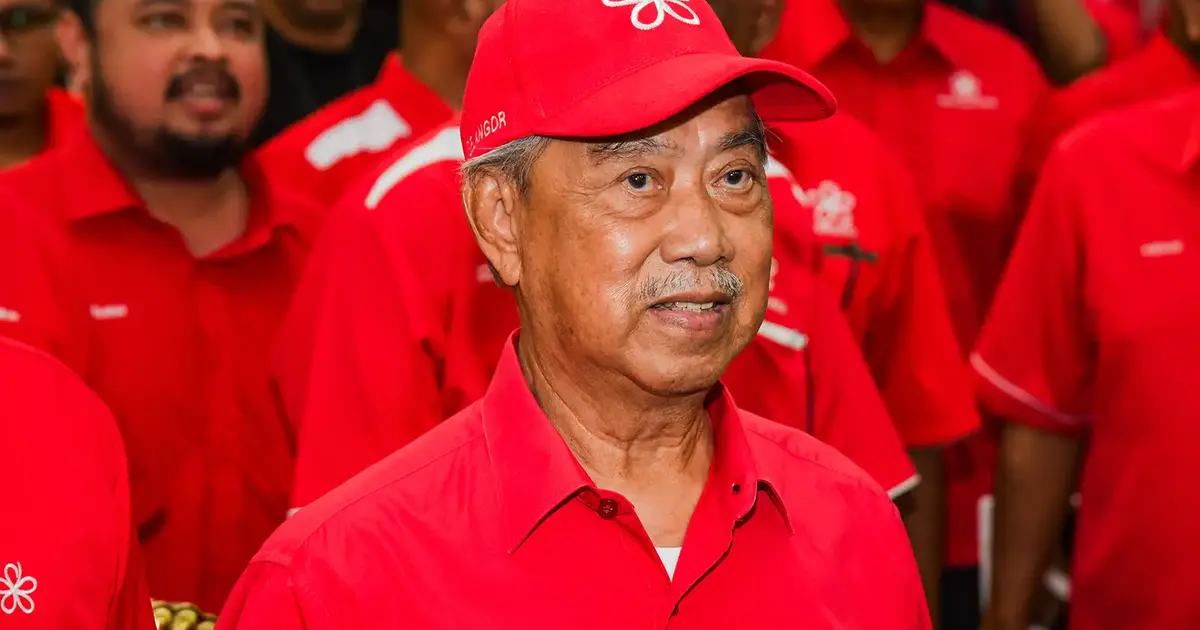
Bersatu party president Muhyiddin Yassin has signalled fresh optimism about the party's ability to attract non-Malay voters independently, suggesting that previous electoral struggles in capturing this crucial demographic stemmed largely from alliance-related concerns rather than fundamental policy weaknesses. The assertion represents a significant repositioning within Malaysia's fractious political landscape, where coalition-building among ethnic communities remains essential for electoral viability.
Muhyiddin's confidence in Bersatu's appeal among non-Malay voters reflects a deeper calculation about the party's political identity and electoral prospects. The Bersatu leader argues that when voters have expressed reservations about supporting the party's candidates and initiatives, their hesitation has been driven substantially by discomfort with the Islamic political approach championed by PAS, Bersatu's former coalition partner. This interpretation suggests that the fundamental Bersatu platform remains attractive to diverse voter bases when evaluated on its own merits, but becomes problematic in voters' minds when bundled with PAS's more religiously-oriented political agenda.
The historical record provides context for Muhyiddin's assessment. Bersatu, as a Bumiputera-focused party founded in 2016, has consistently sought to expand beyond its core Malay-Muslim constituency since its establishment. During the 2022 general election and subsequent state elections, the party's performance among non-Malay voters remained modest, despite competitive campaigns in certain constituencies. These results occurred during periods of both formal and informal cooperation with PAS, lending some credibility to Muhyiddin's contention that partnership optics influenced voter behaviour.
The statement carries particular significance for Malaysian politics at this juncture. Coalition-building remains essential for governing, and any major party's ability to fragment the opposition or consolidate cross-ethnic support directly affects which alliances can command parliamentary majorities. Bersatu's capacity to independently attract non-Malay support would materially alter the calculus for future electoral contests and coalition negotiations, strengthening the party's negotiating position with potential partners while expanding its strategic options.
PAS, meanwhile, occupies a distinct political space as an Islamic party with substantial support among Malay-Muslim constituencies but limited appeal among non-Muslim and secular-oriented voters. The party's emphasis on Islamic law and religious governance has consistently created barriers to broader electoral coalitions. Muhyiddin's implicit critique—that voter discomfort centres on PAS's style rather than on any inherent Bersatu weakness—attempts to reposition Bersatu as a pragmatic alternative capable of representing diverse interests when unencumbered by association with more ideologically pronounced partners.
For non-Malay voters specifically, the calculation involves weighing various factors including economic policy, governance record, leadership credibility, and ideological positioning. If Muhyiddin's assessment proves accurate, then Bersatu's actual policy platform and track record resonate sufficiently with these voters that the primary barrier has been coalition-related perception rather than substantive policy disagreement. This would suggest openness among non-Malay constituencies toward reconsidering Bersatu as an independent force rather than as merely a junior partner in larger coalitions.
The timing of this assertion also warrants examination. Bersatu currently navigates a complex political environment, with tensions evident within Malaysia's ruling coalitions and ongoing discussions about future electoral alliances. By publicly articulating confidence in independent non-Malay support, Muhyiddin positions Bersatu as a stronger negotiating partner—a party with multiple coalition options rather than one dependent upon specific partners for electoral viability. This strengthens the party's hand in discussions with various political factions.
Regionally, Malaysia's political developments carry implications for Southeast Asian democratisation more broadly. The country's three-party ethnic coalition system (representing Malay-Muslim, Chinese, and Indian constituencies) is undergoing stress as newer parties challenge traditional voting patterns. Bersatu's attempt to redefine itself as capable of cross-ethnic appeal, if successful, would represent a significant shift in how Malaysian politics organises itself along communal lines.
Yet scepticism remains justified. Non-Malay voters' past reluctance to support Bersatu may reflect not merely PAS association but also substantive concerns about Bersatu's governance record, internal stability, or policy positions on issues ranging from religious affairs to minority rights. Campaign messaging touting independence from PAS does not automatically translate into electoral support if voters harbour reservations about Bersatu's own institutional direction or leadership.
Moreover, the practical reality of Malaysian electoral politics suggests that even parties seeking broader appeal typically operate within coalitions that shape their parliamentary capacity to govern. Muhyiddin's confidence in attracting non-Malay support must ultimately be tested through actual electoral competition, where voters decide based on comprehensive evaluation of parties, leaders, policies, and realistic governing alternatives rather than theoretical positioning.
The statement nonetheless illuminates Bersatu's strategic thinking going forward. As Malaysia's political landscape continues fragmenting and reforming, Bersatu seeks to position itself as a viable centrist alternative capable of bridging traditional ethnic divides. Whether voters agree with this self-assessment remains to be determined through electoral results and coalition negotiations that will shape Malaysia's political trajectory through the remainder of this decade.

