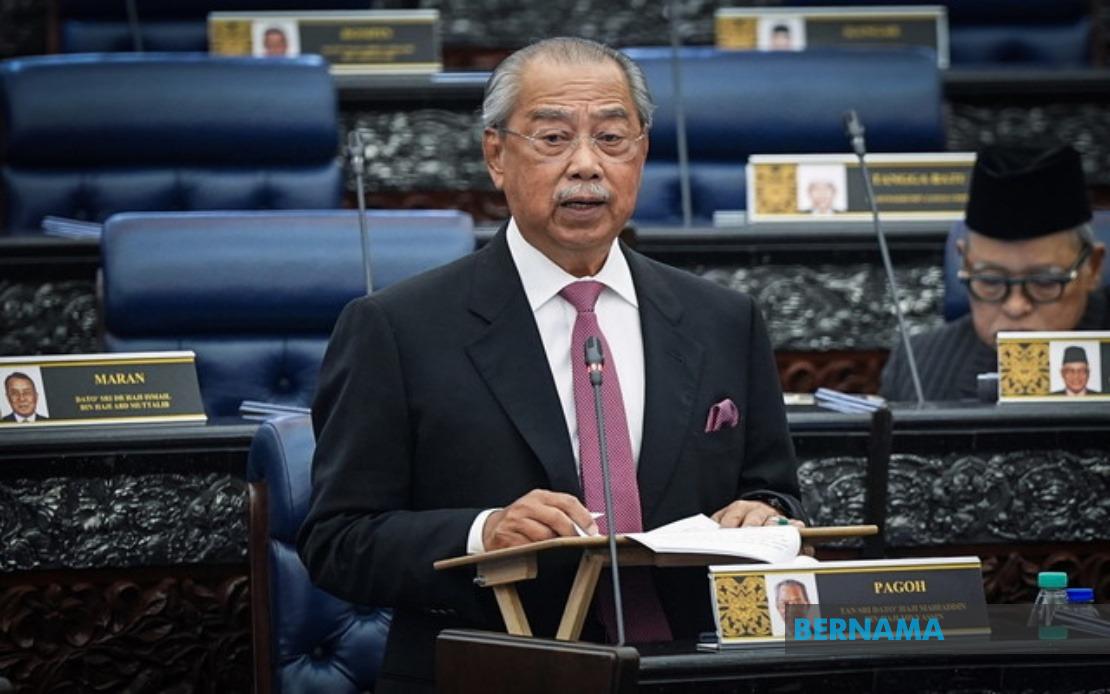
The call for urgent action on Tabung Haji's troubled finances intensified in Parliament as Pagoh MP Tan Sri Muhyiddin Yassin pressed the government to launch an independent forensic audit of the pilgrimage fund's management and wrap it up within twelve months. Speaking during parliamentary debate on the institution's Royal Commission of Inquiry report, the former prime minister emphasised that such an examination must be transparent and designed to uncover the full extent of financial irregularities that have plagued the organisation in recent years.
The RCI's findings, unveiled publicly on July 29, painted a sobering picture of mismanagement at Tabung Haji during the 2014 to 2020 period. According to the report, cumulative losses accumulated between RM10 billion and RM12.6 billion over those seven years—a figure that has sent shockwaves through Malaysia's Muslim community, given that Tabung Haji serves as the primary savings and pilgrimage vehicle for millions of Malaysians preparing for the hajj. The scale of these losses underscores the gravity of governance failures that allowed such financial deterioration to occur without adequate oversight or intervention.
Muhyiddin, who also leads the Bersatu political party, stressed that the findings demanded more than mere acknowledgment. He argued that an independent forensic examination would be essential for tracing the movement of funds through the organisation's complex operations, pinpointing fraudulent activities, instances of power abuse, and negligent decision-making that contributed to the losses. Only through such systematic investigation, he contended, could Parliament and the public understand precisely how the institution's assets had been depleted and who bore responsibility for the damage.
The former premier's remarks carried particular weight given his previous government experience, and his insistence on accountability reflected growing frustration across the political spectrum about the need for concrete action rather than procedural delay. He explicitly called for those found culpable—whether through deliberate fraud, misuse of authority, or failure to exercise due diligence—to face legal consequences. This position echoed widespread public sentiment that financial misconduct at state institutions must result in criminal prosecution, not merely administrative remedies.
Parallel to these calls, MUDA MP Syed Saddiq Syed Abdul Rahman advanced a complementary proposal: establishing a Multi-Agency Task Force specifically to investigate the fourteen problematic Tabung Haji investments highlighted in the RCI report. Rather than allowing separate agencies to pursue fragmented inquiries, Syed Saddiq advocated for coordinated action involving the Malaysian Anti-Corruption Commission, police, and the Inland Revenue Board. This inter-agency approach would prevent the traditional siloed investigation methodology that has historically allowed complex financial misconduct to evade comprehensive scrutiny.
Syed Saddiq's proposal extended further, suggesting that forensic audits should examine not only the fourteen identified Tabung Haji investments but also problematic ventures involving Felda, FGV, and Eagle High—entities that share similar governance structures or have experienced comparable management challenges. By widening the investigative lens, this approach would enable investigators to identify patterns of systemic weakness across multiple state-linked organisations and potentially uncover connections between different instances of mismanagement. The proposition reflects recognition that Tabung Haji's problems did not emerge in isolation but may reflect broader governance deficiencies affecting several major Malaysian institutions.
BN MP Datuk Seri Hasni Mohammad from Simpang Renggam introduced another critical dimension: the need for regular, transparent progress reporting from enforcement agencies. He proposed that MACC, police, and relevant investigatory bodies provide scheduled updates on investigations stemming from the RCI findings, ensuring that Parliament and the public maintain visibility into enforcement efforts rather than investigations disappearing into bureaucratic machinery. Hasni's suggestion addresses a persistent Malaysian governance concern—the opacity of investigation processes and the tendency for inquiries to lose momentum after initial announcements.
Moreover, Hasni advocated for Parliament to establish itself as an ongoing oversight mechanism rather than treating the special sitting as a one-time event. He recommended continuous, cross-party parliamentary surveillance of RCI recommendation implementation, with regular reporting to the Dewan Rakyat. This institutional approach would create a formal parliamentary check on executive implementation, potentially preventing the common scenario where high-profile inquiry recommendations languish without systematic follow-through. The proposal signals parliamentary recognition that accountability extends beyond criminal prosecution to encompassing sustained institutional oversight.
The RCI report itself, released after cabinet approval to disclose its findings to the public, contained twenty-five improvement recommendations for Tabung Haji. As of late July, the institution had reportedly implemented seventy-five per cent of these recommendations, suggesting responsiveness to reform directives. However, implementation of procedural improvements, while necessary, does not address the criminal or misconduct dimensions that demand investigation and prosecution—matters that fall squarely within law enforcement purview rather than administrative reform.
For Malaysian readers and the broader Southeast Asian context, the Tabung Haji situation represents a critical test case for whether regional governments can effectively investigate and prosecute financial misconduct at major state institutions. The fund's significance extends beyond mere financial metrics; it occupies a unique position in Malaysian Muslim life as the institutionalised gateway to hajj, making governance failures a betrayal of religious trust alongside fiscal impropriety. The parliamentary debate signals that political parties across the spectrum recognise this dual dimension and are prepared to demand accountability.
The emphasis on comprehensive rather than piecemeal investigation also reflects evolved thinking about institutional corruption. Malaysian anti-corruption efforts have increasingly recognised that large-scale financial misconduct typically involves complex networks of decisions, approvals, and transactions that cannot be adequately understood through narrow, single-transaction inquiries. The calls for forensic audit methodology, multi-agency coordination, and systematic investigation reflect this sophistication, suggesting that Malaysian institutional capacity for rigorous financial investigation may be maturing.
Government response to these parliamentary proposals will reveal whether statements of commitment to transparency and accountability translate into substantive action with appropriate timeframes and resources. The one-year timeframe proposed by Muhyiddin provides a measurable standard against which government performance can be assessed, preventing the indefinite delay that has sometimes characterised previous major inquiries. Whether enforcement agencies will receive sufficient budget and personnel to complete comprehensive investigations within such compressed timelines remains a critical practical question that will determine whether parliamentary demands yield genuine accountability or merely performative gestures.

