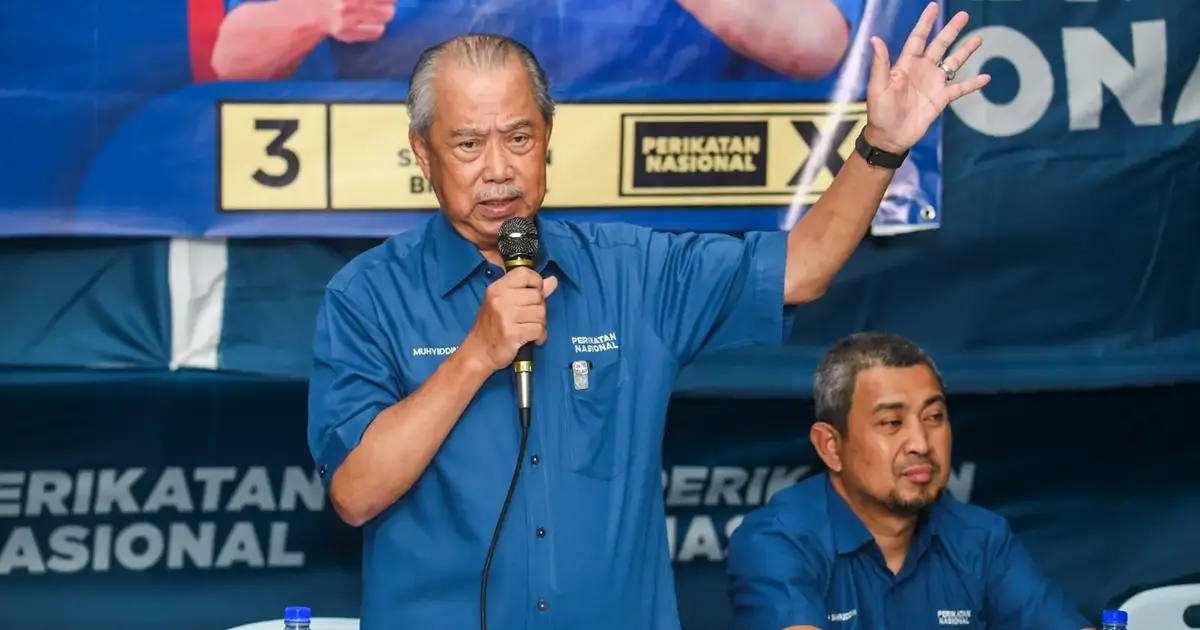
Bersatu party president Muhyiddin Yassin has publicly questioned whether Johor state politics are influencing recent developments in the incarceration status of former Prime Minister Najib Razak, reigniting debate over the intersection of criminal justice and electoral strategy in Malaysia's political landscape.
The timing of any potential release or sentence modification for Najib has become a sensitive topic in Malaysian politics, particularly as the country approaches various electoral contests. Muhyiddin's intervention suggests that opposition figures are scrutinising the motivations behind high-profile decisions affecting high-profile political figures, viewing such matters through the lens of partisan advantage rather than purely judicial independence.
Najib Razak was previously convicted in connection with the 1Malaysia Development Berhad scandal, one of the most significant corruption cases in Malaysian history. The former premier's legal proceedings have remained contentious since his conviction, with subsequent appeals and sentence modifications creating uncertainty around his ultimate jail term and release date. His case has continued to occupy significant space in Malaysian political discourse, serving as a focal point for debates about accountability, judicial independence, and the treatment of former leaders.
Muhyiddin's comments reflect broader concerns within the opposition and civil society about maintaining clear separation between judicial processes and electoral politics. The Bersatu leader's intervention suggests that any moves affecting Najib's status are being interpreted not merely as legal developments but as potential strategic calculations designed to influence voter sentiment in key electoral contests. This interpretation underscores persistent anxieties within Malaysia's political system about whether criminal justice decisions can remain insulated from partisan considerations.
The Johor state context is particularly significant for Malaysian politics, as Johor has traditionally been a stronghold of the United Malays National Organisation, the party that Najib once led and from which he continues to wield considerable influence. Any electoral developments in the state potentially carry implications for Najib's supporters and broader factional dynamics within UMNO. The state's political trajectory has implications not only for local governance but also for national coalition alignments and the balance of power within Putrajaya.
Muhyiddin's assertion that Najib "has already been convicted" appears designed to underscore a fundamental legal fact that should remain immutable regardless of political considerations. By emphasising the existing conviction, the Bersatu president is seemingly arguing that the foundation of Najib's legal status has been established through proper judicial channels and should not be subject to sudden revision based on electoral timelines or political convenience. This framing positions any release or modification as a departure from settled legal conclusions rather than merely an administrative adjustment.
The former premier's case has profound implications for Malaysia's broader democratic institutions. How the country manages high-profile criminal cases involving former leaders significantly influences international perceptions of Malaysian governance, judicial independence, and the credibility of anti-corruption efforts. Southeast Asian neighbours and international observers have closely monitored developments in the 1MDB saga, using it as a barometer for Malaysia's commitment to the rule of law and accountability standards.
For Malaysian voters, these developments carry important messages about the consistency and reliability of the judicial system. If major decisions affecting prominent political figures appear to shift based on electoral considerations rather than legal merits, public confidence in institutional integrity becomes compromised. This concern transcends partisan boundaries, as it touches fundamental questions about whether the country's legal and political systems operate according to coherent principles or are subject to manipulation.
Muhyiddin's public statement also reflects strategic positioning within Bersatu's political strategy. By drawing explicit connections between Najib's situation and electoral politics, the party leader is attempting to frame potential developments as evidence of political manipulation rather than legitimate legal processes. This rhetorical move positions his party as a guardian of institutional integrity, even as the comment itself necessarily injects electoral considerations into what might otherwise remain a purely legal matter.
The broader implications extend to how Malaysia manages transitions of power and accountability for former leaders. Establishing patterns where convictions can be substantially modified according to electoral convenience creates problematic precedents. Such flexibility could undermine efforts to hold future leaders accountable, as potential wrongdoers might calculate that political circumstances could eventually provide relief from legal consequences.
Southeast Asian democratic systems have struggled with precisely this challenge—balancing accountability mechanisms against the practical reality that convicted leaders often retain substantial political influence and supporter bases. Malaysia's handling of the Najib situation thus carries lessons relevant to the region's broader political development and institutional maturity. Countries throughout Southeast Asia are watching how Malaysia navigates these tensions between justice, accountability, and political reality.

