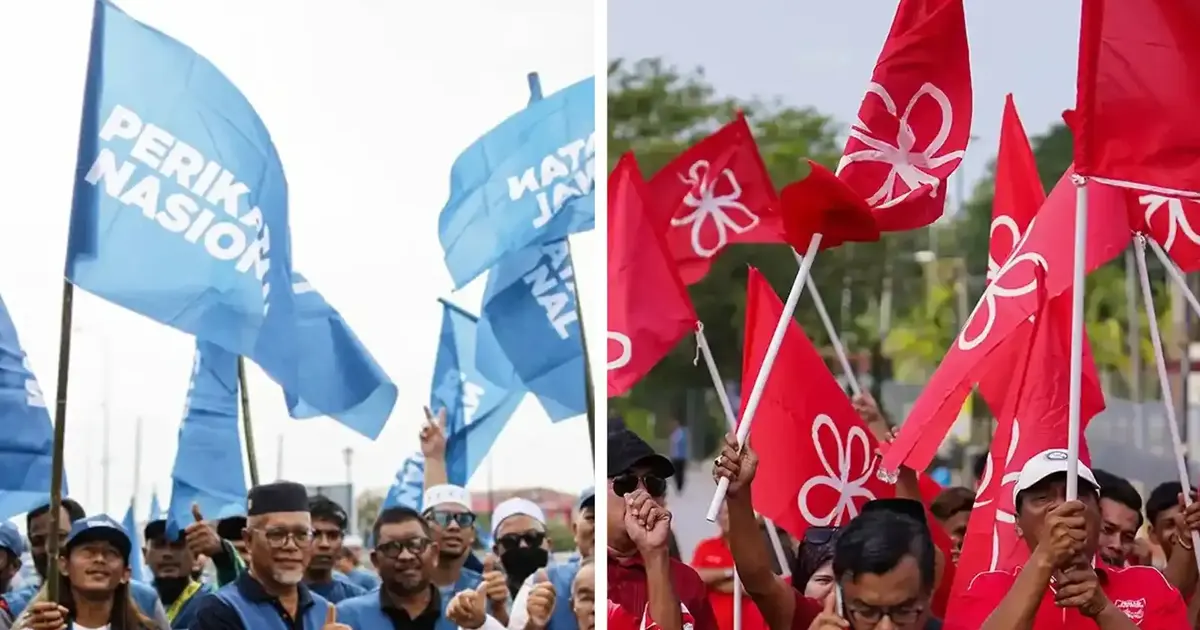
Bersatu president Muhyiddin Yassin has moved to clarify the governance structure of Perikatan Nasional, emphasising that no single figure within the coalition possesses the authority to expel or remove a member party. His remarks come amid ongoing discussions about the mechanics of coalition discipline and decision-making at the highest levels of Malaysia's opposition alliance.
In addressing questions about the circumstances under which a party might be expelled from the PN framework, Muhyiddin underscored that such consequential actions require unanimous endorsement across the entire membership. This procedural requirement reflects the coalition's foundational principle that major decisions affecting the collective body should not rest with any one individual, regardless of their position or influence within the alliance.
The clarification carries significant implications for understanding PN's internal dynamics and the checks and balances that theoretically govern major coalition decisions. By insisting on the need for collective approval, Muhyiddin effectively establishes a veto structure where every member party holds equal standing when it comes to questions of expulsion or disciplinary action against fellow members. This architectural choice suggests the coalition is built on the assumption that no single party, however numerically dominant, should unilaterally determine the fate of others within the alliance.
The timing of this statement reflects the intricate balance required to maintain a coalition as diverse as Perikatan Nasional. The alliance brings together parties with distinct ideological positions, regional bases, and political objectives. Without clear and binding procedures for major decisions, such an arrangement risks fragmenting along factional lines. Muhyiddin's emphasis on consensus-based mechanisms therefore addresses both practical and symbolic concerns about coalition cohesion and legitimacy.
For Malaysian political observers, the distinction matters considerably. In previous coalition configurations, disputes over membership, discipline, and representation have occasionally generated constitutional crises or sudden realignments. By publicly anchoring PN's approach in collective decision-making, Muhyiddin appears to be establishing a political norm that distinguishes the coalition from earlier arrangements that sometimes permitted more centralised control. Whether all parties genuinely accept these principles in practice remains an open question, however.
The statement also reflects the broader constitutional and institutional debates within Malaysian politics about power distribution and the limits of individual authority. While formal coalition agreements typically outline procedures for member conduct and potential expulsion, the actual enforcement of such provisions depends heavily on whether all parties genuinely regard those procedures as binding. Muhyiddin's insistence on unanimity effectively raises the bar for any disciplinary action, making it considerably more difficult to remove a member without generating substantial internal conflict.
This approach creates both strengths and vulnerabilities for Perikatan Nasional. On one hand, it provides protection for smaller coalition partners against arbitrary action by larger ones, potentially encouraging genuine commitment to the alliance rather than mere coerced participation. On the other hand, it can render the coalition vulnerable to obstruction by any single member party, creating opportunities for blackmail or opportunistic behaviour that individual parties might exploit for leverage in negotiations.
The current configuration also reflects the lessons Malaysia's opposition movements have learned from past coalition experiences. Previous alliances have sometimes dissolved or fractured when dominant parties attempted to impose discipline unilaterally on partners. By explicitly rejecting that model, Muhyiddin signals that PN aspires to operate on different principles—ones based on negotiation, consensus, and mutual respect rather than hierarchical control. Whether this aspiration translates into durable practice will significantly shape the coalition's future trajectory.
For Malaysian voters and observers monitoring opposition politics, Muhyiddin's clarification provides useful insight into the formal structure governing PN's internal relations. It suggests that while the coalition may occasionally experience tensions among members, the removal of any significant partner would require overcoming substantial procedural and political obstacles. This has implications for understanding both the stability and the decision-making capacity of Malaysia's principal opposition alliance at a time when national politics continues to evolve in unpredictable directions.
The clarification ultimately positions Perikatan Nasional as an alliance where member parties retain substantial autonomy and protection against unilateral action by others. Whether such arrangements prove sustainable depends on the goodwill and forbearance of coalition members over time—factors that political experience suggests are neither guaranteed nor permanent.

