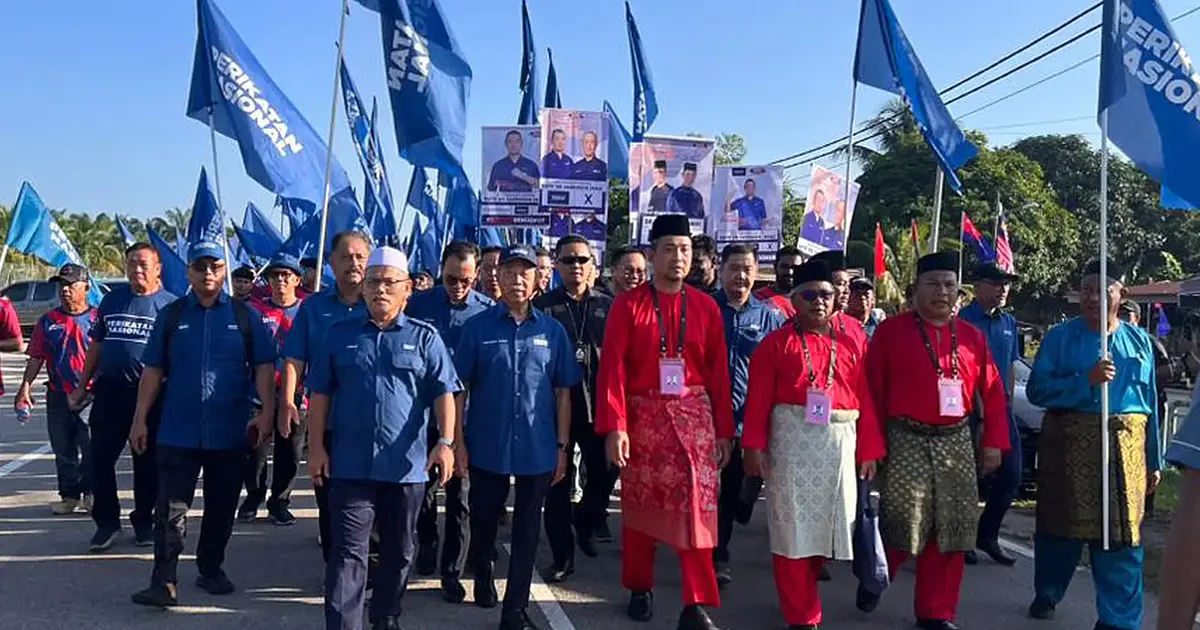
Perikatan Nasional chairman Muhyiddin Yassin led a significant grassroots mobilisation effort in support of Dr Sahruddin Jamal, the Bersatu-fielded candidate for the Bukit Kepong constituency. The public show of party unity brought together hundreds of PN supporters in what signals the coalition's determination to defend or gain ground in this politically contested area. The gathering reflects the increasingly competitive nature of Malaysian politics, where coalition leaders actively engage in localised campaigns to secure voter backing.
Dr Sahruddin Jamal, who has previously served two consecutive terms as an assemblyman, represents the continuity that Bersatu and its PN allies are pitching to voters in this contest. His existing tenure in elected office suggests familiarity with constituent concerns and established working relationships across the district. This track record forms part of the coalition's electoral messaging, positioning experience and administrative knowledge as key differentiators in the campaign.
The mobilisation of hundreds of supporters underscores the tactical importance both Perikatan Nasional and Bersatu place on this particular seat. In Malaysian electoral contests, the ability to turn out large numbers of party faithful serves multiple purposes: it demonstrates organisational capacity to voters, generates local media coverage, and reinforces morale within the party structure. The participation of Muhyiddin himself—one of the coalition's most prominent national figures—signals high-level strategic attention to the outcome here.
Bersatu, the party founded by former Prime Minister Mahathir Mohamad and now led by Muhyiddin, has positioned itself as a central pillar within the broader Perikatan Nasional alliance. The coalition, which also includes PAS and several smaller parties, has sought to present itself as an alternative political force since its formation. Events like the Bukit Kepong campaign activity keep the coalition's organisational machinery active and visible between major national elections, maintaining party discipline and voter engagement.
The Bukit Kepong constituency carries its own political history and demographics that likely factored into the decision to deploy such high-profile support. Constituencies where incumbent assemblymen hold substantial personal following often become focal points for parties seeking to either retain control or mount credible challenges. The presence of Dr Sahruddin's previous legislative experience in the area suggests the seat may represent either a stronghold to defend or a winnable target that PN believes can be captured or held.
From a broader Southeast Asian perspective, this type of localised political activity reflects patterns seen across the region, where political parties invest heavily in ground-level organisation and personal leadership visibility. Unlike purely digital or mass-media campaigns, direct engagement by senior party leaders with local supporters remains a significant feature of electoral contests in Malaysia and comparable democracies. This approach emphasises relationship-building and personal accountability to the electorate.
For Malaysian voters in other constituencies, the Bukit Kepong campaign mechanics offer insight into how the major coalitions are currently prioritising their resources and where they believe competitive contests will be decided. The mobilisation of substantial supporter numbers suggests PN views this race as either high-risk or high-opportunity—or possibly both. Understanding these deployment patterns helps voters gauge which constituencies major parties consider genuinely contested versus those where they may be conceding ground.
Muhyiddin's direct involvement also carries implications for Bersatu's internal hierarchy and decision-making. By personally leading a campaign rally, the chairman reinforces his own authority within the party structure while simultaneously elevating Dr Sahruddin's candidacy and implicitly endorsing his viability as a representative. This kind of public association carries reciprocal benefits: Dr Sahruddin gains national leadership backing, while Muhyiddin demonstrates active engagement in party operations beyond central party office work.
The timing and scale of the Bukit Kepong mobilisation may reflect broader positioning within Malaysian politics ahead of upcoming electoral contests. Political parties often use local by-elections, state assembly contests, and similar competitions as testing grounds for campaign strategies, messaging approaches, and organisational capability. Success or failure in individual constituencies provides valuable feedback about which political narratives resonate with voters and which campaign tactics prove effective.
For constituents in Bukit Kepong specifically, the campaign activity introduces direct exposure to PN's contemporary political priorities and policy platforms through the candidate and surrounding party machinery. Voters gain opportunities to assess Dr Sahruddin's connection to community concerns and evaluate whether his previous assembly experience translates into effective representation and responsiveness at this electoral stage. The campaign gathering creates a venue for two-way political communication between representatives and the represented.
The coalition approach embodied in Perikatan Nasional continues to test whether multiple parties can maintain cohesive messaging and united action around shared political objectives. Bersatu's prominence within PN, demonstrated through its candidacy in Bukit Kepong and reinforced by chairman-level campaign involvement, reflects the party's ambitions within the broader alliance structure. How voter response to this campaign translates into actual support will provide important data about PN's broader electoral viability.

