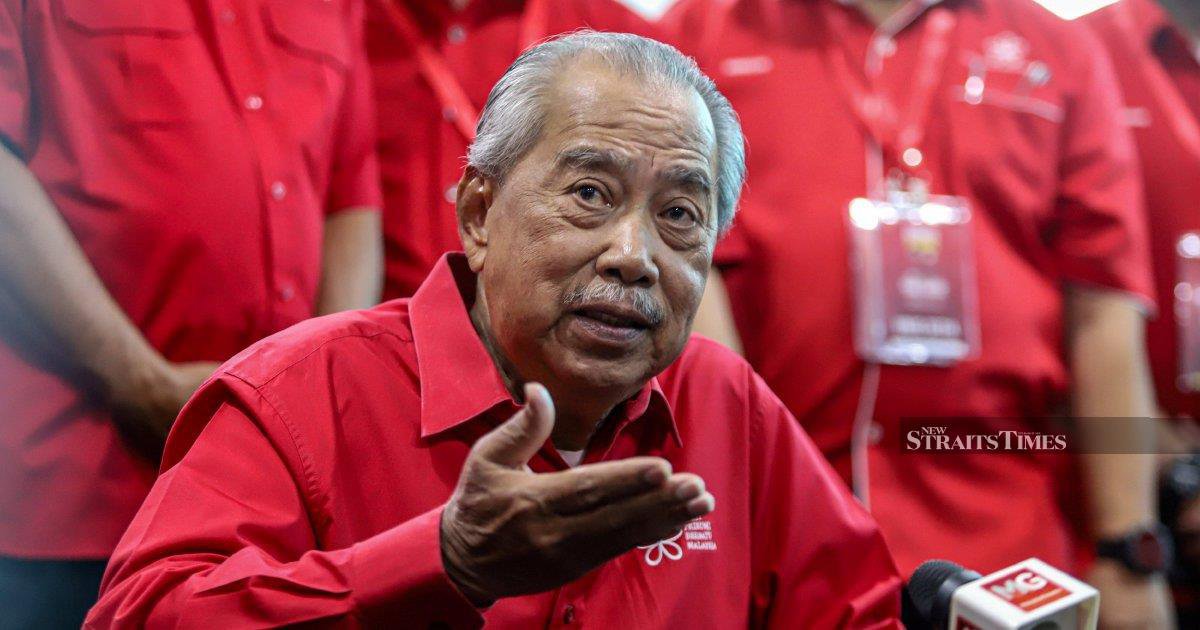
The deepening dispute between senior Perikatan Nasional figures over the circumstances of Bersatu's exit from the coalition reflects the ongoing instability within Malaysia's opposition bloc, with Tan Sri Muhyiddin Yassin forcefully rejecting Tan Sri Annuar Musa's public statements about the split. The disagreement centres on the precise characterisation of how and why Bersatu chose to separate from PN in connection with the Negri Sembilan state election, an issue that has become unexpectedly contentious within opposition circles.
Muhyiddin's rebuttal appears designed to counter what he sees as a revisionist account of events. Annuar Musa, who chairs Perikatan Nasional as its de facto leader following the coalition's complex internal restructuring, had suggested that Bersatu's mufarakah—an Islamic term meaning voluntary separation—represented a deliberate choice by the party to distance itself from the broader PN framework. This characterisation proved immediately controversial, prompting the Bersatu leadership to mount a vigorous defence of their position and motivations.
The Negri Sembilan state election context is crucial to understanding this dispute. As one of Malaysia's smaller states, electoral outcomes there carry symbolic weight within coalitional politics, and the decision about which parties contest which seats can become a flashpoint for broader disagreements about power-sharing and strategic direction. The disagreement over whether Bersatu withdrew voluntarily or was effectively pushed out by PN leadership speaks to underlying tensions about who holds actual control within the opposition alliance.
For Malaysian political observers, this internal PN bickering underscores a persistent weakness that has hampered the opposition's effectiveness in federal politics. Unlike Barisan Nasional, which maintains clearer hierarchies and decision-making structures despite its own occasional frictions, PN remains a somewhat loosely bound coalition of parties with distinct agendas. Muhyiddin's Bersatu, despite its founding role in the original PN configuration, has seen its influence fluctuate considerably, particularly after the party's departure from government in 2021 and subsequent re-alignment manoeuvres.
The substance of Muhyiddin's objection likely centres on his concern that accepting Annuar's framing could damage Bersatu's standing within the coalition and among voters. If the party is portrayed as having voluntarily abandoned PN responsibilities, it risks appearing indecisive or disloyal—charges that could undermine its electoral prospects and internal cohesion. Conversely, by asserting that PN's collective decisions or pressures drove the separation, Muhyiddin positions Bersatu as having acted in response to coalition dynamics beyond its control, thereby protecting party credibility.
This quarrel also illuminates the power struggle within PN leadership that has intensified following the coalition's disappointing performance in the 2023 general election. While Annuar Musa's role as PN chairman theoretically grants him authority over strategic decisions, Muhyiddin retains significant influence through his control of Bersatu, which remains one of PN's larger and more electorally relevant components. Their disagreement over how to characterise and explain the Negri Sembilan situation thus becomes a proxy for broader questions about who genuinely steers PN policy.
For Southeast Asian readers following Malaysian politics, this episode illustrates how coalition politics at state level can generate national-level consequences. The Negri Sembilan election, though geographically limited, has become a point of contention that threatens PN's already fragile internal harmony. This fragility contrasts sharply with the Barisan Nasional's proven capacity to manage intra-coalition disputes more discreetly, an advantage that contributes to BN's continued dominance in federal politics despite periodic challenges.
The dispute also raises questions about PN's longer-term viability as a cohesive political force. Annuar and Muhyiddin's public disagreement suggests an absence of private mechanisms to resolve such conflicts before they become public knowledge. The transparency of their dispute, while democratic, nonetheless signals to voters and other political actors that the opposition coalition remains prone to the kind of internal friction that weakens competitive capacity against an entrenched government.
Muhyiddin's intervention appears calculated to shape the narrative around Bersatu's decision-making autonomy and political standing. By rejecting Annuar's characterisation, he signals to party members and supporters that Bersatu leadership maintains agency and refuses to accept blame for decisions that he views as coalition-wide rather than Bersatu-specific. This distinction matters considerably for internal party morale and external perceptions of Bersatu's strength.
Looking ahead, the unresolved nature of this disagreement suggests that PN's internal structures for managing coalition disputes require strengthening. Without clearer mechanisms for resolving such conflicts, future disagreements over electoral strategy, candidate selection, or resource allocation could similarly explode into public arguments that damage the coalition's collective negotiating position relative to the government and other opposition blocs.
The episode ultimately reflects broader challenges facing PN as it attempts to establish itself as a credible alternative government while simultaneously managing the competing interests and ego-driven conflicts of its constituent parties. Muhyiddin's public pushback against Annuar, though understandable from a Bersatu perspective, underscores just how difficult that balancing act has become in Malaysia's polarised political environment.

