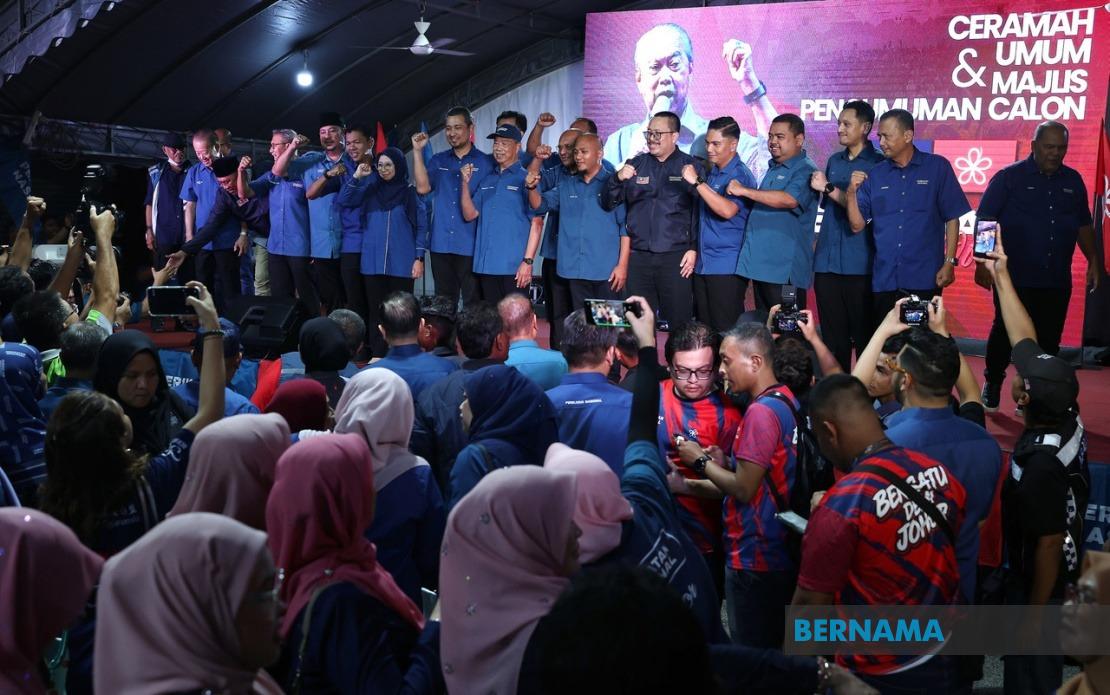
Tan Sri Muhyiddin Yassin, president of Parti Pribumi Bersatu Malaysia, formally revealed Bersatu's full slate of 16 candidates for the Johor State Election at a public event in Muar on June 25. The announcement came during a candidates presentation and ceramah session held at the Pagoh Parliamentary Service Centre in Taman Pagoh Jaya, signalling the party's readiness to contest all 16 seats available in the peninsular state's legislative assembly.
The timing of the announcement reflects the compressed electoral schedule set by the Election Commission. Nomination day has been fixed for June 27, just two days after Muhyiddin's public unveiling, giving candidates minimal time to finalise their campaign machinery before the official nomination process begins. This tight timeframe requires all competing parties to have their candidates and strategies firmly in place well in advance.
Polling for the Johor State Election will take place on July 11, marking the first electoral test following the dissolution of the Johor State Assembly on June 1. The electoral calendar demonstrates the rapid pace at which Malaysian state politics operates once a legislative body is dissolved, with parties scrambling to mobilise supporters and conduct grassroots campaigning within a matter of weeks. For Bersatu, this represents a critical opportunity to consolidate its position in one of Malaysia's economically significant states.
Bersatu's decision to field candidates in all 16 seats underscores the party's ambitions to play a decisive role in Johor politics. The party, which has gained prominence as part of various political coalitions, sees the Johor election as a platform to demonstrate electoral viability and strengthen its organisational presence in the state. The composition of Bersatu's candidate list, including Mohd Idzharruddin Mohd Nasirruddin contesting the N8 Bukit Pasir seat, reflects efforts to balance experience with fresh political talent.
For Malaysian observers, Johor's electoral contest carries broader implications for the country's political landscape. The state has historically served as a bellwether for national political trends, and results from the July 11 election could signal shifting voter preferences and coalition dynamics heading into potential federal-level elections. Bersatu's performance, in particular, will be scrutinised as an indicator of the party's ability to retain voter support and expand its parliamentary presence beyond its current strongholds.
The Johor election also reflects Malaysia's ongoing political realignment. Bersatu's positioning within broader coalition frameworks—particularly its relationships with UMNO, PKR, and other major parties—continues to shape electoral contests at the state level. The party's candidate selections in Johor may reveal strategic calculations about which constituencies offer the best prospects for victory and which represent defensive positions requiring experienced incumbents or strong local figures.
From a regional perspective, Johor's election carries significance for Southeast Asian political observers tracking Malaysia's democratic processes. The state's diverse demographics and economic importance make it a critical test case for political parties seeking to broaden their appeal across different ethnic and socioeconomic communities. Bersatu's 16-candidate slate likely reflects attempts to engage with this diversity through strategic candidate placement.
The logistics of candidate announcement—holding a formal ceramah alongside the unveiling—demonstrates how Malaysian political parties use nomination announcements as momentum-building exercises. By combining the presentation of candidates with public speaking engagements, Bersatu aims to generate immediate media coverage and energise party supporters before the official campaign period begins. Such public events serve as dry runs for campaign messaging and allow parties to gauge initial public reaction to their chosen representatives.
Candidates themselves face considerable pressure following public announcement. The spotlight on individual personalities and their backgrounds intensifies once names become official, with media scrutiny, opponent research, and social media scrutiny accelerating rapidly. For Bersatu's nominees, the period between June 25 and June 27 represents a crucial window to establish their campaign presence and begin mobilising ground support.
The broader electoral context matters for understanding Bersatu's Johor strategy. The party competes within Malaysia's complex multi-party environment where coalition politics often determine electoral outcomes more than individual party strength. Bersatu's 16 candidates will likely campaign within a larger coalition framework, with coordination necessary across party lines to maximise opposition or government support depending on prevailing political alignments.
Johor voters will ultimately judge whether Bersatu's candidate selections resonate with local concerns and aspirations. The state's economy, infrastructure development, education provision, and social services typically dominate electoral discourse. Candidates selected by Muhyiddin and the party leadership must demonstrate credibility on these issues if they hope to connect with constituents during the compressed four-week campaign period.
As Malaysia continues its democratic journey, elections like Johor's test the country's institutional capacity and political parties' organisational strength. Bersatu's full participation across all 16 seats indicates confidence in its electoral prospects, though final results will reveal whether candidate quality, party machinery, and voter sentiment align to produce the electoral outcomes the party anticipates. The July 11 poll will provide concrete data on Bersatu's standing among Johor's diverse electorate.

