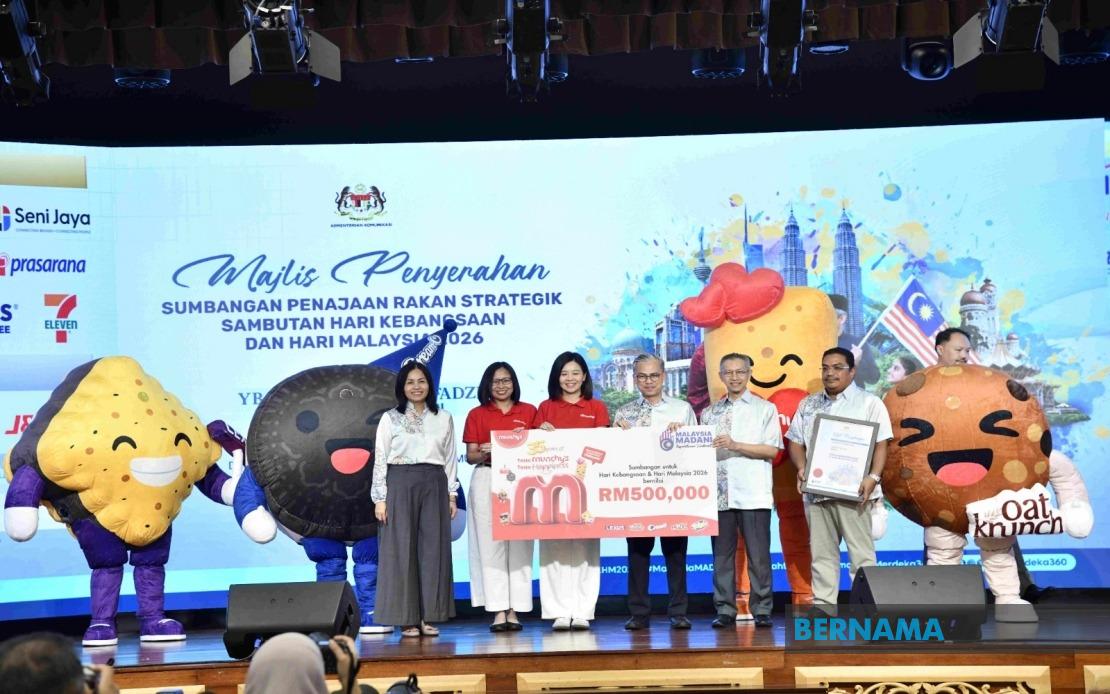
Munchy's Malaysia has pledged RM500,000 in product donations to bolster the 2026 National Day and Malaysia Day (HKHM) celebrations, underscoring the snack manufacturer's deepening investment in Malaysia's most significant civic observances. The contribution, presented to Communications Minister Datuk Seri Fahmi Fadzil during a formal ceremony at Menara Komunikasi in Putrajaya, represents the company's most substantial commitment to date and signals a strategic pivot towards heightened community engagement during an election year.
The donation arrives as Munchy's marks its 35th anniversary operating in the Malaysian market, a milestone that appears to have prompted the company to reassess its philanthropic footprint. Rather than viewing corporate social responsibility as a peripheral activity, the decision to triple down on HKHM support suggests the organisation sees alignment with national pride narratives as integral to brand positioning and market relevance among increasingly conscious Malaysian consumers.
This marks the third successive year that Munchy's has contributed financially to the National Day and Malaysia Day festivities, establishing a discernible pattern of institutional commitment. The escalating value of donations year-on-year demonstrates that the company views these celebrations not as one-off sponsorship opportunities but as anchors for sustained relationship-building with federal agencies and the broader Malaysian public. By tethering itself to moments of collective national consciousness, Munchy's is essentially purchasing goodwill and cultural credibility.
Rodney Wong, the company's chief executive officer, framed the contribution in explicitly patriotic language, emphasising that HKHM celebrations provide an occasion for the organisation to reciprocate support received from Malaysian consumers and communities over decades. This rhetorical move is significant because it recharacterises corporate donation as gratitude rather than brand marketing, though the two functions inevitably overlap in practice. The messaging strategy appeals to nationalist sentiment while simultaneously reinforcing Munchy's identity as a distinctly Malaysian enterprise.
The practical mechanics of the donation involve distributing the RM500,000 worth of products through multiple programmes and activities organised under the HKHM 2026 umbrella. This distribution model ensures broad visibility and community penetration, positioning Munchy's products at the heart of patriotic celebration rather than relegated to commercial advertising spaces. Consumers and participants at official festivities will encounter the brand organically, embedded within the fabric of national commemoration.
For the Communications Ministry and the federal government, corporate donations of this magnitude address a consistent funding challenge in organising nationwide celebrations that maintain public enthusiasm while operating within budgetary constraints. Private sector contributions have become indispensable to sustaining the scale and reach of HKHM celebrations, making relationships with large consumer brands increasingly valuable to event organisers. Munchy's contribution effectively subsidises government expenditure on civic engagement.
The timing of this announcement, released in August for celebrations scheduled in 2026, reflects strategic long-term planning rather than reactive opportunism. By securing commitments well in advance, organisers can better coordinate messaging, logistics, and promotional activities across multiple contributors. For Munchy's, the early declaration of support generates extended media coverage and establishes the company as a forward-thinking institution committed to Malaysia's future stability and cohesion.
Within the broader landscape of Malaysian corporate citizenship, snack and confectionery manufacturers occupy particular cultural significance. These companies produce consumables that literally bind national moments—food consumed during celebrations becomes inseparable from memory of those occasions. By positioning its products as integral to HKHM festivities, Munchy's is creating emotional associations between its brand and patriotic sentiment that transcend conventional advertising relationships.
The donation also reflects competitive dynamics within Malaysia's packaged food industry. As consumer consciousness around corporate social responsibility intensifies, companies compete not merely on product quality and pricing but on demonstrated commitment to national and community welfare. Munchy's escalating contributions effectively signal to retailers, distributors, and consumers that the company deserves preferential treatment as a genuinely Malaysian institution invested in the nation's wellbeing and cultural continuity.
From a regulatory and political perspective, such donations occur within an ecosystem where government relationships directly influence market access, distribution licensing, and regulatory compliance. Companies operating in the consumer packaged goods sector understand that maintaining positive relations with federal agencies facilitates smoother operational conditions. Munchy's RM500,000 commitment thus functions simultaneously as philanthropic gesture, brand investment, and prudent political engagement.
Looking ahead, the 2026 celebrations will likely feature multiple corporate contributors, each seeking visibility and goodwill through festive season association. The competitive race to demonstrate patriotic commitment through donations will probably intensify, creating pressure on other major brands to match or exceed Munchy's contribution. This dynamic, while generating substantial resources for public celebrations, also raises questions about the role of private capital in shaping national commemorative narratives.

