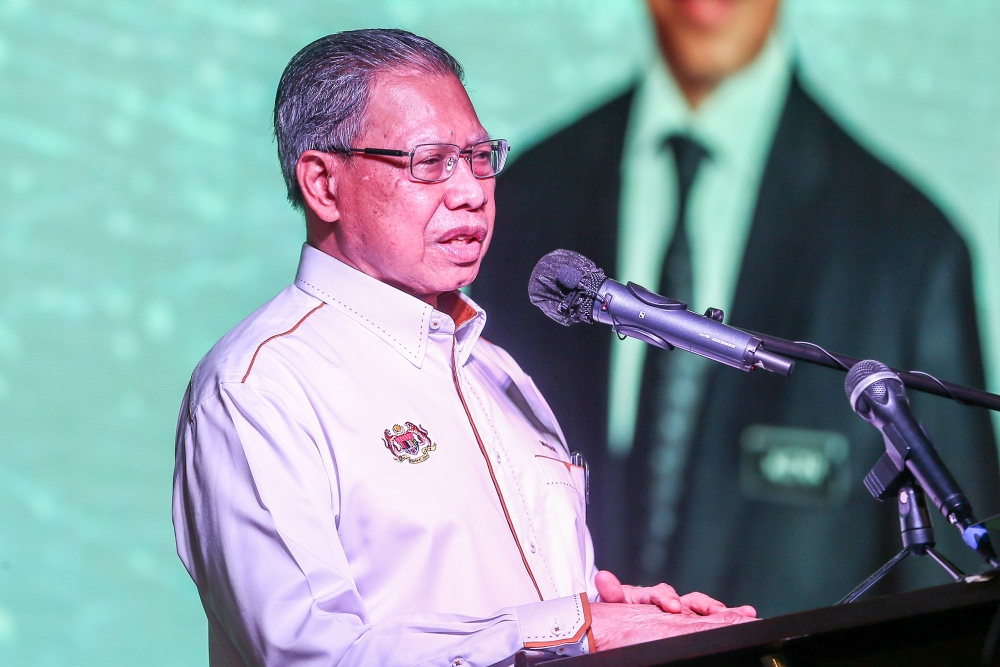
Datuk Seri Mustapa Mohamed has made an unequivocal decision to withdraw from electoral politics, marking a significant moment in Umno's generational transition. The 76-year-old former Jeli MP confirmed during a gathering in Pasir Mas that he will not be returning to contest in the forthcoming general election, effectively closing the final chapter of a lengthy parliamentary career. His declaration carries particular weight given his standing within the party and his consistent presence across multiple electoral cycles over recent decades.
The veteran politician's announcement extends beyond a simple personal retirement announcement. Mustapa Mohamed has actively encouraged the younger cohort within Umno to step forward and assume leadership positions, positioning this not as a departure but as a deliberate act of facilitating regeneration within the party's ranks. This perspective reframes his withdrawal as a constructive measure aimed at addressing the demographic imbalance that many established political parties across the region face. By explicitly advocating for youth advancement rather than merely stepping aside, he signals a commitment to the party's institutional health rather than personal disengagement.
The timing of Mustapa Mohamed's pronouncement arrives as Malaysian politics enters a phase of considerable flux and realignment. General elections in Malaysia's recent history have demonstrated the electorate's willingness to punish parties perceived as stagnant or overly dependent on ageing hierarchies. The Umno-led coalition has faced sustained pressure to demonstrate vitality and forward-thinking governance, particularly given the strong performance of opposition coalitions in capturing younger demographic votes. Mustapa Mohamed's explicit endorsement of generational change therefore addresses a vulnerability that party strategists recognize acutely.
Within Umno's organizational structure, veteran parliamentarians like Mustapa Mohamed have traditionally wielded considerable influence extending beyond their formal portfolios. These figures accumulate networks, institutional knowledge, and leverage within party machinery that younger aspirants must navigate carefully. His voluntary departure from the electoral arena removes a potential point of friction where ambitious mid-career politicians might otherwise compete for nomination slots against established figures with entrenched support bases. This creates clearer pathways for the next generation to contest seats without confronting the additional hurdle of displacing sitting members with deep party roots.
The Jeli constituency itself represents an important case study in this succession dynamic. As a parliamentary seat held by Mustapa Mohamed for extended periods, his departure opens a significant opportunity for the party to introduce fresh representation while potentially consolidating local organization under new leadership. Rural constituencies like those in Kelantan have historically served as foundations for party strength, and the manner in which Umno manages such transitions can either reinforce or undermine this traditional base. Mustapa Mohamed's coordinated step-back, coupled with his public support for younger candidates, provides a model for managed succession that maintains party cohesion.
Regionally, the dynamics Mustapa Mohamed's retirement reflects extend across Southeast Asian democracies grappling with similar demographic and political evolution. Thailand, Indonesia, and the Philippines all confront questions about how aging political establishments accommodate emerging leaders without losing continuity or institutional capacity. Malaysia's experience with such transitions under competitive electoral conditions offers insights into whether managed generational change can occur without party fragmentation or mass defection to rival coalitions. Mustapa Mohamed's measured approach contrasts sharply with more confrontational scenarios where establishment figures resist young challengers, potentially breeding internal divisions.
The substance of Mustapa Mohamed's intervention carries implicit acknowledgment that Umno's electoral prospects depend partly on addressing perceptions of organizational fatigue. Voter surveys across multiple election cycles have indicated that younger electorates particularly associate Umno with incumbent inertia and institutional sclerosis, regardless of specific policy positions. While policy innovation and administrative performance matter considerably, demographic renewal in visible positions of power communicates institutional openness in ways that programmatic pledges often cannot. His willingness to articulate this argument publicly suggests party leadership recognizes the electoral relevance of such perceptions.
Mustapa Mohamed's career trajectory itself provides context for understanding his intervention's significance. As a longstanding MP and senior minister in previous administrations, his continued participation in elections would have consumed nomination resources and potentially complicated candidate selection in competitive districts. His decision to withdraw thus provides tangible relief to party machinery facing difficult choices about candidate allocation. Simultaneously, his public rationale for stepping back—framed around party renewal rather than personal exhaustion—establishes a template that other senior figures might adopt to ease their own transitions without appearing to abandon the organization.
The implications for Malaysian politics extend beyond intra-party dynamics within Umno itself. Oppositions coalitions, particularly those seeking to mobilize younger voters, may intensify efforts to present themselves as genuinely forward-looking alternatives. Mustapa Mohamed's acknowledgment that leadership regeneration constitutes a legitimate political priority—even from within an establishment party—potentially shifts the broader debate about governance renewal. If Umno successfully implements the generational transition he advocates, it may undermine opposition claims about inherent establishment sclerosis. Conversely, if implementation lags or younger leaders prove ineffective, opposition messaging about the necessity of complete political replacement gains rhetorical force.
Looking toward the general election timeline, Mustapa Mohamed's announcement likely represents the first of several similar pronouncements from senior party figures across the political spectrum. His decision to frame this in terms of institutional obligation rather than personal necessity may encourage peers facing similar age-related questions to adopt comparable positioning. The degree to which other established figures embrace this regenerative logic will substantially influence how effectively Malaysian political parties navigate the demographic transition that contemporary electoral competition increasingly demands. Mustapa Mohamed has not merely retired; he has provided his party with a framework for conceptualizing generational succession as institutional responsibility rather than painful necessity.

