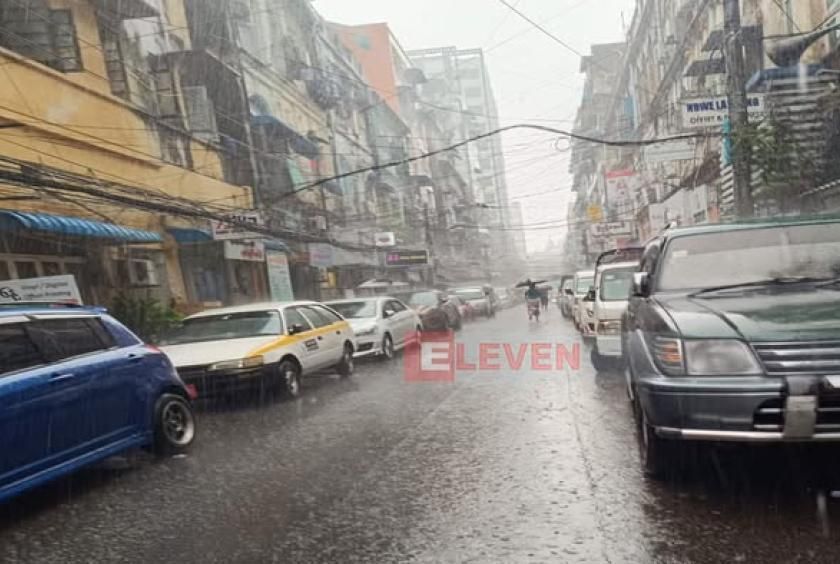
Myanmar's Department of Meteorology and Hydrology has sounded an alarm over the gathering strength of El Niño conditions, warning that the climate phenomenon will escalate sharply from August 2026 onwards. The agency's forecast, grounded in models developed by leading international meteorological institutions, suggests that moderate El Niño conditions currently prevailing over the tropical Pacific Ocean near the equator will transition into a robust phase during the coming month and potentially evolve into an exceptionally strong pattern before the year concludes. The alert carries serious implications not only for Myanmar but for the entire Southeast Asian region, which remains vulnerable to the cascading meteorological disruptions that such climatic shifts unleash.
El Niño, despite originating thousands of kilometres away in the Pacific Basin, exerts profound influence across the globe through complex interactions between ocean temperatures and atmospheric circulation patterns. The phenomenon emerges when unusually warm water accumulates across the tropical Pacific, disrupting the delicate equilibrium that normally governs monsoon systems, cyclone formation, and precipitation distributions. Southeast Asian nations, including Myanmar, Thailand, Cambodia, and Vietnam, sit directly in the path of these climatic repercussions, making forecasts of El Niño intensification matters of genuine national consequence. The Department's warning reflects growing scientific consensus about the trajectory of current Pacific conditions, which satellite observations and oceanographic data increasingly confirm.
The meteorological service outlined the diverse hazards associated with strengthening El Niño conditions. Abnormal rainfall patterns represent perhaps the most immediate threat, with some regions experiencing unseasonable deluges while others face prolonged dry spells. Storm formation becomes erratic and potentially more severe in certain zones, complicating disaster preparedness efforts. Agricultural zones across Myanmar and neighbouring countries face heightened vulnerability, as irregular precipitation directly undermines crop cycles and irrigation planning. Beyond farming impacts, elevated daytime temperatures during warmer months could intensify heat stress across urban and rural populations alike, straining electricity grids and water supplies already under pressure from shifting weather patterns.
Drought conditions constitute another grave concern embedded in El Niño episodes. The phenomenon frequently triggers prolonged dry periods across significant portions of Southeast Asia, depleting water reserves in reservoirs and underground aquifers while elevating wildfire risks across forests and agricultural lands. Myanmar's Irrawaddy Delta region, which serves as the nation's rice-growing heartland and economic anchor, faces particular exposure to rainfall fluctuations. Irrigation-dependent farming communities throughout the country could confront water shortages that prove catastrophic for annual harvests. Beyond agriculture, hydroelectric installations that generate substantial portions of Myanmar's electricity become vulnerable when rainfall patterns deteriorate, potentially triggering energy shortages during peak demand periods.
The Department's projection that El Niño could achieve very strong intensity by December 2026 warrants serious consideration from policymakers and emergency management authorities. Strong El Niño episodes, based on historical precedent, frequently correlate with extreme weather events that challenge national infrastructure and overwhelm disaster response capacities. Myanmar's development challenges and relative vulnerability to climate shocks make advance preparation particularly critical. The nation's experience with tropical cyclones, monsoon disruptions, and drought cycles demonstrates the cascading social and economic consequences when extreme weather strikes unprepared populations and inadequately fortified infrastructure.
The Department of Meteorology and Hydrology has accordingly urged relevant government sectors, private enterprises, and community organisations to commence preparatory measures immediately rather than awaiting the peak impact period. This proactive stance reflects international best practices in climate risk management, emphasising mitigation and adaptation strategies deployed ahead of anticipated hazards. Agricultural agencies require time to advise farmers on adjusted planting schedules and crop selection strategies suited to expected rainfall deficits. Water resource management authorities need months to calibrate reservoir releases and plan conservation measures. Power utilities must evaluate generation capacity and potential constraints that dry-season electricity generation might impose. Public health institutions should stockpile medical supplies and coordinate heat-stress protocols for vulnerable populations.
Regional cooperation assumes heightened importance given that El Niño impacts transcend national borders. The Mekong River Commission, comprising Cambodia, Laos, Thailand, and Vietnam alongside Myanmar, regularly coordinates responses to cross-boundary water management challenges. Meteorological agencies throughout Southeast Asia maintain information-sharing protocols that enable collective analysis and coordinated warning dissemination. Such regional frameworks become invaluable when climatic phenomena like El Niño create simultaneous pressures across multiple nations, requiring harmonised responses and mutual support arrangements. Myanmar's explicit communication of its forecast outlook contributes to this collaborative architecture, enabling neighbouring countries to refine their own preparedness strategies.
The Department pledged to maintain regular updates regarding El Niño evolution, committing to timely release of revised forecasts as Pacific conditions continue unfolding. This commitment to ongoing communication reflects recognised scientific principles that El Niño intensity can fluctuate and that precipitation patterns vary substantially by region and season. Farmers, water managers, and disaster preparedness officials therefore require continuous information flows rather than single-point warnings. The availability of frequent updates also enables adaptive management strategies that can adjust as real-time conditions either confirm or diverge from initial forecasts. Such flexibility proves essential in Southeast Asia's monsoon-dominated climate regime, where precise timing and magnitude of rainfall exert tremendous influence over outcomes.
The broader context encompasses accelerating global climate change, which scientific evidence increasingly suggests is amplifying the intensity and frequency of El Niño episodes. Some research indicates that warming oceans and shifting atmospheric patterns intensify peak El Niño temperatures and extend event durations. For Myanmar and regional neighbours, this suggests that future El Niño challenges may prove more severe than historical patterns would predict. The current warning thus serves as both immediate alert regarding 2026 conditions and longer-term indication that Southeast Asian nations must fundamentally strengthen climate resilience infrastructure, early warning systems, and disaster management capacity to navigate coming decades of increasing meteorological volatility.

