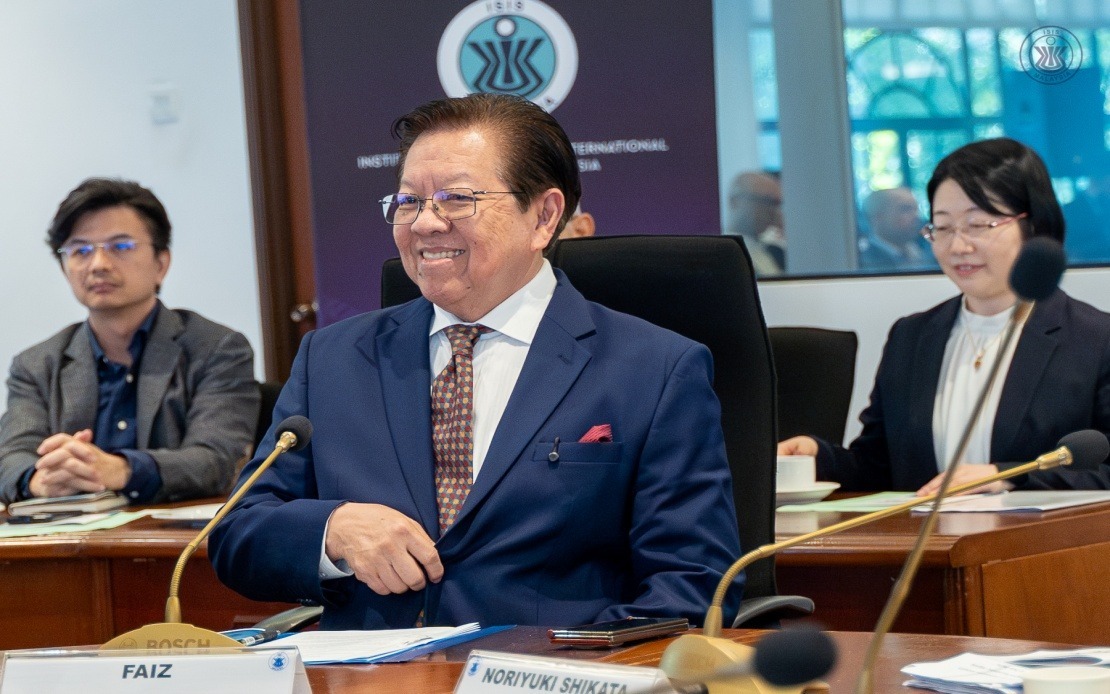
The 39th Asia-Pacific Roundtable (APR) launching in Kuala Lumpur on Tuesday will dedicate significant analytical resources to unpacking the Myanmar crisis, according to Institute of Strategic and International Studies (ISIS) Malaysia executive chairman Datuk Prof Dr Mohd Faiz Abdullah. The three-day conference, running through July 2, represents a departure from the carefully measured rhetoric that dominated official ASEAN forums, offering practitioners, scholars and regional experts a platform for frank deliberation on one of Southeast Asia's most pressing security challenges.
Mohd Faiz observed that the recent ASEAN Summit held in Cebu, the Philippines, produced only muted and formulaic statements regarding Myanmar, reflecting the diplomatic constraints inherent in collective regional decision-making. Those official positions, while politically necessary, often obscure the depth of concern and complexity that regional strategists perceive beneath the surface. The APR, operating as a Track 2 forum outside formal government channels, provides the space for candid discussion where experts can explore nuances and develop sophisticated policy thinking unconstrained by diplomatic protocol.
The dedicated Myanmar caucus will bring together experienced analysts specialising in the country's political trajectory, drawing on their knowledge of civil society, military dynamics, and humanitarian dimensions of the ongoing crisis. This focused forum enables participants to move beyond surface-level observations and examine how Myanmar's instability reverberates across borders, affecting refugee flows, regional trade patterns, and the broader architecture of Southeast Asian security cooperation. The intensity of these discussions reflects growing regional anxiety about Myanmar's trajectory and its implications for ASEAN cohesion.
Beyond Myanmar, the roundtable's comprehensive agenda spans multiple dimensions of contemporary geopolitical turbulence affecting the Asia-Pacific region. Tensions in the South China Sea remain central to regional concerns, particularly given competing maritime claims and their potential to destabilise sea-lanes critical to global commerce. The deteriorating situation in West Asia, encompassing Middle Eastern conflicts and their regional ramifications, demands scrutiny alongside emerging economic pressures including tariff escalation and energy market volatility. These interconnected challenges underscore how regional prosperity and stability increasingly depend on managing cascading global crises.
Artificial intelligence has emerged as a transformative issue commanding serious strategic attention at this year's roundtable. The rapid advancement of AI technologies carries profound implications for regional competitiveness, military capabilities, and economic disruption across Southeast Asia. Participants will examine how countries might harness AI's benefits while managing risks of technological dislocation and potential weaponisation. This forward-looking dimension reflects the APR's commitment to addressing not merely present crises but the structural shifts reshaping regional dynamics.
The conference has expanded dramatically since its inception four decades ago, underscoring its enduring relevance within Asia-Pacific policy circles. The first APR convened merely 30 to 40 participants, whereas this year's edition attracts approximately 400 attendees representing 30 countries. This growth reflects the roundtable's reputation as a premier venue where serious strategic thinking occurs, drawing government officials, corporate leaders, military strategists, and intellectual heavyweights across the region. Such expansion attests to the APR's ability to remain contemporaneous with evolving regional concerns.
Operating under this year's overarching theme of "Accelerating agency and action," the roundtable seeks to identify leaders and catalysts capable of stewarding the region through turbulent geopolitical terrain. Previous iterations examined themes of interregnum and recalibration, but the current focus emphasises proactive regional responses rather than reactive accommodation. This framing acknowledges that the Asia-Pacific's future depends not on passive acceptance of international pressures but on deliberate choices by regional actors to shape their strategic environment.
The APR occupies a distinctive position within global strategic discourse. As one of the world's top 20 security-focused conferences, it ranks among elite international forums where policy thinking achieves greatest sophistication. Yet it maintains particular relevance for Southeast Asia, functioning as the region's premier Track 2 gathering where ASEAN-affiliated think-tanks converge. This combination—global standing coupled with Southeast Asian rootedness—enables the roundtable to connect parochial regional concerns with broader international trends.
ISIS Malaysia convenes the APR on behalf of ASEAN-ISIS, a network encompassing the region's leading policy institutes and research organisations. This institutional architecture ensures that discussions reflect the analytical capacity of Southeast Asia's most serious strategic thinkers while maintaining connections to government circles through indirect channels. The Track 2 format itself—operating outside official state structures—paradoxically enhances influence by permitting candid dialogue that informs subsequent government deliberations without the constraints of diplomatic performance.
The roundtable's fundamental purpose involves facilitating what Mohd Faiz characterises as "lively, frank, and constructive conversations" addressing the security, stability, sustainability, and prosperity dimensions of regional development. This multidimensional approach recognises that contemporary challenges resist compartmentalisation, requiring integrated analysis spanning military security, economic resilience, environmental sustainability, and social cohesion. By assembling diverse expertise within a single forum, the APR enables participants to understand how decisions in one policy domain reverberate across others.
For Malaysian observers and policymakers, the roundtable offers crucial insights into how regional and international actors perceive emerging challenges and potential responses. The dedicated Myanmar caucus particularly signals how seriously regional strategists regard that country's trajectory. Similarly, discussions of South China Sea tensions, West Asian developments, and technological disruption provide early indicators of how regional consensus may crystallise around shared concerns. Such intelligence gathering constitutes essential preparation for Malaysia's own navigation of turbulent strategic waters.
The convergence of 400 participants from three dozen countries creates rare opportunity for coalition-building among like-minded actors. Informal networks forged during the roundtable often translate into coordinated positions during subsequent official forums, from ASEAN ministerial meetings to broader international gatherings. In this sense, the APR functions not merely as a discussion venue but as an incubator for emerging regional positions and potential collaborative responses to shared challenges. The intensity of Myanmar discussions may well presage stronger collective ASEAN action on that crisis.
As regional geopolitical competition intensifies and traditional alliance structures face strain, forums like the APR become increasingly vital for maintaining substantive dialogue among regional elites. The roundtable's three-day format permits sufficient depth to move beyond headline-generating declarations toward genuine intellectual engagement with complex problems. For Malaysia and other Southeast Asian nations seeking to enhance their strategic autonomy while managing great power competition, the insights generated through such forums constitute invaluable input for sophisticated policymaking.

