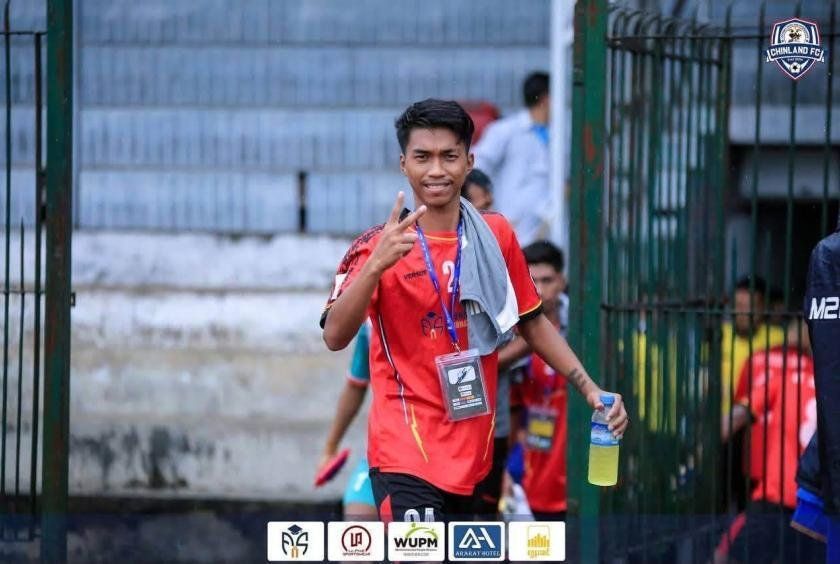
Chinland FC announced on August 29 that it had successfully located Pa Lung, the footballer who had been missing for a week, with the player now safely reunited with his family and the club. The discovery brought relief to teammates, supporters, and authorities who had mounted an extensive search operation across Myanmar following the player's unexplained disappearance.
The circumstances surrounding Pa Lung's absence reveal a common predicament faced by professional athletes in developing regions: the tension between career obligations and family emergencies in contexts where communication infrastructure remains fragile. According to the club's statement, Pa Lung had made an urgent decision to return to his hometown without first informing Chinland FC management due to his mother's critical health condition requiring immediate familial presence and support. This unplanned departure, while emotionally understandable, triggered a chain of complications that escalated the situation into a formal missing-person case.
The communication breakdown that prolonged the uncertainty demonstrates how vulnerable individuals remain once outside urban centres in Myanmar. During his journey home, Pa Lung's mobile phone battery depleted, severing his primary link to the outside world. Beyond the dead phone, he encountered additional communication obstacles that prevented him from reaching out to either his club or emergency contacts. In an era of mobile connectivity, the scenario underscores persistent infrastructure challenges in Myanmar's provinces and the reality that many areas still lack reliable telecommunications coverage or charging facilities for travellers.
Chinland FC's response protocol reveals professional standards within Myanmar's football administration. Upon recognizing Pa Lung's prolonged absence, club officials did not delay in escalating the matter. They filed an official missing-person report with the appropriate police station within a reasonable timeframe, initiating formal search procedures. For five consecutive days, club personnel actively searched for their missing player while simultaneously working with law enforcement, demonstrating the kind of coordination that has become standard practice in athlete welfare across Southeast Asia's football communities.
The club's decision to issue a public appeal after unsuccessful private search efforts represented a calculated escalation appropriate to the circumstances. When internal efforts and police investigation yielded no results despite five days of effort, club leadership recognized that broader community engagement might generate the crucial lead needed to locate Pa Lung safely. This public call for assistance reached beyond football circles, engaging media organizations, concerned citizens, and various government agencies in a coordinated effort to bring the missing player home.
The resolution reflects the effectiveness of Myanmar's civil society response mechanisms when football—the nation's most popular sport—mobilizes public attention and institutional resources. Multiple governmental and quasi-governmental bodies mobilized in response to Pa Lung's disappearance. The Myanmar Football Federation (MFF) and the Myanmar National League (MNL) engaged their administrative networks and institutional credibility. The Myanmar Police Force conducted search operations, while various government agencies at local and regional levels contributed resources and information. This multi-institutional response highlights how football transcends its sporting context in Myanmar, functioning as a social organizing principle that commands governmental and community attention.
Media organizations played a catalytic role in circulating Pa Lung's missing-person information across Myanmar's information landscape. Given the limited penetration of internet-based news consumption in many regions, traditional media channels remain critical for reaching dispersed populations. The combination of broadcast media, print journalism, and social media sharing created redundant communication pathways that eventually resulted in Pa Lung's location. For Malaysian readers familiar with more developed telecommunications infrastructure, this case illustrates the ongoing digital divides that characterize Southeast Asia, where modern sporting institutions operate alongside pre-modern communication challenges.
The underlying health emergency that triggered the situation deserves analytical attention. In many Southeast Asian contexts, family health crises create impossible choices for young workers and athletes. Professional contracts and team obligations clash with filial duty and medical necessity. Pa Lung's decision to prioritize his mother's condition over notifying his employer reflects values deeply embedded in Myanmar's culture, where familial obligations supersede institutional ones. Yet this choice, entirely reasonable from a human perspective, created administrative complications and public concern that might have been mitigated through advance communication.
Chinland FC's public statement emphasized gratitude toward all parties involved in the search operation, reflecting both genuine appreciation and institutional diplomacy. By naming the Myanmar Football Federation, the National League, police authorities, media organizations, and unnamed civil society participants, the club reinforced the collective nature of athlete welfare in Myanmar's football ecosystem. This inclusive acknowledgment strengthens institutional relationships and sets precedent for future crisis management within the sport.
The resolution provides reassurance to Myanmar's football community about player safety protocols, but also illustrates vulnerabilities that persist. Athletes travelling between urban professional environments and rural hometowns occupy a precarious space where modern sporting expectations intersect with pre-modern infrastructure realities. Clubs and federations might consider developing communication protocols that accommodate family emergencies while maintaining organizational awareness. Such systems could reduce future crises without forcing athletes to choose between career stability and family responsibility.
Pa Lung's safe return to Chinland FC closes an anxious chapter for Myanmar's football world, yet the incident carries lessons applicable across Southeast Asia's developing sports industries. As professional football expands in the region, establishing robust welfare systems that recognize both institutional needs and family realities remains essential. The case demonstrates that Southeast Asian football communities possess the institutional capacity and social solidarity to locate missing athletes, but also reveals the communication and infrastructure gaps that make such searches necessary in the first place.

