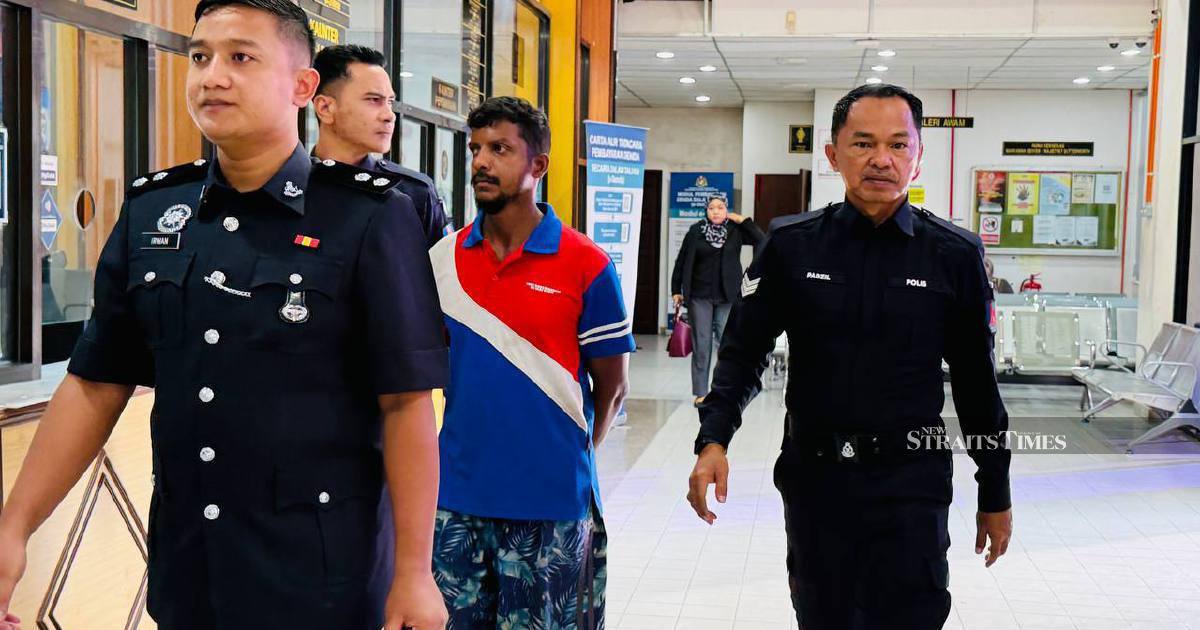
A Myanmar national made his first court appearance in Butterworth today on charges of inflicting grievous hurt following an alleged violent incident involving a compatriot last week. The defendant entered a plea to the charge during proceedings at the Sessions Court, though specific details regarding the circumstances of the alleged assault were not immediately disclosed in open court.
The decision to deny bail came amid concerns about the accused's immigration status and the need to confirm his identity through official documentation. Court authorities indicated they would require verified identification papers before reconsidering the bail application, a standard procedural safeguard when dealing with foreign nationals whose credentials cannot be immediately established. The prosecutor's office did not object to the bail denial, suggesting cooperation between law enforcement and the court on this issue.
This incident reflects broader patterns of interpersonal disputes within Myanmar migrant communities across Penang and the northern region. The port city of Butterworth has witnessed increasing numbers of migrants from Myanmar in recent years, drawn by employment opportunities in manufacturing, construction, and informal services sectors. When conflicts arise between members of the same ethnic or national community, they sometimes escalate to violence, particularly in informal housing settlements and workplace environments where tensions run high.
The grievous hurt charge carries significant legal implications under Malaysian law. As defined in the Penal Code, causing grievous hurt is a serious offence distinct from simple hurt, typically involving injuries that cause substantial damage to the victim's bodily function or require extended medical treatment. Conviction on such charges can result in imprisonment up to two years, fines up to RM2,000, or both, depending on the severity of injuries inflicted and circumstances of the incident.
Identification verification procedures for foreign nationals are crucial in Malaysia's criminal justice system, particularly given concerns about undocumented migration and the potential for accused persons to disappear before trial. Immigration authorities work alongside police and court officials to cross-reference names and biographical information with embassy records and travel documentation. In this case, the court's insistence on proper identity confirmation before considering bail reflects established practice when dealing with non-citizen defendants who lack readily available verification through Malaysian identification systems.
The bail denial does not constitute a determination of guilt. Instead, it represents a precautionary measure aimed at ensuring the accused remains available for trial proceedings and preventing flight risk. Many Myanmar nationals facing charges in Malaysian courts have limited resources and documentation, making them statistically more likely to abscond if released without stringent conditions. The court's approach in withholding bail thus serves dual purposes: protecting public interests and maintaining procedural integrity.
Myanmar nationals comprise a significant portion of Penang's migrant worker population, numbering several hundred thousand across the state when including both documented and undocumented individuals. Employment opportunities in manufacturing zones around Butterworth and the broader Seberang Perai area have drawn substantial migration flows since the late 1990s. While most migrants maintain peaceful coexistence with local communities, occasional criminal incidents involving members of this population receive heightened scrutiny from both media and law enforcement agencies.
The upcoming bail hearing will likely hinge on the court's satisfaction with identity documentation presented by authorities. Embassy verification remains the gold standard, though police may also establish identity through other means including witness testimony from established community members, previous immigration records, or employment documentation. The prosecution will probably call for continued detention, citing concerns about ensuring the defendant's appearance for trial, while legal representation may seek bail conditions such as reporting requirements or residential restrictions.
This case underscores the administrative complexities Malaysian courts navigate when adjudicating cases involving foreign nationals. Beyond the substantive criminal law question of whether the defendant caused grievous hurt, courts must address procedural matters relating to jurisdiction, identity verification, and appropriate bail conditions. These technical matters can extend case timelines significantly, particularly when international communication becomes necessary for document verification through diplomatic channels.
For the Myanmar national community in Penang, high-profile criminal cases carry reputational implications. Large population groups sometimes face collective suspicion following incidents involving individual community members, potentially affecting employment prospects and community relations. Conversely, swift and fair prosecution of cases strengthens public confidence in the judicial system's impartiality and willingness to hold all persons accountable regardless of nationality.
The court will schedule a subsequent hearing once documentation is submitted and verified. Until that time, the accused remains in custody at a designated detention facility. The case will eventually proceed to trial where the burden remains on prosecutors to establish guilt beyond reasonable doubt, with the accused entitled to present a defence and cross-examine witnesses. The grievous hurt charge demonstrates Malaysian authorities' commitment to investigating and prosecuting violent offences within both citizen and non-citizen populations.