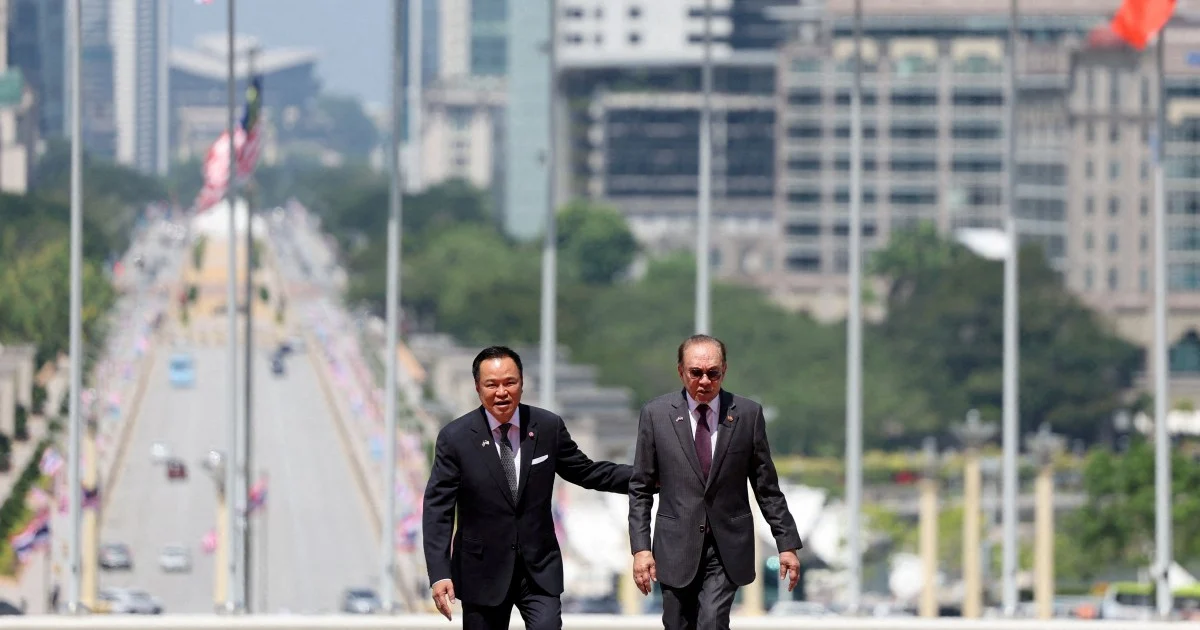
Prime Minister Datuk Seri Anwar Ibrahim has positioned Malaysia as an advocate for dialogue-based solutions to Myanmar's deepening political crisis, arguing that sustainable peace requires the participation of diverse stakeholders and respect for the Burmese people's right to self-determination. The statement underscores Malaysia's diplomatic approach to the regional conflict, which has destabilised Southeast Asia's eastern flank since the military coup in February 2021.
Anwar's position reflects a nuanced Malaysian stance that balances engagement with multiple actors involved in Myanmar's fractured political landscape. Rather than backing a singular faction or imposing external solutions, Malaysia advocates for inclusive frameworks that bring together the junta, opposition groups, ethnic armed organisations, and civil society. This approach aligns with ASEAN's long-standing principle of non-interference while acknowledging that the bloc's credibility depends on contributing meaningfully to regional stability.
The Myanmar crisis has created a complex web of humanitarian, security, and economic challenges that ripple across Southeast Asia. Hundreds of thousands of internally displaced persons, ongoing armed conflicts between the military and resistance forces, and the near-total collapse of civil institutions have turned Myanmar into a focal point for regional concern. Malaysia, as a middle-power neighbour and ASEAN member, faces pressure to articulate solutions that reflect both principled neutrality and pragmatic engagement.
Anwar's emphasis on self-determination reflects international norms regarding peoples' rights to choose their political systems without external imposition. This framing distinguishes Malaysia's approach from more interventionist positions that some nations advocate. By highlighting self-determination, Anwar subtly acknowledges that any settlement imposed by external parties—whether ASEAN mediators, neighbouring countries, or international bodies—risks perpetuating the cycle of conflict that has plagued Myanmar.
Inclusive engagement, as Anwar frames it, presents practical challenges given the profound ideological and armed divisions within Myanmar. The junta shows little inclination toward negotiations, while opposition forces remain fragmented across multiple resistance movements operating in different regions. Ethnic armed organisations, some of which have long histories of autonomy struggles, pursue objectives that may not align with centralised democratic governance. Bridging these constituencies requires mechanisms and intermediaries willing to facilitate dialogue amid mutual mistrust and ongoing violence.
Malaysia's diplomatic role faces additional constraints from its own domestic politics and economic interests. As a Muslim-majority nation with a significant Buddhist minority, Malaysia has particular sensitivities regarding Myanmar's treatment of the Rohingya and broader religious dynamics. Simultaneously, Malaysia maintains economic relationships with the Myanmar junta while sympathising with democratic opposition movements. This balancing act requires careful messaging that avoids alienating any stakeholder while advancing coherent policy objectives.
The ASEAN context shapes how Malaysia's approach resonates regionally. ASEAN's Five-Point Consensus, agreed upon in April 2021, called for cessation of violence, dialogue among parties, humanitarian assistance, and a special ASEAN envoy role. However, implementation has stalled, with the junta largely ignoring ASEAN mediation efforts. Malaysia's reaffirmation of dialogue-based solutions signals continued commitment to ASEAN mechanisms even as their effectiveness remains limited. This persistence reflects both institutional loyalty and a belief that abandoning dialogue entirely invites further instability.
For Myanmar's diverse population, inclusive engagement offers theoretical promise of representation and voice-sharing. However, the practical pathway from current violence to negotiated settlement remains unclear. Preliminary confidence-building measures might include humanitarian corridors, prisoner releases, or localised ceasefires in specific regions. These confidence measures could gradually create space for broader political discussions, though security concerns on all sides complicate even incremental progress.
Anwar's framing also carries implications for Malaysia's broader regional diplomacy. By advocating for inclusive, dialogue-based approaches, Malaysia positions itself as a responsible regional actor committed to rules-based multilateralism and respect for sovereignty. This messaging strengthens Malaysia's diplomatic standing among ASEAN partners and international actors, even when concrete outcomes remain elusive. The consistency of this message across multiple forums demonstrates strategic patience and principle-based diplomacy.
International observers note that Myanmar's resolution ultimately depends on shifts within the country itself—whether through military exhaustion, opposition consolidation, or shifts within the junta's own calculations. External actors including Malaysia can facilitate dialogue but cannot impose solutions. Anwar's statements reflect this reality by emphasising Myanmar people's agency while positioning Malaysia as a supportive, neutral facilitator rather than a solution-imposer.
The path forward remains uncertain, but Malaysia's continued emphasis on inclusive engagement serves multiple functions: maintaining ASEAN unity, supporting humanitarian principles, and preserving diplomatic channels for future negotiations. As the crisis persists and regional impacts deepen, Malaysia's commitment to dialogue-based approaches will be tested repeatedly against the demands of affected Myanmar citizens and the expectations of neighbouring states seeking greater stability and predictability.

