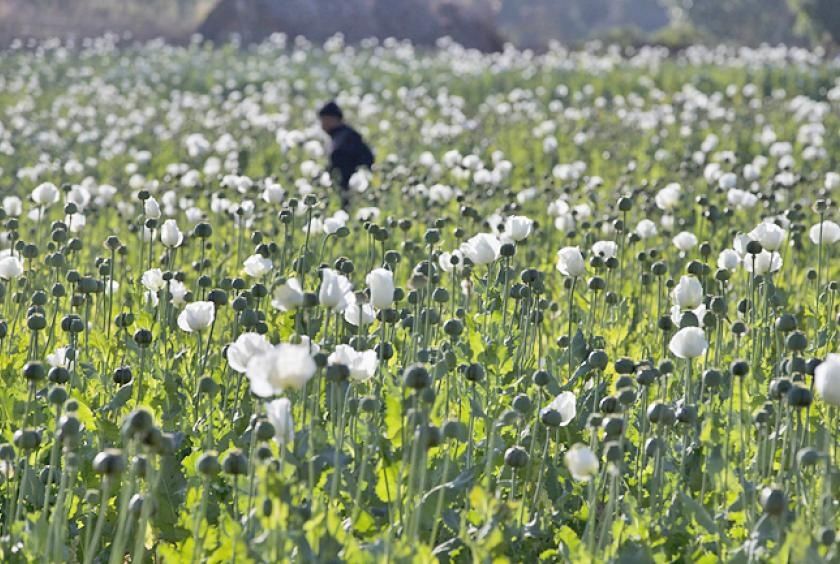
Myanmar's drug enforcement authorities have intercepted a substantial shipment of illicit narcotics in coordinated operations across the country's heartland, seizing 17.6 kilograms of heroin alongside one million stimulant tablets. The Central Committee for Drug Abuse Control reported the twin enforcement actions, which together resulted in the arrest of nine suspects and underscore the persistent challenge of narcotics trafficking across Myanmar's territories.
The first operation unfolded in Amarapura township, situated within Mandalay region in central Myanmar. Acting on intelligence received from informants, anti-narcotics police conducted a targeted search of four motorcycles on July 29, uncovering the substantial heroin cache. The seizure of 17.6 kilograms represents a significant volume of a drug that commands premium prices in regional black markets and typically serves distribution networks extending throughout Southeast Asia. Four individuals were apprehended at the scene and face prosecution under Myanmar's stringent narcotic legislation.
Days later, law enforcement executed a parallel operation in Lewe township, located within the Naypyitaw Union Territory. This action yielded the confiscation of one million stimulant tablets on July 23, a haul indicating industrial-scale drug production or trafficking operations. Stimulant pills, often methamphetamine tablets colloquially known as yaba or ice, represent the most commonly trafficked synthetic drugs throughout the region and command enormous demand among users across Myanmar, Thailand, Malaysia, and neighbouring nations. Five additional suspects were arrested in connection with this seizure.
The timing and scale of these operations reflect the elevated tempo of Myanmar's drug enforcement efforts, even as the country navigates broader political and security challenges. The Central Committee for Drug Abuse Control announced the seizures through official statements released on consecutive days, signalling institutional commitment to narcotics interdiction despite governance pressures and resource constraints. All nine suspects arrested across both operations now face charges under the Narcotic Drugs and Psychotropic Substances Law, Myanmar's principal legislation governing drug-related offences, which carries substantial penalties including lengthy imprisonment.
Myanmar occupies a critical position within regional drug trafficking networks, functioning simultaneously as a transit route and a production centre. The Golden Triangle region, encompassing parts of Myanmar, Laos, and Thailand, remains the world's second-largest opium-producing area after Afghanistan, while synthetic drug manufacturing, particularly methamphetamine production, has expanded dramatically in recent years. Seizures like these suggest that Myanmar's border areas and interior supply chains remain primary conduits for drugs destined for regional markets, including Malaysia, where consumption and trafficking have become increasingly visible public health concerns.
The heroin intercept is particularly significant given changing patterns in regional opioid trafficking. Traditionally, larger heroin volumes moved northward into China or westward through Laos and Thailand toward Vietnam. However, Southeast Asian consumption patterns have shifted markedly, with synthetic stimulants increasingly dominating street-level demand relative to heroin. The 17.6-kilogram seizure nonetheless indicates that substantial heroin trafficking networks persist and maintain Myanmar-based supply chains, likely connected to larger regional distribution systems.
The stimulant tablet seizure of one million units warrants particular attention for Malaysian policymakers and public health officials. Methamphetamine tablets produced in Myanmar's clandestine laboratories have become endemic throughout Malaysia, fuelling addiction rates and contributing to criminal activity. Law enforcement agencies across Malaysia have repeatedly identified Myanmar-sourced yaba as a primary driver of substance abuse in urban centres, with trafficking networks supplying pills to distributors in Kuala Lumpur, Penang, Johor, and other major cities. Each million-tablet seizure in Myanmar therefore represents a direct reduction in supply reaching Malaysian streets.
The operations underscore Myanmar's capacity to conduct significant drug enforcement operations despite institutional challenges stemming from the February 2021 military coup and subsequent political turmoil. Even as governance structures have fractured and legitimate state authority has contracted in peripheral regions, the Central Committee for Drug Abuse Control continues issuing enforcement announcements and prosecuting suspects. This institutional persistence, however limited, suggests that anti-narcotics operations may enjoy some degree of prioritization or continuity across Myanmar's competing power centres.
Regional cooperation mechanisms remain essential to disrupting trafficking networks that operate across multiple jurisdictions. Malaysian authorities collaborate with their counterparts throughout Southeast Asia through bilateral arrangements and multilateral frameworks, yet Myanmar's ongoing political instability complicates information-sharing, joint operations, and coordinated enforcement efforts. The seizures reported by the Central Committee for Drug Abuse Control demonstrate the tangible results achievable even within constrained operational environments, yet they simultaneously highlight the vast volumes still circulating through regional supply chains and reaching end markets in Malaysia and neighbouring countries.
Looking forward, these seizures should incentivize sustained engagement between Malaysia and Myanmar on narcotics enforcement, notwithstanding broader geopolitical tensions and Myanmar's internal political fragmentation. Intelligence-sharing arrangements, capacity-building assistance, and technical support for Myanmar's drug enforcement institutions remain strategically valuable investments for Malaysia's own drug control objectives. The interdiction of nearly 18 kilograms of heroin and one million stimulant tablets represents meaningful progress, yet regional markets continue absorbing enormous quantities of illicit drugs produced or transited through Myanmar's territory, suggesting that enforcement pressure must be intensified and sustained to generate meaningful reductions in availability.

